
The Realt Review 2026 brings you up to date on one of the leading tokenized real estate platforms. It is worth a read.
TL;DR — RealT Review 2026
RealT is one of the earliest and most established tokenized real estate platforms, offering fractional ownership in U.S. rental properties with regular yield payments in stablecoins.
The platform stands out for accessibility and frequent distributions, but it also carries real-world risks tied to property management, local regulation, and legal compliance. RealT is best suited to investors who understand both blockchain infrastructure and traditional real estate risk — and who view tokenized property as part of a diversified portfolio, not a passive substitute for ownership.
RealT is one of the longest-running platforms in the tokenized real estate sector. It allows investors to buy fractional ownership in U.S. rental properties using blockchain-based tokens, with rental income distributed regularly in stablecoins.
The platform has helped define how fractional property ownership on blockchain can work in practice. At the same time, it has exposed the real-world challenges that arise when digital ownership meets local property law.
This review explains how RealT works, its strengths, its risks, and what investors should realistically expect.
Some links in this article may be affiliate links. If you choose to invest through them, we may earn a small commission at no extra cost to you.
Always do your own research before making any investment decisions.
What Is RealT?
RealT is a tokenized real estate platform that fractionalizes U.S. residential rental properties. A dedicated LLC holds each property, and investors purchase blockchain tokens that represent economic rights linked to that entity.
Token holders receive:
- Fractional exposure to rental income
- Potential upside from property appreciation
- On-chain ownership records
- Regular yield payments, usually in stablecoins
RealT primarily focuses on single-family and small multi-family rental properties in U.S. cities, including Detroit, Cleveland, Chicago, and Atlanta.
How the RealT Platform Works
Property Tokenization
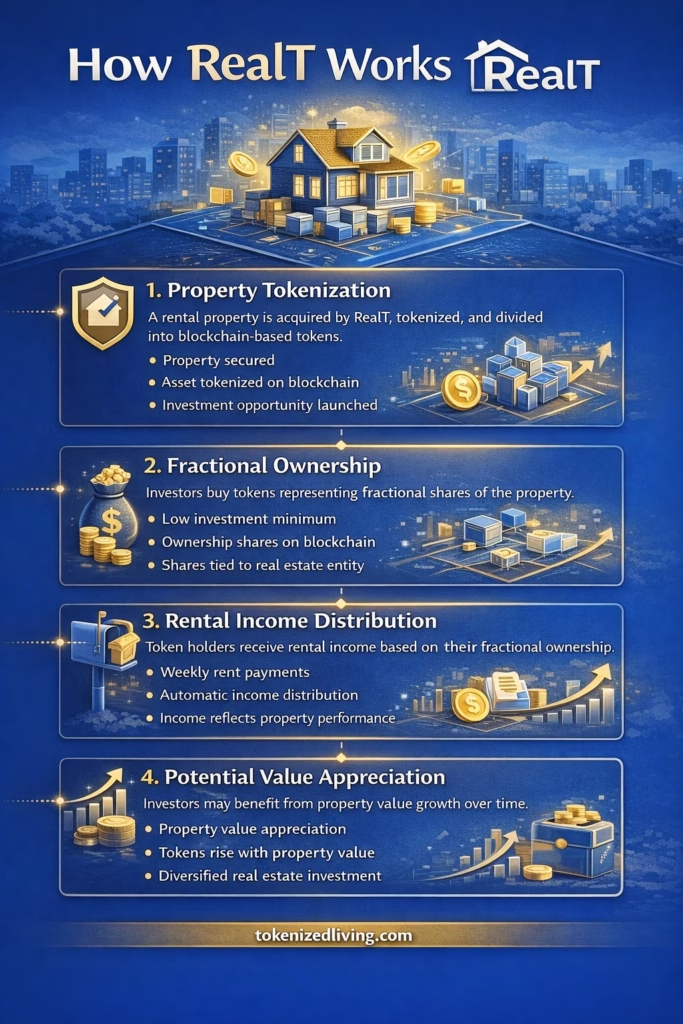
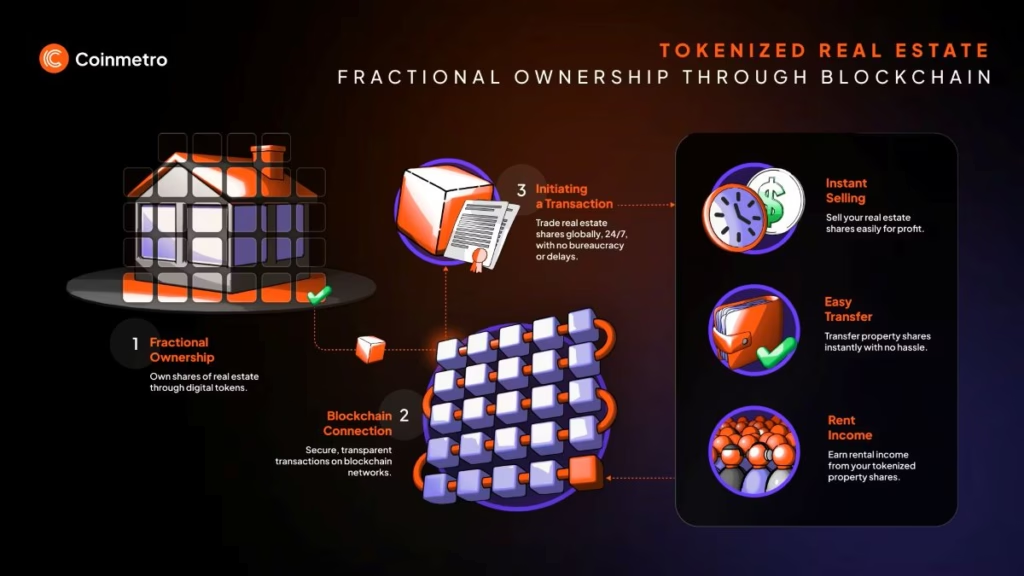
Each property is acquired and placed into a single-purpose LLC. That LLC is then tokenized, and ERC-20 tokens get issued to represent fractional ownership.
Buying Tokens
Investors can:
- Buy tokens during primary property offerings
- Trade tokens on approved secondary markets
- Use crypto wallets to hold and manage assets
The low minimum investment makes RealT more accessible than traditional real estate investing.
Rent Income Distribution
Rent income, after expenses, is distributed to token holders. You typically get payments weekly, which appeals to income-focused investors seeking predictable cash flow.
Platform Transparency
Investors can access property-level data, including:
- Rent status
- Expenses
- Maintenance updates
However, operational control remains with RealT and its property management partners.
If you want to understand the structure behind it, we broke down how RealT works step by step here.
RealT Property Example
Here is a real example of how Realt tokenizes a property, from the building itself to projected income, blockchain data, and offering details.
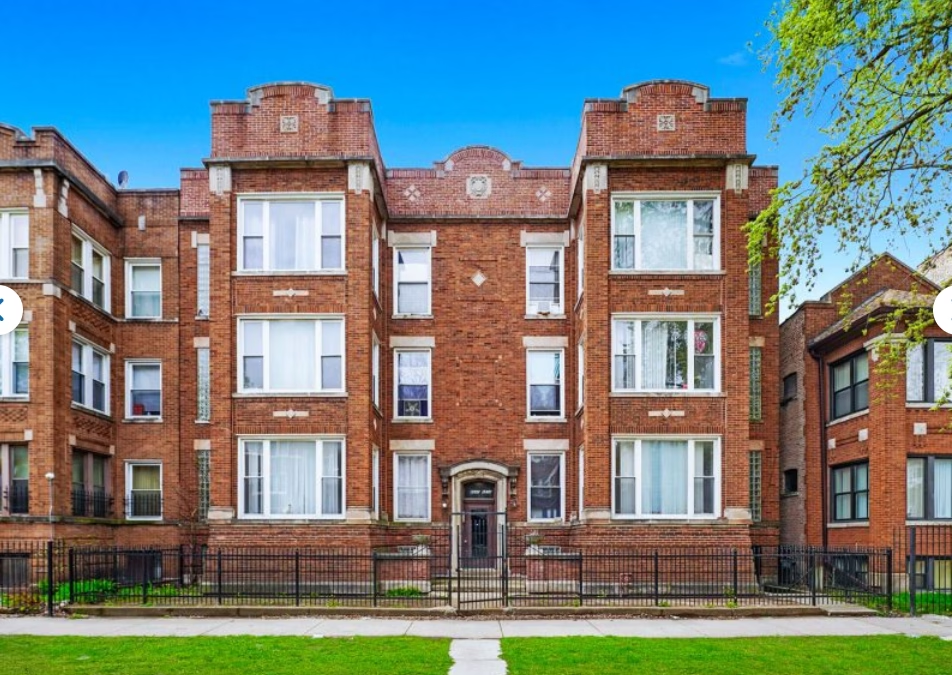
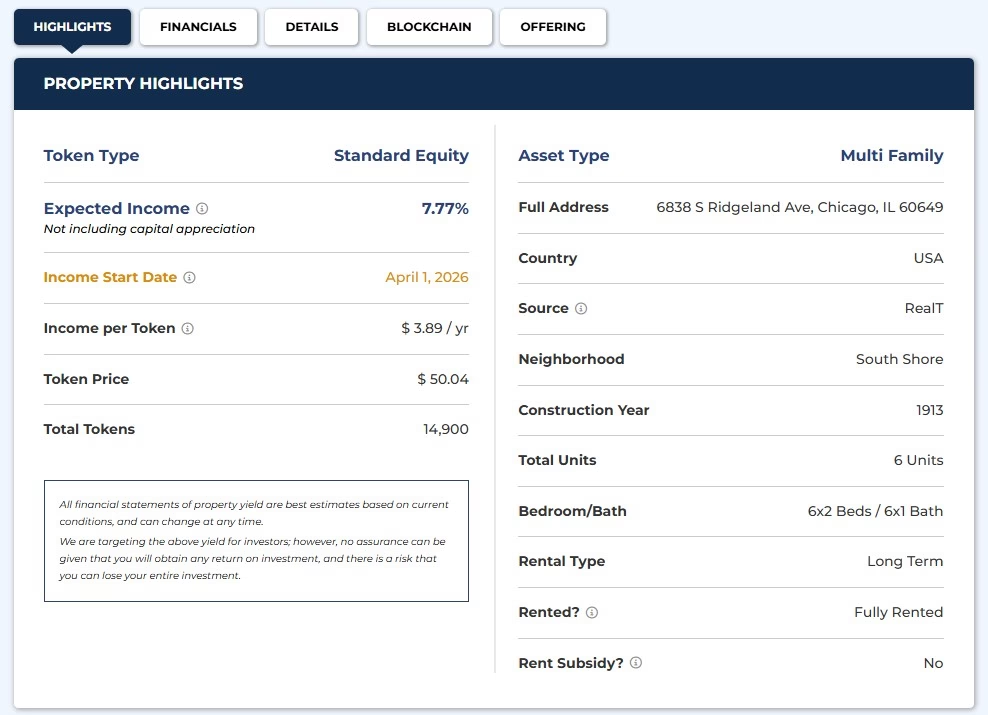
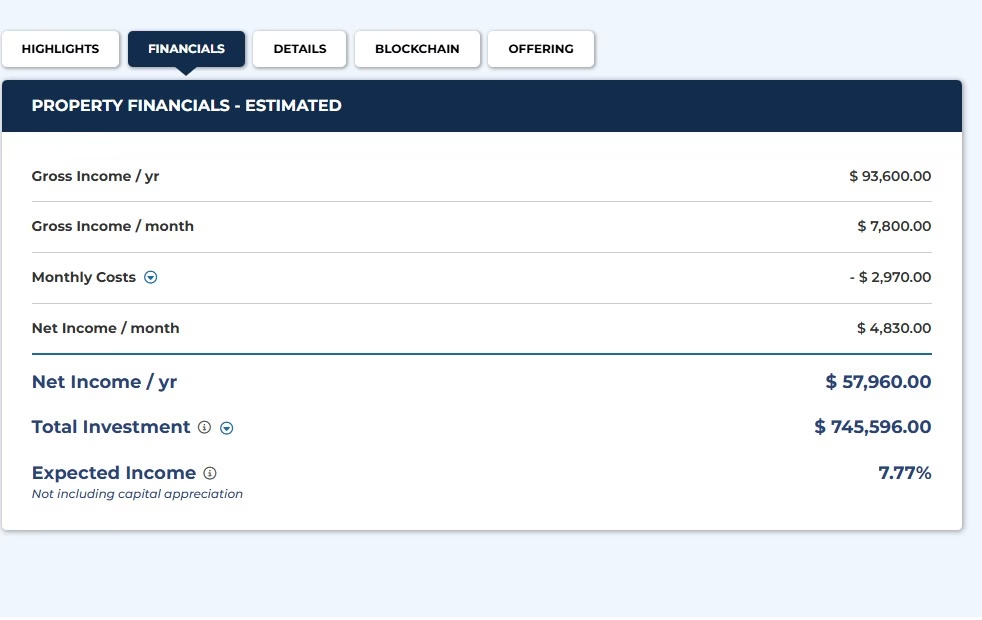
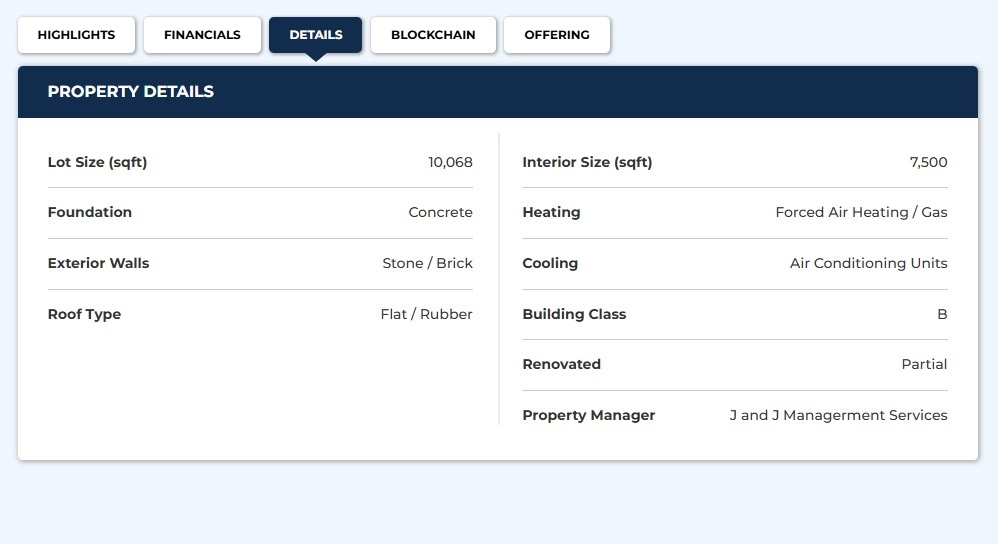
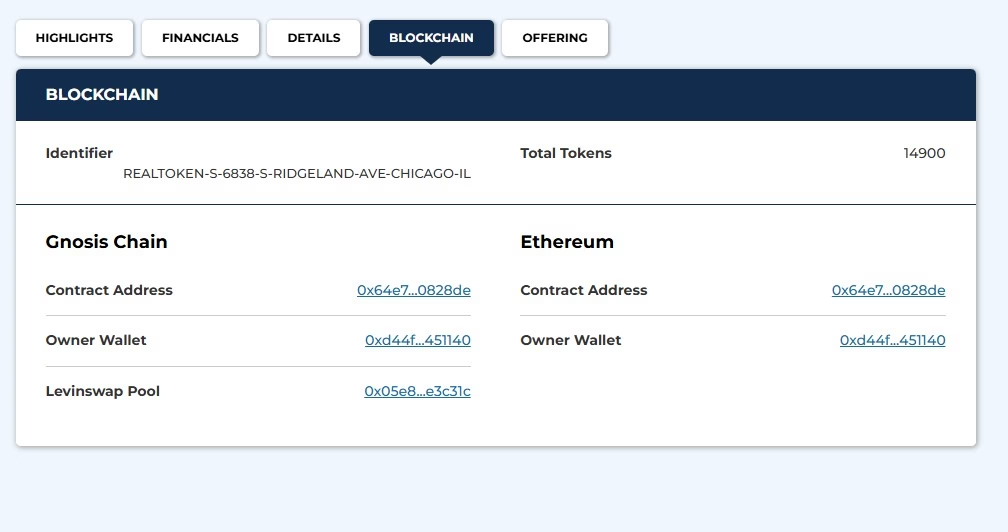
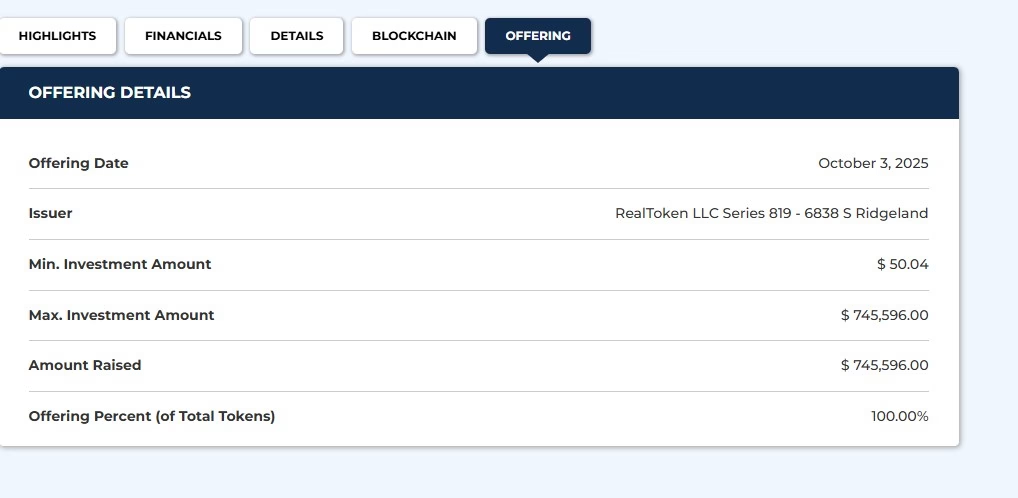
Now let’s compare this model with traditional real estate and REITs.
| Feature | RealT | Traditional Property | REIT |
|---|---|---|---|
| Ownership | LLC shares | Direct title | Shares |
| Liquidity | Limited | Very low | High |
| Income | Rental | Rental | Dividends |
| Entry cost | Low | High | Low |
Key Benefits of RealT
Lower Barrier to Real Estate Investing
Fractional ownership allows investors to access U.S. rental real estate without large upfront capital or direct ownership responsibilities.
Regular Yield Payments
Frequent distributions are a standout feature and differentiate RealT from many traditional real estate structures.
Blockchain-Based Ownership
On-chain tokens provide transparency around ownership and transfers, improving record-keeping and auditability.
Established Track Record
RealT is an early mover in tokenized real estate and has operated through multiple market cycles.
Risks and Limitations to Consider
Geographic Concentration Risk
RealT’s exposure to specific U.S. cities means local housing policy, enforcement, and economic conditions have an outsized impact on performance.
Operational Dependence
Investors rely on:
- Property managers
- Local contractors
- Municipal compliance processes
When these fail, income and asset performance can be affected.
Liquidity Constraints
Although tokens can be traded, liquidity is not guaranteed. Exiting positions may take time or require price concessions.
⚖️ Legal & Compliance Risk (Important)
Legal Risk Disclosure
Some RealT-linked properties, particularly in Detroit, have been involved in ongoing legal and compliance disputes related to property maintenance and municipal regulations. These issues have, at times, affected rent collection and cash flow on certain assets.
Tokenized ownership does not bypass local real estate law, and investors should understand that regulatory and operational risks remain fully applicable.
Tokenized Living Insight:
“Blockchain changes how assets are accessed — not how real estate laws apply.”
🔍What Users Are Saying About RealT
User feedback across platforms like Reddit, Trustpilot, and crypto forums gives a useful snapshot of how RealT performs in real-world use.
👍 Common Positive Feedback
Many users highlight the accessibility and income potential of the platform:
- Low minimum investment makes real estate more accessible
- Weekly rental income payments are a major draw
- Simple onboarding process compared to traditional property investing
- Transparent ownership records through blockchain
Some investors also mention that RealT provides a more hands-off way to gain exposure to U.S. rental markets.
⚠️ Common Concerns
At the same time, users consistently point out a few limitations:
- Limited liquidity, especially during low-demand periods
- Selling tokens is not always instant
- Property performance varies depending on location and management
- Legal structure (LLCs) can be confusing for new investors
A recurring theme is that while RealT lowers the barrier to entry, it does not remove the underlying risks of real estate investing.
🧠 Overall Sentiment
Overall, RealT is generally viewed as an innovative way to access real estate, particularly for smaller investors.
However, most experienced users treat it as:
- a long-term investment
- part of a diversified portfolio
- not a fully liquid or risk-free income source.
Explore RealT Properties
If you want to see how this works in practice, you can browse available properties on RealT.
You can see real properties, how they are structured, and what they generate.
View Properties on RealTThis is an affiliate link. If you use it, we may earn a commission at no extra cost to you.
How RealT Compares in the Tokenized Real Estate Space
RealT demonstrates both the promise and pressure points of tokenized real estate:
- Strong on accessibility and yield distribution
- More exposed to municipal enforcement risk due to portfolio concentration
As the sector matures, RealT’s experience is shaping best practices around compliance, disclosures, and investor expectations.
Frequently Asked Questions (FAQs)
Is RealT legitimate?
RealT is a real tokenized real estate platform with operating rental properties and documented income distributions. However, like all real estate investments, it carries legal, operational, and market risk.
How do investors earn money with RealT?
Investors earn income from rental payments generated by the underlying properties, distributed proportionally based on token ownership.
Are RealT tokens liquid?
Liquidity exists but is limited. You can trade on approved markets, but fast exits are not guaranteed.
Is RealT suitable for beginners?
RealT is better suited to investors who understand crypto wallets, blockchain assets, and real estate risk. It may not be ideal for those seeking fully passive or risk-free investments.
Does tokenization remove property risk?
No. Tokenization improves access and transparency, but it does not eliminate tenant risk, regulatory enforcement, or maintenance obligations.
Final Verdict on Realt review 2026: Is RealT Worth Considering?
RealT remains one of the most influential platforms in tokenized real estate and fractional ownership. It offers genuine innovation in access, yield distribution, and on-chain ownership.
At the same time, its legal and operational challenges highlight an important truth: blockchain does not replace real-world compliance.
For investors who approach RealT with proper due diligence and realistic expectations, it can still play a role in a diversified tokenized asset portfolio.
We use AI tools to enhance research and drafting, always under human supervision.