
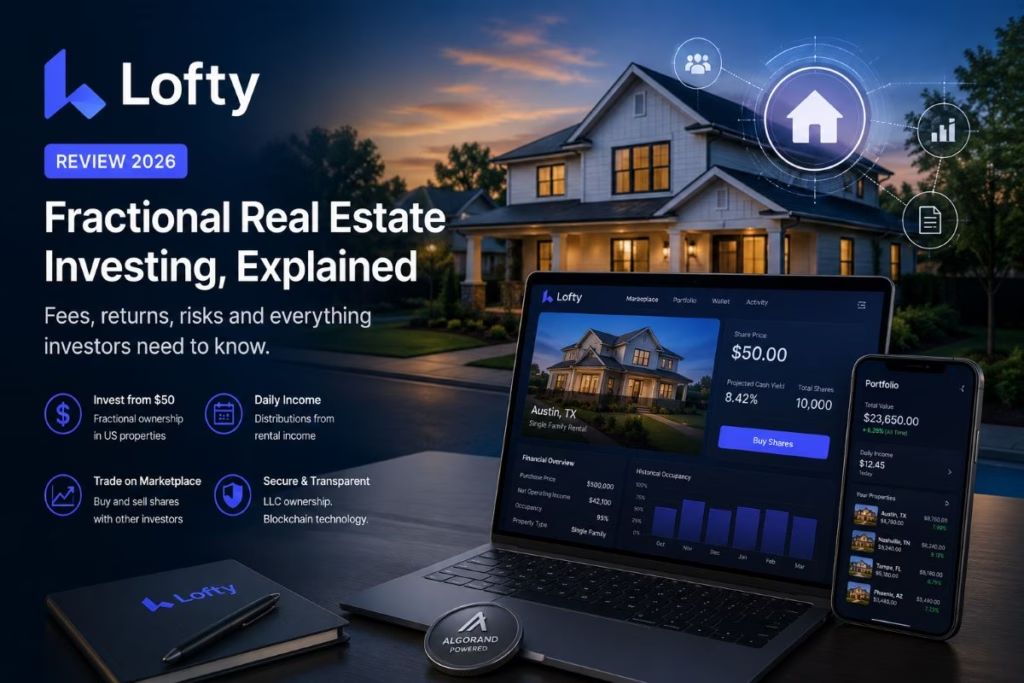
Lofty has one of the more ambitious models in tokenized real estate. Instead of placing investors into a broad fund, it lets them choose individual properties and buy fractional interests from $50.
That idea is attractive, but the marketing can make the process sound easier than it is. Buying a share takes minutes. Assessing the property, legal structure, debt, expenses and exit market takes far longer.
The platform has also changed considerably since our original review. Lofty now supports a wider range of properties, partial equity sales and peer-to-peer trading. Its current fee structure, legal setup and liquidity system deserve a fresh examination.
TL;DR
Lofty gives investors access to fractional interests in individual US properties through blockchain-based shares. Each property sits inside a separate LLC, while investors hold membership interests represented on Algorand.
The $50 starting price, daily income distributions and detailed property documents make Lofty easy to explore. International investors can also apply, subject to identity checks and sanctions restrictions.
However, Lofty is not the real estate equivalent of buying a liquid stock. Secondary-market purchases and sales currently carry a 3% platform fee on each side. Orders can remain unfilled, while weak demand may force a seller to accept a discount.
Property quality also varies. Some listings involve long-term rentals, while others may include short-term rentals, commercial assets, owner-managed properties or homes with existing loans. Investors must assess every listing separately.
Our verdict: Lofty is one of the most developed tokenized property marketplaces available. Even so, it suits careful investors better than anyone seeking simple, passive and immediately liquid real estate exposure.
Lofty Review 2026: Quick Verdict
| Category | Assessment |
|---|---|
| Minimum investment | From $50 per share |
| Asset type | Fractional membership interests in property-owning LLCs |
| Blockchain | Algorand |
| Income | Property income can be distributed daily |
| Secondary market | Peer-to-peer limit-order marketplace |
| Trading fees | 3% for buyers and 3% for sellers on traded properties |
| Investor eligibility | US and many international investors |
| Main strength | Direct property selection and detailed documentation |
| Main weakness | Liquidity is available but never guaranteed |
| Overall view | Strong concept, but due diligence is essential |
What Is Lofty?
Lofty is a US fractional real estate marketplace. The company does not operate like a traditional REIT or pooled property fund.
Investors select individual listings and decide how many shares to purchase. Each share normally starts at $50 when a property first enters the marketplace.
Lofty says it has processed more than $100 million in transactions and offers over 100 properties. Available assets can include long-term rentals, holiday rentals, commercial property and other equity structures.
The platform remains closely linked to blockchain technology. Property shares use Algorand Standard Assets, while marketplace transactions rely on smart contracts and USDC.
Despite the original Lofty AI name, artificial intelligence is no longer the main reason to consider the platform. Its real selling point is the marketplace itself.
What Has Changed Since Our Original Lofty Review?
The first version of this article described a simpler model. Sellers submitted a property, Lofty created a DAO LLC, and investors collectively funded the purchase.
That structure still exists in parts of the marketplace, but Lofty now goes further. Property owners can sell only part of their equity and retain the rest.
Current seller guidance says an owner must keep at least 10% of the property. Lofty also states that many listed properties already have a mortgage or another loan.
Consequently, the economic structure can differ from one property to another.
Secondary-market trading has changed as well. Lofty uses buy and sell limit orders, with funds or shares placed into smart-contract escrow until an order matches.
Most importantly, the current trading fee is 3% for a buyer and 3% for a seller on traded properties. That creates a 6% platform-fee hurdle across a complete secondary-market round trip, before considering price changes or payment costs.
How Does Lofty Work?
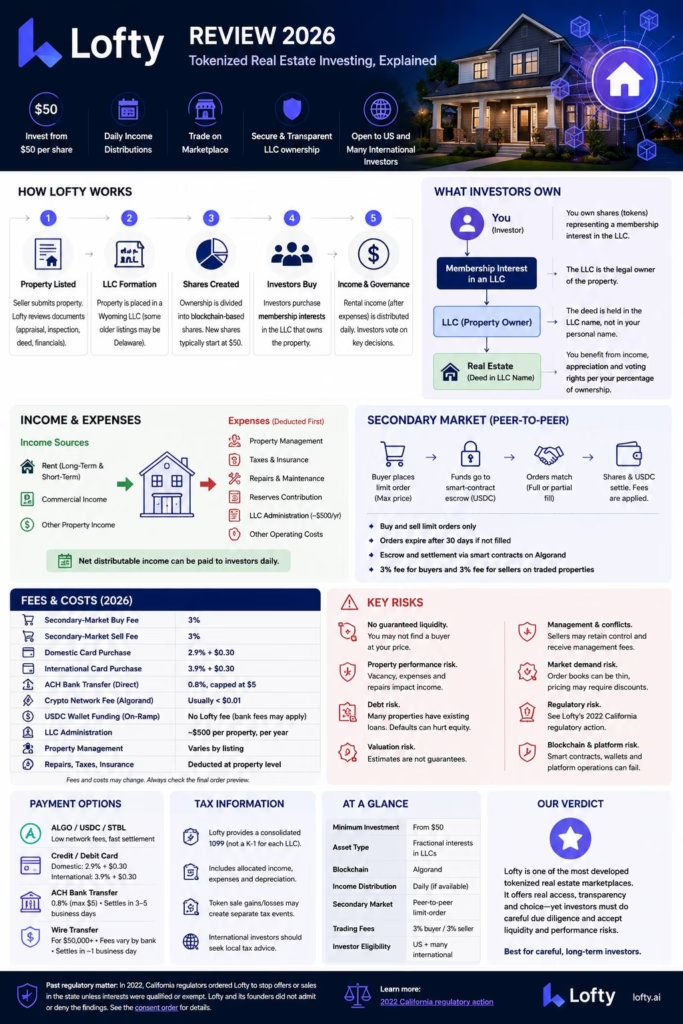
1. A Property Is Listed
A seller submits a property for review. Lofty arranges or reviews documents such as an appraisal, inspection report, ownership records and financial information.
Newer seller material describes the property deed moving into a Wyoming LLC. Older Lofty documentation refers to Delaware entities, so investors should check the actual formation documents for each listing.
That inconsistency matters. Never rely on a general help page when the property-specific operating agreement and deed provide the legal facts.
2. The Property Is Divided Into Shares
The LLC ownership is divided into blockchain-based shares. A $500,000 equity value, for example, could be represented by 10,000 shares priced at $50 each.
The seller may offer all eligible equity or retain a substantial stake. Expenses and property income are then allocated according to each owner’s percentage.
3. Investors Buy Membership Interests
Purchasing shares gives the investor a membership interest in the LLC that owns the property. The LLC remains the name recorded on the property deed.
Therefore, an investor does not receive a personal name on the county title. Ownership comes through the legal entity and its operating agreement.
Wallet records show who holds the blockchain shares. Meanwhile, Lofty links verified users to their wallet addresses through its identity and compliance process.
4. Property Income and Expenses Are Allocated
Rent or other property income flows into the LLC. Taxes, insurance, management, repairs, administration and reserve contributions reduce the distributable amount.
Lofty can credit the remaining income to investors each day. Daily distribution does not mean the building produces profit every day; it only describes the payment schedule.
5. Investors Can Place Sell Orders
Once a property becomes tradeable, owners can list shares on Lofty’s marketplace. Sellers choose a minimum price, while buyers choose the most they will pay.
A trade only completes when compatible orders meet. Partial fills are possible, and unmatched orders can expire after 30 days.
What Do Lofty Investors Actually Own?
Lofty often describes its users as direct property owners. That description needs context.
Token holders own membership interests in a separate LLC. In turn, that company owns the property or the relevant property equity.
This arrangement provides stronger legal rights than a reward token with no connection to an asset. Still, the token itself is not a paper deed to a specific bedroom, roof tile or square metre.
Economic rights depend on several documents:
- The LLC operating agreement
- The property deed
- The capitalization and share records
- Any mortgage or secured loan
- Management agreements
- The rules governing income, expenses and voting
A blockchain record helps track ownership transfers. It cannot repair a weak contract, remove an undisclosed lien or guarantee that the property will perform.
Market Insight
Tokenization improves recordkeeping and transferability. It does not improve the underlying building, tenant or neighbourhood. Investors still succeed or fail largely because of traditional real estate fundamentals.
How Does Lofty’s Daily Income Work?
Daily income is one of Lofty’s best-known features. Once a funded property generates distributable cash, each investor receives a proportional share.
That money can remain in the account, be withdrawn or support another property purchase. A reinvestment option may also automate future allocations.
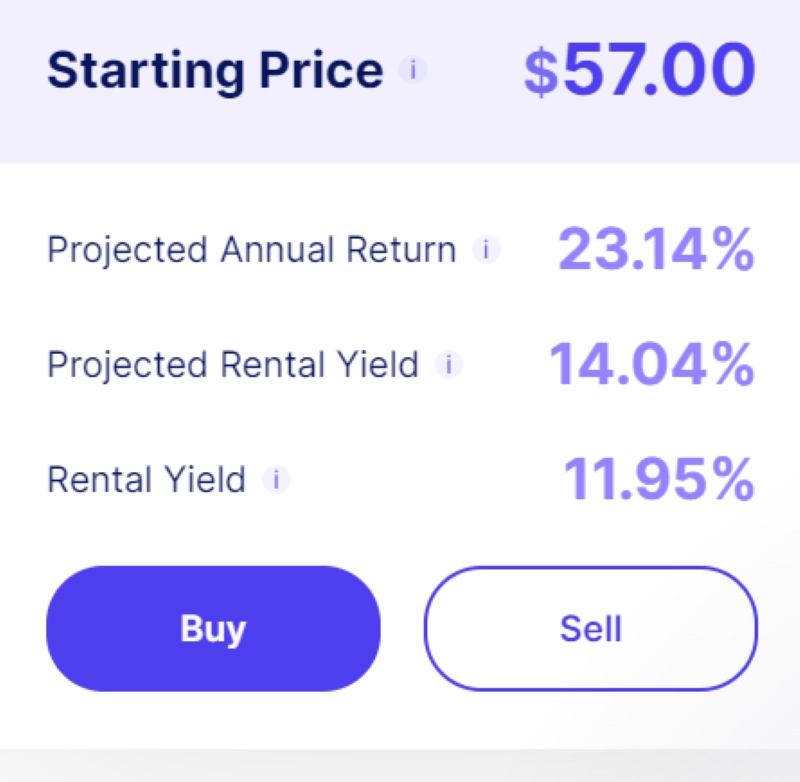
Yet advertised rental yield should never be mistaken for guaranteed income. Vacancy, late payments and maintenance can reduce cash flow quickly.
Short-term rentals create another layer of uncertainty. Seasonal demand may produce strong income during one period and weak results during another.
Operating reserves provide some protection against repairs. However, large expenses can exceed the reserve and reduce distributions or require a governance decision.
Annual LLC administration also costs money. Lofty’s due-diligence guidance estimates roughly $500 per property each year, although actual expenses may vary.
Buying Property Shares on Lofty
Opening an account requires identity verification. Both US and many non-US investors can apply, although sanctioned jurisdictions are excluded.
After approval, the process works as follows:
- Browse the marketplace.
- Select a property.
- Review the financials, inspection, appraisal, deed and operating agreement.
- Choose the number of shares.
- Select a payment method.
- Preview and submit the order.
- Receive shares in the Lofty Wallet after completion.
Lofty displays estimated values using third-party valuation data. Those figures are useful reference points, not guaranteed sale prices.
An investor can pay using supported bank, card or cryptocurrency methods. USDC and ALGO remain central to the blockchain side of the platform.
Explore Lofty Properties
To see how Lofty works in practice, you can browse the properties currently available on its marketplace.
Review each property’s ownership structure, projected income, expenses and supporting documents before investing.
This is an affiliate link. If you use it, we may earn a commission at no extra cost to you.
Selling Lofty Shares
Lofty allows an owner to place a sell order without a fixed multi-year lockup. This feature gives investors more flexibility than many private property deals.
Nevertheless, “sell anytime” means an investor may list shares at any time. It does not mean another person must buy them immediately.
The seller chooses a limit price and number of shares. Those shares move into escrow, but the investor continues receiving property income until a trade completes.
Weak demand can create three outcomes. The order may take time, only part of it may fill, or the seller may need to lower the price.
Even a profitable property can have a thin order book. Smaller tokenized markets rarely match the depth of major stock exchanges.
The 3% seller fee also matters. Combined with the 3% buyer fee, it can discourage frequent trading and widen the gap between buyers and sellers.
Watch This Trend
Lofty’s marketplace is becoming more sophisticated, but the important measure is not the number of buttons or trading features. Real liquidity depends on active buyers, competitive bids and enough volume to absorb sellers without steep discounts.
Lofty Fees in 2026
Lofty’s fees are more complicated than the old review suggested.
| Cost | Current published figure or treatment |
| Secondary-market buy order | 3% platform fee |
| Secondary-market sell order | 3% platform fee |
| Domestic card purchase | 2.9% plus $0.30 |
| International card purchase | 3.9% plus $0.30 |
| Direct ACH purchase | 0.8%, capped at $5 |
| Crypto network transaction | Usually under $0.01 on Algorand |
| USDC wallet funding | Lofty advertises a separate on-ramp with no Lofty fee, although bank charges may apply |
| LLC administration | Around $500 yearly per property, paid from property finances |
| Property management | Varies by listing |
| Repairs, taxes and insurance | Deducted at property level |
Some payment guidance has not been updated as recently as the marketplace fee page. Always check the final order preview before paying.
New listings and secondary-market trades may also have different economics. The listing seller can pay a 3% equity-sale fee, while traded shares apply fees to marketplace buyers and sellers.
Payment charges can stack with platform costs. An international card buyer entering a traded property may face both the card-processing charge and the marketplace fee.
For a long-term investor, those charges may be manageable. Frequent traders start with a serious disadvantage.
Lofty Wallet and the Algorand Blockchain
Every user receives a Lofty Wallet. The wallet runs on Algorand and uses a one-of-two multisignature setup.
One key belongs to the user, while Lofty holds another encrypted key. According to the company, either key can authorize actions, allowing the investor to retain control while preserving an account-recovery route.
External Algorand wallets can also be connected. However, Lofty’s current trading process sends purchased shares, sale proceeds and returned assets to the Lofty Wallet before users transfer them elsewhere.
Algorand offers fast settlement and low network fees. Those qualities make small payments and frequent income distributions practical.
Blockchain use introduces separate risks, though. Wallet mistakes, phishing, smart-contract vulnerabilities and USDC price deviations remain possible.
Lofty says its marketplace smart contract received a CertiK audit. An audit reduces technical risk but never removes it.
Property Research and Due Diligence
Lofty provides more property-level documentation than many fractional platforms. Investors can review financial projections, market data, inspections and legal documents.
That transparency is valuable only when somebody reads the files.
Projected return combines estimated income with potential appreciation. Appreciation is not cash flow, and valuation models can be wrong.
Likewise, an inspection report captures conditions at a certain point. Hidden defects, poor workmanship and later damage may still appear.
Before buying, check the following:
- Is the property occupied, vacant or used for short stays?
- Does actual income support the advertised yield?
- Who prepared the appraisal and inspection?
- How much debt sits ahead of the equity owners?
- What happens if the mortgage enters default?
- How large is the operating reserve?
- Who manages the property, and what do they charge?
- Does the seller retain a controlling stake?
- Are related parties receiving fees?
- How deep is the current order book?
- What discount would be needed for a quick exit?
- Do the deed and LLC documents match the listing summary?
Buying ten weak properties does not create a strong portfolio. Diversification helps only when the underlying assets deserve investment.
New property shares normally begin at $50. Previously funded properties trade at prices set through the order book.

Governance and Property Management
Investors can vote on important property decisions. Topics may include repairs, rent changes, manager replacement or the sale of the building.
Lofty’s published governance system generally requires a 60% supermajority. Voting periods often last several days.
That level of control sounds attractive, but shared decision-making can become slow or contentious. Small investors may also have little influence when one seller retains a large position.
Property managers handle daily operations. In newer owner-listed deals, the original owner may continue managing the asset and charge a fee.
Possible conflicts should be examined before investing. A person selling equity, controlling votes and earning management income sits on several sides of the transaction.
Taxes on Lofty Investments
Lofty prepares entity-level tax filings and provides investors with a consolidated 1099 rather than a separate K-1 for every property.
The form can include allocated income, expenses and depreciation. Token sale gains or losses may create separate tax consequences.
International investors should not assume a US form settles their obligations. Withholding, treaty rules and local reporting can vary widely.
Crypto transactions add further recordkeeping. Moving USDC, converting currencies or transferring assets between wallets may have consequences in some jurisdictions.
Tax simplicity is relative. One consolidated form helps, but tokenized property still combines real estate, partnership accounting and blockchain records.
Lofty’s Regulatory History
A fair Lofty review must include the platform’s 2022 California regulatory action.
The California Department of Financial Protection and Innovation stated that interests sold in Lofty holding LLCs were securities under state law. Its consent order covered at least 75 entities and more than $12.6 million of offered interests.
Lofty and its founders entered the settlement without admitting or denying the regulator’s findings. They agreed to pay a $37,500 penalty and stop further offers or sales in California unless the interests were qualified or an exemption applied.
Current Lofty guidance says California and New York users can trade with other individuals using cryptocurrency. That secondary-market position is different from the earlier issuer offerings examined by California.
The old order does not prove every current Lofty transaction breaks securities law. Equally, investors should not pretend the regulatory history never happened.
Legal Risk
Property tokens sit at the intersection of company law, securities rules, real estate ownership and blockchain transfers. Rights may change by state, transaction type and investor location. Read the operating agreement and obtain professional advice when the legal position matters.
What Happens If Lofty Fails?
Each property is held in a separate legal entity rather than on Lofty AI, Inc.’s corporate balance sheet.
Lofty says those entities and their assets would continue if the platform company closed. Token holders could appoint another manager, keep operating or vote to sell the property.
Its continuity plan names an outside law firm to support governance if Lofty can no longer do so.
That separation is a sensible safeguard. Still, a platform failure would almost certainly create disruption, legal costs and reduced trading access.
Owning an asset through an independent LLC protects the property structure. It does not guarantee a smooth transition.
Lofty Customer Reviews
Public feedback is mixed.
Trustpilot showed a 3.6 rating from 71 reviews during our research. Most ratings were positive, but the sample remains small and should not decide an investment.
Supporters often praise the low starting amount, daily distributions and access to individual properties. Several users also like the documents and marketplace design.
Critical reviews mention slow support, withdrawal confusion, difficult tax reporting, outdated property data and disappointing asset performance.
Some complaints concern specific properties rather than the platform alone. Even so, that distinction offers little comfort when an investor loses money.
The pattern reinforces one conclusion: Lofty makes property shares easy to buy, but the investment itself remains complex.
Lofty Pros and Cons
Pros
- Start with $50
- Choose individual properties
- Receive proportional property income
- Access property and legal documents
- Trade through a peer-to-peer marketplace
- Use low-cost Algorand transactions
- Participate in governance
- Apply from many countries
- Hold interests in separate property entities
Cons
- 3% fee on each side of secondary trading
- No guaranteed buyer when selling
- Property quality and structures vary
- Some properties have existing loans
- Sellers may retain voting influence
- Repairs and vacancies can stop distributions
- USDC and wallet processes add complexity
- Tax reporting can still be demanding
- Customer support feedback is inconsistent
- Regulatory history requires attention
Who Is Lofty Best For?
Lofty may suit investors who want to select individual US properties without buying an entire building.
A patient user can spread a modest amount across several carefully researched listings. Experience with rental property, financial statements or blockchain wallets also helps.
The platform is less suitable for somebody who needs a guaranteed exit date. Anyone treating projected returns as fixed interest should stay away.
Investors seeking broad, passive real estate exposure may prefer a diversified REIT. Those wanting direct control over a whole property will find Lofty too fragmented.
The platform works best as a specialist allocation, not as an emergency fund or complete property strategy.
Final Verdict: Is Lofty Worth It in 2026?
Lofty is one of the more interesting working examples of tokenized real estate. The platform connects legal ownership records, property documents, daily distributions and a live marketplace in a way few competitors match.
Its strongest feature is choice. Investors can examine a specific property rather than accept a fund manager’s entire portfolio.
Its biggest weakness is the gap between stock-market language and real property liquidity. A share can be listed quickly, but selling at a fair price still depends on another investor.
The 3% fee charged to both secondary buyers and sellers makes that gap wider. Property expenses, debt and management quality add more uncertainty.
Careful investors gain access that would otherwise require far more capital and administration. Casual buyers may find that the simple interface hides a complicated investment.
Our view is positive but guarded. Lofty deserves consideration, yet every property should be treated as a separate deal and researched accordingly.
Frequently Asked Questions
Is Lofty a REIT?
No. Lofty is a marketplace for fractional interests in individual property-owning LLCs. Investors choose specific listings rather than buying shares in a pooled real estate company.
What is the minimum Lofty investment?
New property shares generally start at $50. Prices can move above or below that level after secondary trading begins.
Do Lofty investors own real estate?
Investors own membership interests in an LLC that owns the property or property equity. Their personal names do not normally appear directly on the deed.
Does Lofty pay rent every day?
Lofty can distribute available property income daily. Actual cash flow still depends on tenants, occupancy, repairs, taxes, insurance and management costs.
Can I sell Lofty shares whenever I want?
You can place a sell order without a standard multi-year lockup. Completion depends on finding a buyer at an acceptable price.
How much does Lofty charge to sell shares?
Lofty currently publishes a 3% fee for secondary-market sell orders. Buyers of traded shares also face a 3% platform fee.
Can international investors use Lofty?
Many international investors can apply after completing identity checks. Sanctions restrictions and local laws may prevent access in some countries.
Which blockchain does Lofty use?
Lofty uses Algorand. Property interests are represented by Algorand Standard Assets, while USDC supports marketplace settlement.
Are Lofty returns guaranteed?
No. Income, property values and token prices can fall. Vacancy, debt, repairs, weak demand and poor management can all reduce returns.
Is Lofty safe?
Lofty uses separate LLCs, verified wallets, smart-contract escrow and audited marketplace technology. Those safeguards reduce certain risks but do not eliminate property, legal, liquidity, platform or blockchain risk.
Disclaimer: This article is for informational purposes only and does not constitute financial, tax or legal advice. Property and blockchain investments can lose value. Conduct independent research and seek professional advice before investing.