
Could we really be coming to the end of the Detroit vs Realt lawsuit?
🧠 TL;DR
- Detroit sued RealT over 400+ non-compliant properties
- Court blocked rent collection and evictions (July 2025)
- RealT blames failed property managers + legal restrictions
- Financial pressure built through 2025–2026
- A fiduciary-led agreement may stabilize the situation
- This is a critical test for tokenized real estate
⚡ Why The Realt Lawsuit Case Matters Right Now
A few years ago, tokenized real estate felt like a breakthrough.
You could invest in U.S. rental properties for as little as $50. You could earn rental income without owning a full property.
Platforms like RealT made that idea real.
But now, something important is happening.
This lawsuit in Detroit is the first time a tokenized real estate model is being stress-tested at scale in the real world.
And the outcome could shape how this entire sector evolves.
🧭 The Story of Realt Lawsuit: How We Got Here
📍 Phase 1 — Rapid Expansion
RealT built a large portfolio of Detroit properties.
Each property was split into tokens. Investors from around the world bought fractional ownership.
On paper, it worked.
But behind the scenes, something else was building.
📍 Phase 2 — Compliance Problems Emerge
The City of Detroit began flagging issues:
- Missing Certificates of Compliance (CoC)
- Unsafe living conditions
- Poor maintenance
- Tenant complaints
These weren’t isolated cases.
They were happening across hundreds of properties.
👉 This is where the story starts to shift.
📍 Phase 3 — The Realt Lawsuit (Mid-2025)
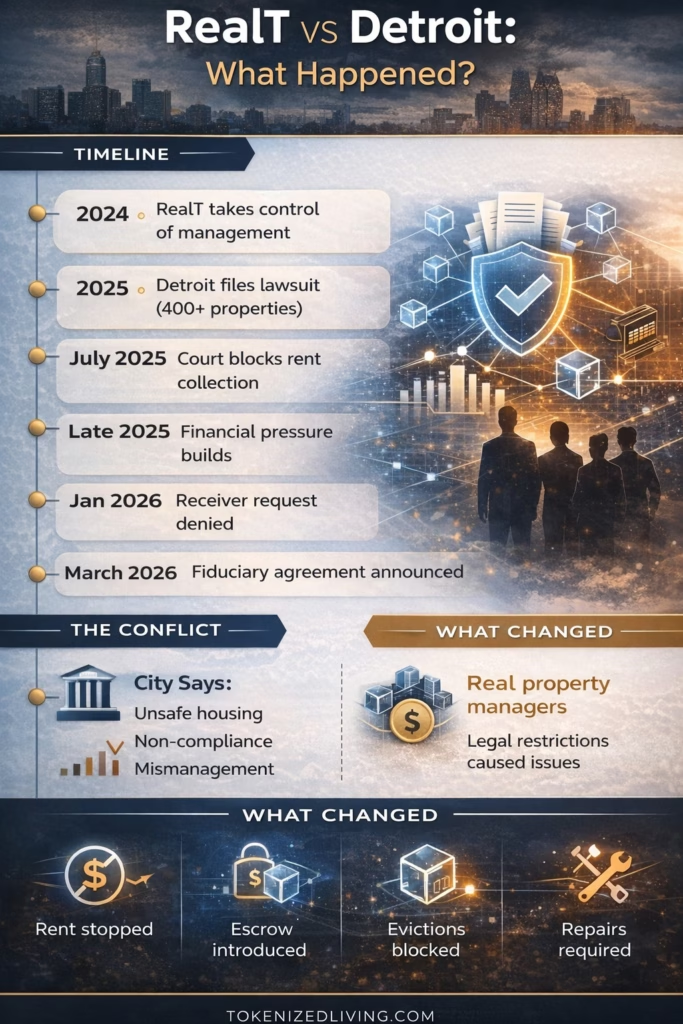
Detroit filed a major lawsuit covering 400+ properties.
The city described it as one of the largest nuisance cases in its history.
What Detroit Claims
- Properties were unsafe and non-compliant
- RealT failed to maintain housing standards
- Ownership structure made accountability unclear
What RealT Says
- Third-party managers caused the problems
- Funds were misused or mishandled
- RealT stepped in to fix operations (Dec 2024)
👉 At this point, both sides agree something went wrong.
They just disagree on why.
📍 Phase 4 — Court Intervention (July 2025)
This is the turning point.
The court issued a Temporary Restraining Order (TRO):
- ❌ RealT could not collect rent on non-compliant units
- 💰 Rent redirected into escrow
- 🚫 Evictions blocked
- 🔧 Mandatory repairs required
Why This Matters
This hit the core of the model.
Tokenized real estate depends on cash flow from rent.
Once that stopped, pressure began to build quickly.
📍 Phase 5 — Financial Pressure Builds (Late 2025)
Reports began to show:
- Missed token holder payouts
- Unpaid taxes and fines
- Growing operational strain
Detroit argued the system was failing.
RealT argued the restrictions made recovery harder.
👉 This is where the situation becomes a feedback loop:
- Less cash flow → fewer repairs
- Fewer repairs → more violations
- More violations → stricter restrictions
📍 Phase 6 — Receiver Debate (January 2026)
Detroit pushed for a court-appointed receiver.
That would mean losing control of the portfolio.
The court said no—for now.
But it left the door open.
📍 Phase 7 — Toward a Resolution of Realt Lawsuit (March–April 2026)
Now things get interesting.
RealT announced a preliminary agreement:
- A fiduciary (Charles Bullock) may take operational control
- Focus on repairs, compliance, and restoring cash flow
- Work with the city on taxes and programs
At the same time, Detroit signaled a possible consent agreement.
👉 Both sides appear to be moving toward a controlled restructuring, not a collapse.

⚖️ What’s Proven vs What’s Disputed in Realt Lawsuit
✅ Verified Facts
- Lawsuit filed covering 400+ properties
- Court restricted rent collection and evictions
- Many properties lacked compliance at some stage
- Financial strain has affected the platform
⚠️ Disputed Points
- Who is responsible (RealT vs property managers)
- Whether the city’s restrictions worsened the situation
- True scale of mismanagement
- Long-term viability of the portfolio
| Issue | City of Detroit | RealT |
|---|---|---|
| Property Conditions | Unsafe, widespread violations | Problems inherited from prior managers |
| Responsibility | RealT + founders accountable | Third-party managers responsible |
| Cash Flow Issues | Mismanagement | Caused by court restrictions |
| Solution | Receiver / strict oversight | Cooperative restructuring |
| Current Direction | Consent agreement | Fiduciary-led recovery |
📊 What Realt Lawsuit Means for Tokenized Real Estate
Let’s be honest.
This is not a small issue.
But it’s also not the death of tokenization.
The Real Problem
This case highlights something critical:
👉 Tokenization does NOT fix bad property management
It actually amplifies it.
Because now:
- Hundreds of investors depend on one system
- One weak link affects the entire network
🚀 The Bigger Opportunity
Here’s the part most people miss.
This situation is forcing the industry to evolve.
We are likely to see:
- Stronger compliance frameworks
- Transparent property-level reporting
- Hybrid models with regulated managers
- Better investor protections
👉 In other words, this could make the sector stronger
📈 Internal Insight (Tokenized Living)
If you’ve read our other guides:
- 👉 [Complete Guide to Tokenized Real Estate]
- 👉 [Tokenized Real Estate for Younger Investors]
- 👉 [Building a Tokenized Retirement Portfolio]
You’ll notice a pattern.
The model works best when:
- The underlying asset is strong
- Management is reliable
- Compliance is tight
This case reinforces all three.
⚠️ Legal Risk Box
Key Risk for Investors
- Regulatory enforcement can stop cash flow instantly
- Local compliance matters more than blockchain structure
- Token holders rely heavily on centralized operators
👉 Always assess:
- Property manager track record
- Local regulations
- Legal structure of ownership
💬 Pull Quote
“Tokenization didn’t break here. Execution did. And that’s exactly what the next generation of platforms will fix.”
❓ FAQs
Is RealT shutting down?
No confirmed shutdown. The situation points toward restructuring, not closure.
Are investors still earning income?
Many payouts were disrupted. Recovery depends on restoring compliance and rent flow.
What is a Certificate of Compliance (CoC)?
It’s a legal requirement proving a property meets safety and housing standards.
Could this happen to other platforms?
Yes—if property management fails or compliance is weak.
Is tokenized real estate still worth it?
Yes, but only with strong due diligence on management and legal structure.
🔮 What Happens Next
Watch these signals closely:
- Final approval of the fiduciary agreement
- Progress on property compliance
- Return of rental income flows
- City enforcement actions
👉 This case is not over.
But it may define the next phase of tokenized real estate.