
TL;DR
Tokenized real estate uses blockchain technology to represent property ownership or investment rights as digital tokens. These tokens allow investors to buy fractional exposure to property markets that were once difficult to access. The concept aims to improve accessibility, transparency, and liquidity. However, the legal structure of each platform matters greatly, and tokenized property investments still carry traditional real estate risks alongside new technological risks.
Some links in this article may be affiliate links. If you choose to invest through them, we may earn a small commission at no extra cost to you.
Always do your own research before making any investment decisions.
Introduction
Real estate has long been one of the most popular investment assets in the world. Property can generate rent income, provide long-term appreciation, and offer diversification within a portfolio.
However, real estate also comes with barriers.
High entry costs, slow transactions, and limited liquidity often prevent smaller investors from participating in large property markets. Tokenization aims to address these limitations.
By combining real estate with blockchain technology, tokenization allows property assets to be divided into digital units that investors can buy and trade.
This guide explains how tokenized real estate works, why investors are paying attention, and the opportunities and risks involved.
What Is Tokenized Real Estate?
Tokenized real estate refers to property investments represented by blockchain-based digital tokens.
Each token typically represents a portion of the economic rights tied to a property asset.
Instead of purchasing an entire building or apartment, investors can purchase fractional exposure through tokens.
These tokens may represent:
- equity ownership in a property-holding entity
- debt secured by property assets
- rights to rental income streams
- participation in property development projects
The exact structure varies between platforms. In many cases, the token represents shares in a legal entity that owns the property rather than direct ownership of the building itself.
This distinction is important for investors to understand.
How Tokenized Real Estate Works
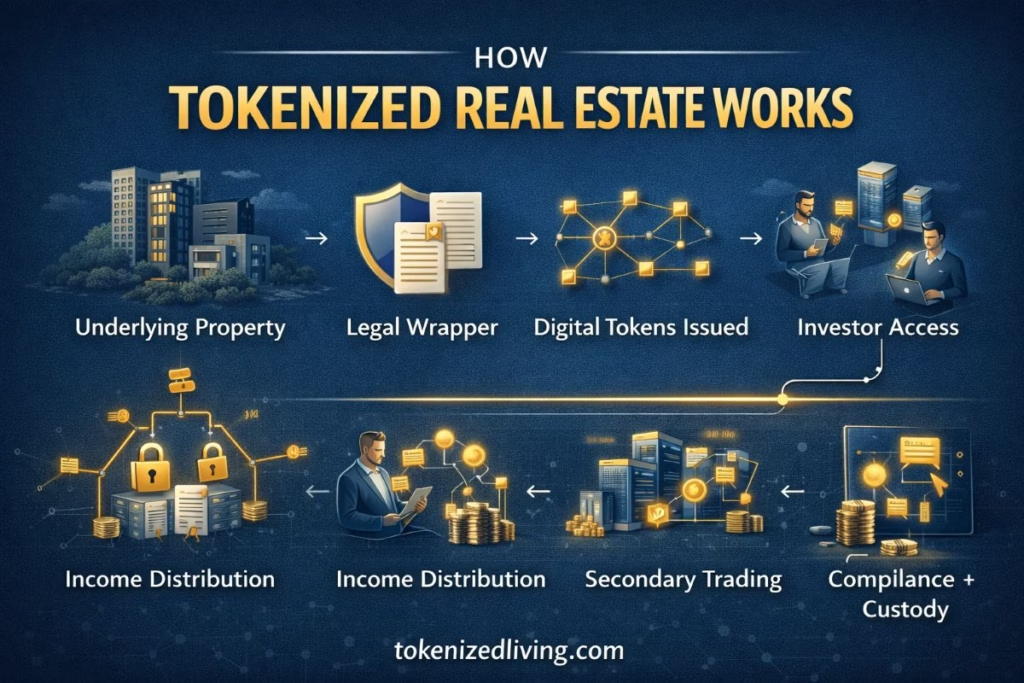
Tokenized property investments usually follow a structured process.
First, a property asset is acquired or selected for investment.
Next, the property is placed within a legal wrapper, such as a company, trust, or special-purpose vehicle. This entity holds the underlying asset.
Digital tokens are then issued to represent investment rights tied to that structure.
Investors can purchase these tokens through compliant platforms that perform identity checks and regulatory screening.
Once purchased, investors may receive income distributions, governance rights, or exposure to property appreciation depending on the platform model.
Watch: Tokenized Real Estate Explained
If you prefer a visual breakdown, this short video walks through how tokenized real estate works, including fractional ownership, income generation, and the risks investors should understand.
Why Investors Are Paying Attention
Tokenization has attracted interest because it attempts to solve several long-standing frictions in real estate markets.
Traditional property investing often requires significant capital. Transactions can take weeks or months to complete. Ownership transfers involve complex documentation and intermediaries.
Tokenization introduces several potential advantages:
- fractional investment access
- faster digital transactions
- programmable compliance
- transparent transaction records
For investors who want exposure to real estate without managing physical property, tokenized models present an interesting alternative.
Tokenized real estate is not just attracting institutional investors. It is also changing how individuals think about property investing across different life stages.
Younger Investors
Young investors are increasingly exploring tokenized real estate as an entry point into property markets that would otherwise be out of reach. Instead of saving for years to buy a full property, fractional ownership allows smaller, more flexible investments from the start. For a deeper look at how this trend is shaping the next generation of investors, see our guide on how tokenized real estate is helping younger investors get onto the property ladder.
Retirement Portfolio
Tokenized property is also gaining attention as a potential component of long-term portfolios. Real estate has traditionally played a role in retirement planning, and tokenization introduces a more flexible way to access that exposure. If you are thinking long term, you can explore how tokenized real estate fits into a modern retirement portfolio strategy in our dedicated guide.
📊 Market Insight
Why Real Estate Is a Natural Fit for Tokenization
Real estate is historically illiquid. Buying and selling property can take months. High transaction costs also create barriers to entry.
Tokenization aims to address these challenges by allowing properties to be divided into smaller digital investment units.
Large research firms have suggested that real estate may become one of the largest categories of tokenized real-world assets because of its size and global demand.
If tokenization infrastructure continues to mature, property markets could become one of the most significant applications of blockchain finance.
📈 Watch This Trend
Institutional Interest in Tokenized Property Is Growing
The idea of tokenized real estate has moved beyond early experiments.
Governments, financial institutions, and blockchain platforms are testing models that combine property markets with digital asset infrastructure.
Some jurisdictions are exploring pilot programs where property ownership records can be integrated with blockchain systems.
While the industry remains early, these developments suggest that tokenized real estate may evolve from niche platforms into broader financial infrastructure.
Types of Tokenized Real Estate
Tokenized property investments can take several forms.
Residential Rental Properties
Investors receive income generated from rental payments.
Commercial Real Estate
Office buildings, retail centers, and warehouses can be tokenized to allow fractional investment exposure.
Real Estate Development Projects
Some platforms tokenize funding for construction or redevelopment projects.
Property-Backed Debt
Tokens may represent loans secured against real estate assets.
Each structure carries different risk profiles and return expectations.
📊 Comparison
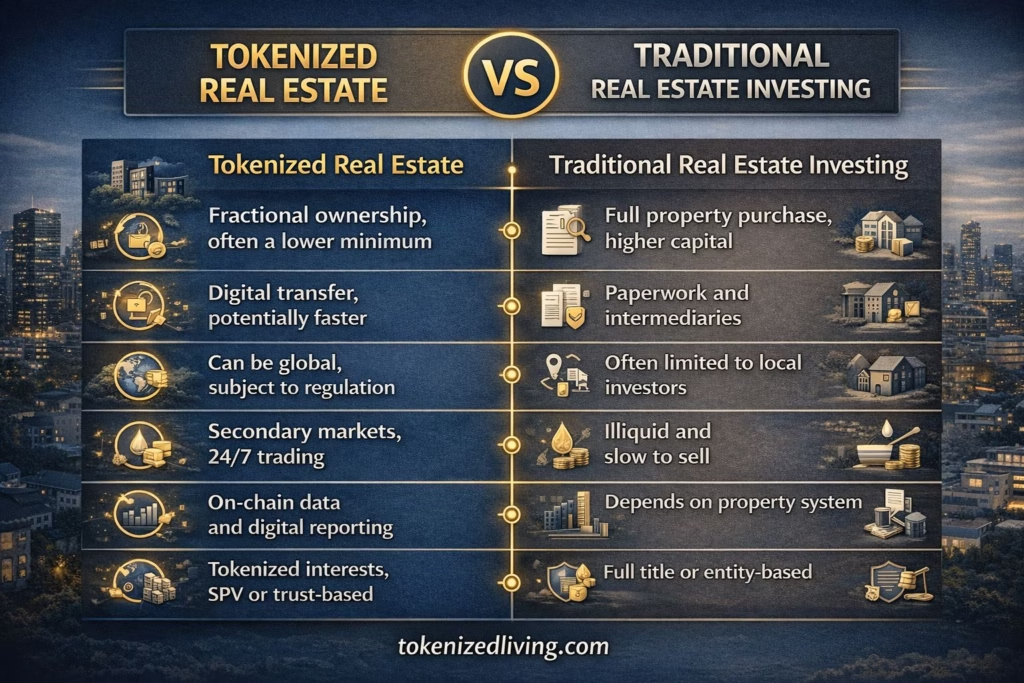
Tokenized Real Estate vs Traditional Property Investing
| Feature | Traditional Property Investment | Tokenized Real Estate |
|---|---|---|
| Minimum investment | Often very high | Lower through fractionalization |
| Liquidity | Limited and slow | Potentially improved but still developing |
| Ownership transfer | Paperwork and legal intermediaries | Digital token transfer within compliance frameworks |
| Accessibility | Often limited to local investors | Can reach global investors depending on regulation |
| Transparency | Depends on property managers | Blockchain transaction records can improve transparency |
| Diversification | Difficult with small capital | Easier to spread investments across multiple properties |
Platforms and Infrastructure
Several platforms are experimenting with tokenized real estate markets.
These platforms typically combine property management expertise with blockchain technology.
They handle:
- property sourcing
- legal structuring
- investor onboarding
- income distribution
- token issuance
The reliability of the platform and the legal structure used are critical factors investors should evaluate.
Regulation and Legal Structure
Tokenized real estate does not exist outside traditional laws.
Property ownership rules, securities regulations, and investor protection laws still apply.
Many tokenized property platforms operate under regulated frameworks that classify their tokens as digital securities.
Investors should carefully review the legal structure used by each platform to understand what rights their tokens represent.
Benefits of Tokenized Real Estate
Tokenized property investing offers several potential advantages.
Lower Investment Barriers
Investors can participate with smaller capital allocations.
Portfolio Diversification
Fractional investments allow exposure to multiple properties.
Digital Transparency
Blockchain records may improve transaction visibility.
Simplified Transfers
Tokenized structures may enable faster transfers compared with traditional property transactions.
Risks of Tokenized Real Estate
Despite its potential, tokenization also introduces risks.
Platform Risk
Investors rely on the platform issuing and managing tokens.
Legal Complexity
The token structure may not always represent direct ownership.
Liquidity Limitations
Secondary markets remain relatively small.
Market Risk
Property values can fluctuate based on economic conditions.
⚠️ Key Risks to Watch
Even as tokenization develops, investors should remain aware of key challenges.
Regulatory frameworks are still evolving. Liquidity in secondary markets remains limited. Technology infrastructure must also prove its reliability at scale.
Most importantly, investors should examine the legal structure behind each tokenized property offering.
The token itself does not guarantee ownership rights unless the underlying legal framework clearly supports it.
Conclusion
Tokenized real estate represents an attempt to modernize one of the world’s oldest investment markets.
By combining blockchain technology with property assets, tokenization introduces new ways to access, trade, and manage real estate investments.
However, the concept remains in its early stages. Investors should focus not only on the technology but also on the legal structure, regulatory environment, and platform reliability behind each offering.
If these foundations continue to develop, tokenized real estate could become an important part of the broader real-world asset tokenization movement.
Pull Quote
“Tokenization allows traditionally illiquid assets such as real estate to be divided into smaller investment units and accessed by a broader range of investors.” Deloitte.
Legal Risk Box
Tokenized real estate investments often represent interests in legal entities tied to property assets rather than direct ownership of the property itself. Investors should review offering documents, regulatory status, custody arrangements, and jurisdictional rules before participating in tokenized property investments.
FAQs
What is tokenized real estate?
Tokenized real estate represents property investments through blockchain-based digital tokens that reflect economic rights tied to real estate assets.
Is tokenized real estate the same as owning property?
Not always. In many cases, investors own tokens representing shares in an entity that owns the property rather than direct property ownership.
Is tokenized real estate legal?
It can be legal when issued under appropriate regulatory frameworks and securities laws. The structure and jurisdiction matter.
What are the main benefits?
Lower entry barriers, improved accessibility, diversification, and digital transaction infrastructure.
What are the biggest risks?
Platform risk, regulatory uncertainty, legal structure complexity, and limited liquidity in secondary markets.
We use AI tools to enhance research and drafting, always under human supervision.