
Updated September 14, 2026
Who makes decisions when a tokenized property portfolio runs into serious trouble?
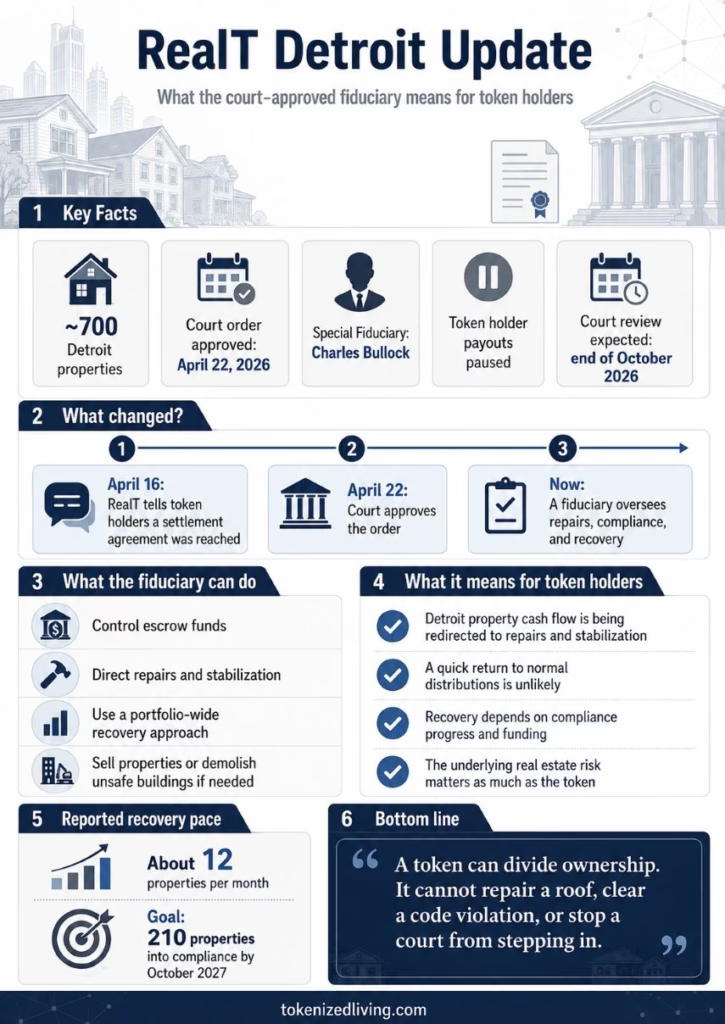
For RealT’s affected Detroit properties, the answer changed in April 2026. A court-approved agreement placed roughly 700 properties under special fiduciary Charles Bullock.
His role matters because property management, repair spending and asset sales can determine what remains for investors.
However, court oversight does not guarantee enough funding to repair every building. Nor does it establish when token holders will receive money.
TL;DR
- The fiduciary arrangement gave an outside decision-maker broad control over the Detroit portfolio.
- Repair funding and property conditions remain central to the outcome.
- RealT’s later liquidation announcement did not remove the existing oversight.
- Operational control and legal ownership are different questions.
- Investors need documented results before drawing conclusions about recovery.
What Powers Does the RealT Detroit Fiduciary Have?
A judge approved the agreement on April 22, 2026.
According to public reporting, Bullock can use escrowed rent for renovations, sell properties to raise funds and demolish dangerous buildings. Detroit officials also said eviction authority moved to him.
The reported repair priorities focused on occupied homes and emergency conditions.
These powers go beyond collecting rent or hiring contractors. They concern the future of the buildings themselves.
The full agreement was not public when the report appeared. Therefore, this account relies on Outlier Media’s reporting, republished by Michigan Public, rather than a review of its complete terms.
Control Does Not Mean Personal Ownership
The word “control” can cause confusion.
Authority to manage a property does not mean the fiduciary personally owns it. Equally, holding tokens does not necessarily give an investor power to direct repairs or approve a sale.
Several separate questions sit underneath the arrangement:
| Question | What investors need to establish |
|---|---|
| Who owns the building? | The recorded property owner |
| What does the token represent? | Rights defined by the offering documents |
| Who makes decisions? | Authority under agreements and court orders |
| Who receives available proceeds? | Entitlements after applicable obligations |
Investors should also avoid assuming that managing properties together automatically combines every issuing company’s assets and debts.
That conclusion requires evidence from the relevant documents and legal process. A description of portfolio-wide management is not enough.
Our RealT review explains the investment structure and the wider risks facing holders.
The Repair Funding Problem
Authority and funding are different things.
A fiduciary may have permission to commission repairs. The portfolio still needs cash to pay for them.
At the time of the April agreement reporting, officials described an escrow balance of slightly less than $640,000.
That is a historical reported balance, not a verified September account balance.
Assessing whether available money is sufficient requires more than dividing it by the number of properties. Buildings have different conditions, occupancy levels and repair needs.
A useful funding assessment would examine:
- Available cash and restrictions on its use.
- Outstanding contractor invoices.
- Emergency work that cannot wait.
- Expected rent collections.
- Insurance, taxes and other continuing expenses.
- The cost and likely proceeds of any proposed sales.
Without that information, neither optimism nor a precise recovery forecast is justified.
Repair Targets Are Not Completed Repairs
The original reporting described a goal of roughly 12 compliant properties per month, reaching 210 by October 2027.
Those figures describe a target. They do not establish completed work.
Investors need progress reports showing which properties received repairs, what the work cost and whether the relevant compliance requirements were satisfied.
Even then, compliance is only one part of the financial picture. A repaired building may still carry unpaid obligations or require further spending.
Conversely, a property’s poor condition does not reveal its eventual sale value without evidence about the local market and its liabilities.
The useful question is therefore specific: What has changed at this property, and what documents support that change?
How Do RealT’s Liquidation Plans Affect the Arrangement?
On July 2, 2026, co-founder Jean-Marc Jacobson announced that RealT intended to enter voluntary liquidation and sell assets.
July reporting said Bullock retained final authority over Detroit property sales. It also left questions about the plan’s scope and implementation unresolved. See Outlier Media’s liquidation report.
The announcement therefore should not be treated as a completed sale programme or an investor repayment schedule.
Different documents establish different stages of a transaction. A proposed sale, an approved sale and a completed closing are not interchangeable.
For the broader sequence of events, read our RealT Detroit lawsuit timeline.
Why Property Income May Not Reach Token Holders
Rent received from tenants is not automatically available for investor distributions.
A property needs money for its operating expenses. Repairs, insurance, taxes and other obligations can reduce the cash remaining. Court orders or agreements may also restrict how funds are used.
Therefore, an update showing rent collection would not, on its own, prove that distributions can resume.
Property sales require similar care.
The gross sale price is only the starting figure. Investors need to understand relevant debts, transaction costs and other obligations before estimating what might remain.
The exact treatment depends on the issuer, its documents and the applicable legal process.
A token balance records a holding. It does not establish the cash available to repay that holding.
What Does This Mean for Tenants?
Residents need safe homes and clear communication about repairs.
A change in oversight can alter who handles decisions, but it does not prove that work has happened. Repair notices, completed inspections and reliable contact arrangements provide more useful evidence.
Occupied properties also create responsibilities that extend beyond investor returns. Sales and management changes can affect residents’ housing stability.
Any assessment of the fiduciary’s progress should therefore consider both the condition of the homes and the financial position of the portfolio.
Improved investor reporting cannot substitute for improved living conditions.
What Investors Should Monitor
Existing holders can organise updates around four practical questions.
1. What decisions have been documented?
Look for court orders, fiduciary reports and formal notices. Separate these from commentary about what someone expects to happen.
2. What has happened to the relevant property?
Check for completed repairs, compliance records, sale notices and changes in management or ownership.
3. What has happened to the money?
Useful reporting should explain funds received, spending, remaining balances and outstanding obligations.
A headline about money raised provides limited insight without the accompanying costs.
4. What does this mean for the investment?
Connect each update to the exact issuing entity and offering documents. Keep purchase records, distribution statements and relevant correspondence together.
Where the documents leave important questions unanswered, seek legal advice about the specific holding and jurisdiction.
The October Court Report
Earlier reporting identified an expected progress report at the end of October 2026, when the judge would consider whether to extend the fiduciary’s term.
That is a court milestone, not a repayment deadline.
A useful report could clarify spending, completed work and the decisions still required. Its practical significance will depend on its contents and any subsequent court action.
Frequently Asked Questions
Does fiduciary control guarantee investor protection?
It creates oversight and decision-making authority. It cannot guarantee sufficient assets, successful repairs or full repayment.
Can investors assume all RealT properties face the same outcome?
No. Property conditions, liabilities and investment documents can differ. Broad portfolio announcements do not establish an identical result for every holding.
Does the fiduciary represent each token holder personally?
Investors should not assume that. The appointment’s terms define the role; holding tokens does not itself create a personal advisory relationship.
Will the original token price determine repayment?
It does not establish the amount available. Actual proceeds, obligations and investor rights matter.
What Would Meaningful Progress Look Like?
Meaningful progress would include documented repairs, clearer accounts and decisions supported by records.
For residents, that means safer homes and reliable management. For investors, it means evidence connecting property outcomes to their legal and financial position.
The fiduciary’s appointment is a significant change in authority. The result still depends on what happens to the buildings, the money and the obligations behind each investment.