
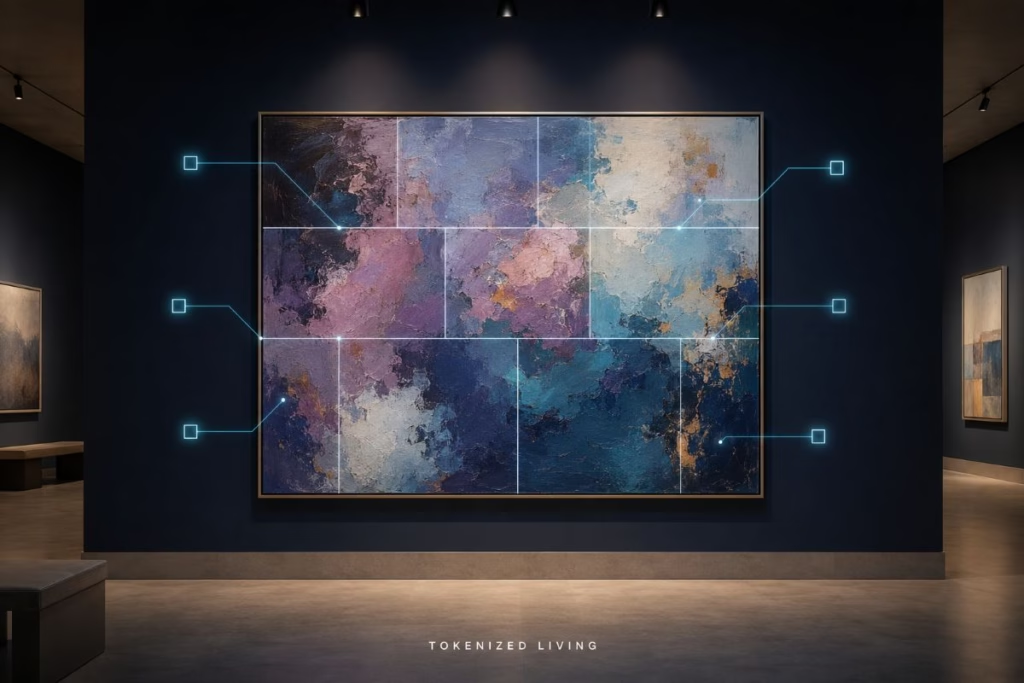
Art tokenization promises to make valuable artwork available to more investors.
Instead of buying an entire painting, you may be able to purchase a small digital share. That sounds simple. However, the legal reality can be far more complicated.
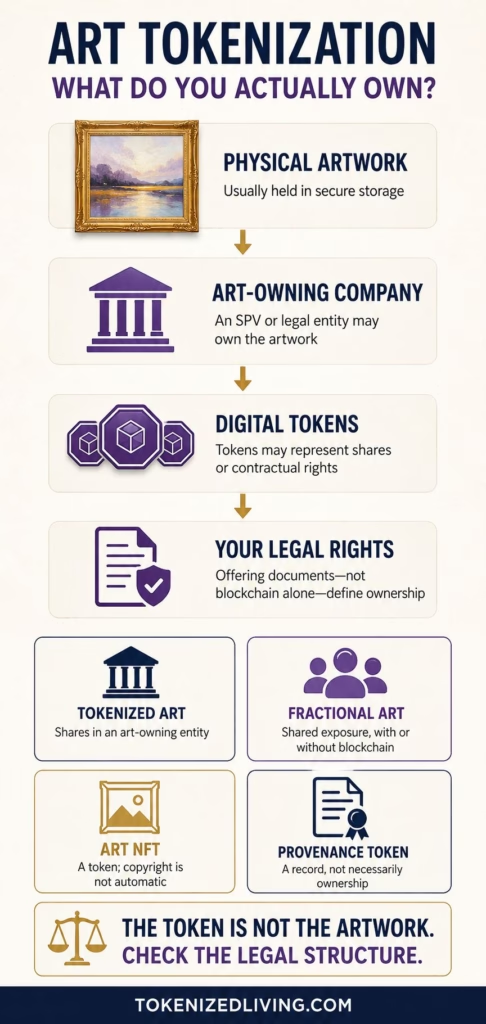
A token might represent shares in a company that owns an artwork. It could provide contractual rights linked to a painting. Alternatively, it may only act as a digital record.
Those structures do not give investors the same rights.
Therefore, the most important question is not, “Which artwork does this token represent?”
It is this:
What do I legally own?
This guide explains how art tokenization works, how it differs from ordinary fractional ownership, and which risks investors should examine.
TL;DR
- Art tokenization uses blockchain-based tokens to represent rights linked to artwork.
- The physical artwork usually remains off-chain.
- A company or special-purpose entity often owns the artwork.
- Investors may own shares in that entity instead of the painting itself.
- Fractional art ownership can exist without blockchain technology.
- Blockchain can improve recordkeeping, but it cannot prove that an artwork is genuine.
- Tokenization may support secondary trading. However, it does not guarantee liquidity.
- Art tokens may qualify as securities, depending on their structure and jurisdiction.
- Buying an NFT does not automatically transfer copyright or commercial rights.
- Fees, valuation, custody, insurance and manager control can affect investor returns.
The token is not the artwork. The legal agreement decides what you own.
What Is Art Tokenization?
Art tokenization is the process of creating blockchain-based tokens that represent rights, shares or economic interests linked to artwork.
The artwork may be a physical painting, sculpture or collectible. It could also be a digital work.
However, the physical asset does not move onto the blockchain. Instead, the blockchain records tokens connected to an off-chain legal structure.
For example, a company may purchase a painting. It can then issue shares linked to that asset. Digital tokens may represent those shares.
This makes art tokenization part of the wider real-world asset tokenization market.
Still, not every art token provides investment rights. Some only represent collectibles, membership benefits or provenance records.
Therefore, investors must examine the documents behind the token.
If you are new to the wider concept, our guide explains what tokenization means in plain English.
What Does an Art Investor Actually Own?
There is no single form of tokenized art ownership.
Different projects attach different rights to their tokens.
| Structure | What the buyer may own | What the buyer may not own |
|---|---|---|
| Tokenized physical art | Shares or membership interests in an art-owning company | A direct physical section of the painting |
| Fractional art shares | Conventional shares in a special-purpose company | A blockchain token |
| Art NFT | A unique blockchain token linked to digital content | Copyright or commercial rights, unless granted |
| Provenance token | A digital record linked to an artwork | An investment interest or ownership claim |
| Revenue-sharing token | Contractual rights to certain income | Legal title to the artwork |
In many cases, investors own an interest in a company. That company owns the artwork.
As a result, the investor’s rights come from company documents, securities terms and contractual agreements. They do not come from the blockchain alone.
Investors should check:
- Which legal entity owns the artwork
- Whether that entity has clear title
- What rights the token or share provides
- Who controls the sale of the artwork
- Whether investors receive voting rights
- How the platform calculates distributions
- What happens if the issuer fails
- Whether investors can transfer or replace tokens
Without clear answers, the word “ownership” means very little.
Art Tokenization Versus Fractional Art Ownership
People often use these terms as if they mean the same thing. They do not.
Fractional ownership means several investors share rights or financial exposure to one asset.
Tokenization describes how those rights get recorded, managed or transferred.
Therefore, fractional ownership can exist without blockchain technology.
Masterworks provides a useful example. Its SEC filings describe investors buying interests in special-purpose companies that invest in artworks. The filings do not describe blockchain tokens as part of that structure.
Investors still gain fractional exposure. However, they do so through conventional company shares.
The Masterworks SEC filing also warns that no public market may exist for those shares. Investors may never sell them above their original purchase price—or at all.
Tokenized fractional ownership adds a blockchain layer. Yet the underlying legal and investment risks remain.
How Does Art Tokenization Work?
Each platform uses a different structure. However, physical art tokenization often follows seven broad stages.
1. The artwork is selected
An issuer identifies a painting, sculpture or other collectible.
The selection process should examine the artist, sales history, condition and expected market demand. A famous name alone does not make an artwork a strong investment.
2. Experts examine the artwork
Specialists review the work’s authenticity, provenance and condition.
They may also provide a valuation. However, art valuation remains subjective. Two qualified experts can reach different conclusions.
Moreover, an appraisal does not guarantee the future selling price.
3. A legal entity acquires the artwork
A special-purpose vehicle, company or investment structure usually purchases the asset.
This step creates a legal barrier between the artwork and the platform’s wider business. However, the strength of that protection depends on the documents and jurisdiction.
Investors should confirm that the entity has valid title to the artwork.
4. The issuer creates investment units
The company divides the investment into shares, membership interests or other units.
Those units determine the investor’s economic and voting rights. They also explain how the company will distribute any sale proceeds.
5. Tokens represent those units
The issuer creates blockchain tokens linked to the investment units.
Smart contracts may control transfers or restrict access to approved wallets. In addition, the platform may use a transfer agent or off-chain register to maintain the official ownership record.
This creates an important distinction. The token may represent the investment without being the legal source of ownership.
6. Investors complete onboarding
Regulated offerings usually require identity and anti-money-laundering checks.
Some products also limit participation by country, wealth, income or professional-investor status. Consequently, tokenized art is rarely open to everyone.
7. The artwork is stored and eventually sold
A specialist custodian normally stores and insures the physical artwork.
Investors may receive proceeds after the manager sells it. Alternatively, they may try to sell their shares through a permitted secondary market.
However, neither exit route guarantees a buyer or a profit.
A Real Example of the Token and the Legal Rights Separating
A 2023 Freeport offering document provides an unusually clear example.
Under the proposed structure, separate company series would own individual artworks. Investors would purchase shares in the relevant series.
Ethereum-based tokens would then represent those shares.
However, the Freeport SEC filing stated that the tokens themselves would not give investors legal rights. The shares and registered ownership records would provide those rights.
It also explained that losing a token would not remove an investor’s interest. The platform could issue a replacement because the official share record still existed.
This example destroys a common misconception.
Owning the token and owning the legal investment are not always the same thing.
The same filing also warned that no liquid secondary market existed. Therefore, investors could have their money locked up for years.
Potential Benefits of Art Tokenization
Art tokenization can provide useful benefits when the structure works properly.
Still, every benefit depends on legal execution, market demand and platform quality.
Lower investment minimums
A valuable painting can cost millions of dollars.
Dividing its investment value into smaller units can reduce the entry price. As a result, more investors may gain exposure to the art market.
However, a smaller investment does not mean smaller product risk.
Greater portfolio flexibility
Fractional access may let investors spread money across several artists or periods.
That could provide more diversification than buying one expensive artwork. Nevertheless, owning several related art investments does not create broad portfolio diversification.
All of them can still suffer during a weak art market.
More efficient recordkeeping
Blockchain can maintain a visible record of token creation and transfers.
Smart contracts may also automate transfer restrictions and ownership updates. Therefore, platforms could reduce some manual administration.
However, an accurate blockchain record can still contain false off-chain information.
Potential secondary trading
Tokens can make interests easier to transfer from a technical perspective.
Yet technology only provides the infrastructure. Real liquidity requires active buyers, fair prices and legal permission to trade.
A marketplace with no buyers is not a liquid market.
New funding options
Artists, galleries and collectors may use tokenization to raise capital against artwork.
In some structures, artists could also receive resale payments. However, royalties do not appear automatically because a token exists.
The offering agreement or smart contract must specifically create and enforce them.
Blockchain Does Not Prove Authenticity
Blockchain records can help track transactions after someone creates a token.
However, blockchain cannot inspect a painting. It cannot confirm the artist, detect restoration or prove the ownership history before tokenization.
If someone enters false information, the blockchain may preserve that false information permanently.
The joint NFT report from the US Copyright Office and USPTO made the same basic point. An immutable record remains vulnerable to incorrect information at the moment of creation.
Therefore, investors still need:
- Qualified art experts
- Provenance documents
- Condition reports
- Independent appraisals
- Legal title checks
- Insurance records
- Secure physical storage
Blockchain can support these processes. It cannot replace them.
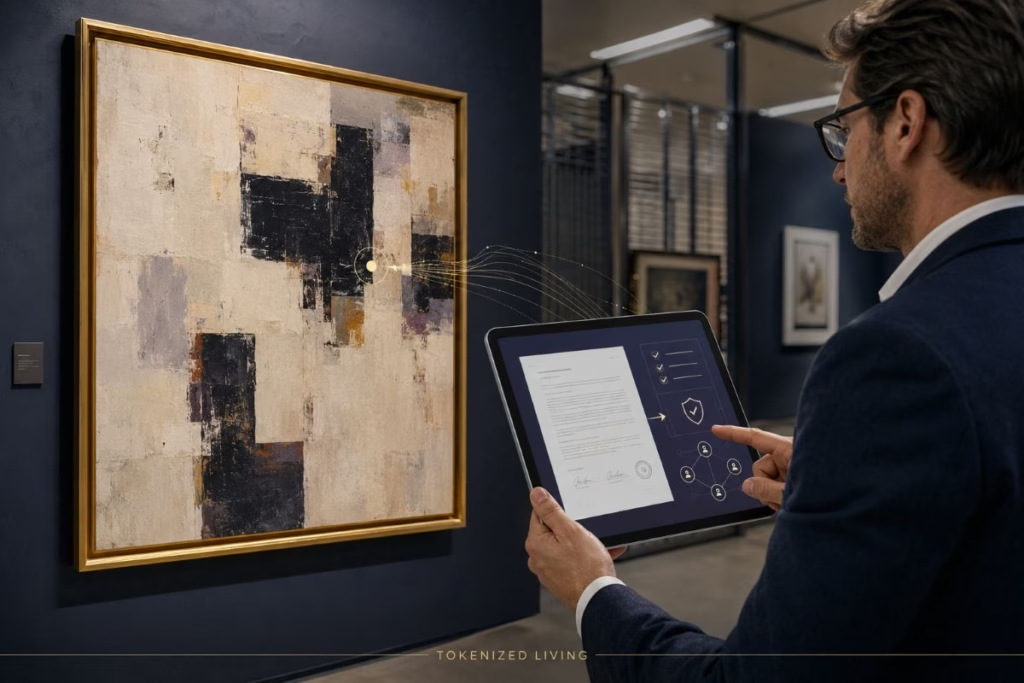
Real Examples of Fractional and Tokenized Art
These examples show how different structures can produce very different investor rights.
They are structural examples, not platform recommendations. Investment availability may also change.
Sygnum and the tokenized Picasso
In 2021, Sygnum Bank and Artemundi tokenized Picasso’s Fillette au béret.
The painting carried a CHF 4 million valuation. The project issued 4,000 Art Security Tokens, with a CHF 5,000 minimum subscription.
However, the offer targeted professional and institutional investors. It was not an unrestricted retail NFT sale.
According to Sygnum’s announcement, Swiss law recognized each token holder’s ownership share. Investors could also trade the tokens through Sygnum’s platform.
This case shows what regulated art tokenization can look like. It also shows why “anyone can buy” is an inaccurate claim.
Freeport and tokenized company shares
Freeport proposed using separate company series to own works by artists such as Andy Warhol.
Investors would buy shares in a series. Blockchain tokens would represent those shares.
However, the company’s legal documents and transfer agent would maintain the enforceable ownership record. The token itself would not create the investor’s rights.
Masterworks and non-tokenized fractional art
Masterworks shows that fractional art investing does not require blockchain.
Investors purchase interests in special-purpose companies connected to artworks. The platform manages the acquisition, storage and eventual sale.
Its filings also describe major risks involving valuation, authenticity, insurance and limited liquidity.
The comparison matters because tokenization is a tool. It does not create fractional ownership by itself.
Art Tokens Versus Art NFTs
Art tokens and art NFTs often serve different purposes.
A fractional physical-art investment may use fungible security tokens. Each token in the same offering can represent an equal economic interest.
An NFT is usually unique. It may link to a digital image, animation, membership or collectible.
Most importantly, buying an NFT does not automatically transfer copyright.
The buyer only receives the rights stated in the licence or sales agreement. Those rights might include personal display, commercial use or nothing beyond control of the token.
The US Copyright Office and USPTO report found that consumer education and product transparency remain important. Buyers cannot assume an NFT proves ownership of the associated intellectual property.
Therefore, investors should separate three things:
- Ownership of the token
- Ownership of the physical or digital artwork
- Ownership of copyright and commercial rights
One purchase does not automatically include all three.
Regulation of Tokenized Art
Many fractional art products look and behave like investments.
Investors contribute money, rely on a manager and hope to profit when the artwork appreciates. Depending on the structure, regulators may treat these interests as securities.
Blockchain technology does not remove those obligations.
SEC Commissioner Hester Peirce summarized the issue clearly:
“Tokenized securities are still securities.”
Her statement on tokenized securities also stressed that blockchain cannot change the underlying nature of an asset.
As a result, issuers may need to address:
- Securities registration or exemptions
- Investor eligibility
- Identity and anti-money-laundering checks
- Marketing and disclosure rules
- Transfer restrictions
- Custody requirements
- Tax reporting
- Consumer-protection laws
Rules vary between countries. Therefore, access in one jurisdiction does not guarantee access elsewhere.
The Risks Most Art Tokenization Articles Ignore
Tokenization can change how investors access art. It cannot remove the underlying risks.
Unclear legal ownership
Some projects use vague phrases such as “own a piece of the artwork.”
That statement may only mean economic exposure through a company. Investors should demand a precise description of their legal rights.
Limited liquidity
Artwork can take months or years to sell.
Tokenized shares may also face lockups, transfer restrictions and weak buyer demand. Therefore, investors should never depend on a quick exit.
Subjective valuations
Art does not trade on one transparent global exchange.
Appraisals can rely on private sales, auction records, condition and expert opinion. As a result, the displayed valuation may differ greatly from the final selling price.
High fees
Art investments can include sourcing, management, storage, insurance and sales fees.
Some platforms also take a share of profits. Others issue additional equity to managers, which can dilute existing investors.
Investors should calculate returns after every fee.
Manager control
The platform or asset manager may decide when to sell the artwork.
Individual investors often have little influence over that decision. Consequently, they may need to accept a longer holding period than expected.
Authenticity and provenance risk
Forged documents, uncertain attribution or later expert opinions can reduce an artwork’s value.
Blockchain does not eliminate these risks because they originate outside the network.
Storage and insurance risk
Physical art requires secure storage and specialist care.
Fire, theft, water damage or poor handling can affect its value. Insurance may help, but policies can contain exclusions or coverage limits.
Platform failure
An art platform can fail even when the underlying painting still exists.
Investors then need clear legal procedures for replacing the manager, accessing records and selling the asset.
A strong bankruptcy-remote structure can help. However, investors should never assume one exists.
No regular income
Most artwork does not produce rent, interest or dividends.
Returns often depend on a future sale at a higher price. Therefore, investors may wait years without receiving cash flow.
Tax complexity
Tax treatment depends on the investor’s location and the product structure.
Gains may face securities, capital-gains, corporate or collectible-asset rules. Cross-border offerings can create additional reporting problems.
These problems are not unique to art. Many of the same legal, custody, platform and liquidity issues appear in the risks of tokenized real estate.
Art Tokenization Due-Diligence Checklist
Before investing, ask these questions:
- Who legally owns the artwork?
- What exactly does the token represent?
- Which document creates my rights?
- Has an independent expert authenticated the artwork?
- Who provided the valuation?
- Where is the artwork stored?
- Does adequate insurance cover it?
- Who controls the eventual sale?
- Can the manager issue more shares?
- What fees apply before and after the sale?
- Is secondary trading already active?
- Which transfer restrictions apply?
- What happens if the platform closes?
- Do I receive voting or information rights?
- Does the investment produce income?
- Which laws and taxes apply to me?
If a platform cannot answer these questions clearly, avoid it.
A beautiful asset does not excuse an ugly investment structure.
Is Tokenized Art a Sensible Investment?
Tokenized art may suit investors who understand alternative assets and can accept a long holding period.
It could provide access to artworks that would otherwise remain unaffordable. In addition, well-designed structures may improve records and simplify ownership transfers.
However, tokenized art remains a speculative investment.
The wider art market reached an estimated $59.6 billion in 2025, according to the Art Basel and UBS Global Art Market Report 2026. Yet that figure covers the broader art market. It does not measure tokenized-art adoption or guarantee investment growth.
Moreover, art produces no dependable cash flow. Returns depend heavily on valuation, timing, fees and buyer demand.
Therefore, investors should not use money they may need soon. They should also avoid treating tokenized art as a replacement for a diversified portfolio.
Final Thoughts
Art tokenization can lower financial barriers and modernize ownership records.
However, it does not turn paintings into liquid crypto assets. Nor does it remove appraisers, custodians, insurers, lawyers, managers or regulators.
In fact, a credible offering often needs all of them.
The strongest projects will connect blockchain records to clear legal rights, professional custody and honest disclosures. Weak projects will rely on attractive artwork and vague promises of democratization.
Investors should ignore the hype and inspect the structure.
The artwork may attract your attention.
The legal claim should decide whether the investment deserves your money.
FAQs About Art Tokenization
Can anyone invest in tokenized art?
No. Some offerings restrict investors by country, income, wealth or professional status. Most regulated platforms also require identity checks.
Does an art token mean I own part of the painting?
Not necessarily. You may own shares in a company that owns the painting. The offering documents explain your actual rights.
Can I sell an art token whenever I want?
No. Transfer restrictions and limited buyer demand may prevent a quick sale. Never assume a token guarantees liquidity.
Is tokenized art the same as an NFT?
No. Tokenized physical art may involve regulated investment tokens. An NFT usually represents a unique digital token linked to content or benefits.
Does blockchain prove that an artwork is authentic?
No. Blockchain can preserve a record, but it cannot verify whether the original information was accurate.
Do artists receive royalties from token sales?
Only when the contract or smart contract creates that right. Tokenization does not automatically give artists resale royalties.
How do investors make money from tokenized art?
Returns usually depend on selling the artwork or investment interest at a higher price. Fees, taxes and expenses reduce any profit.
Is art tokenization regulated?
It can be. Fractional interests may qualify as securities or other regulated investments. The treatment depends on the legal structure and jurisdiction.
This article provides general educational information. It does not provide financial, legal or tax advice.