
Updated August 2026
TL;DR
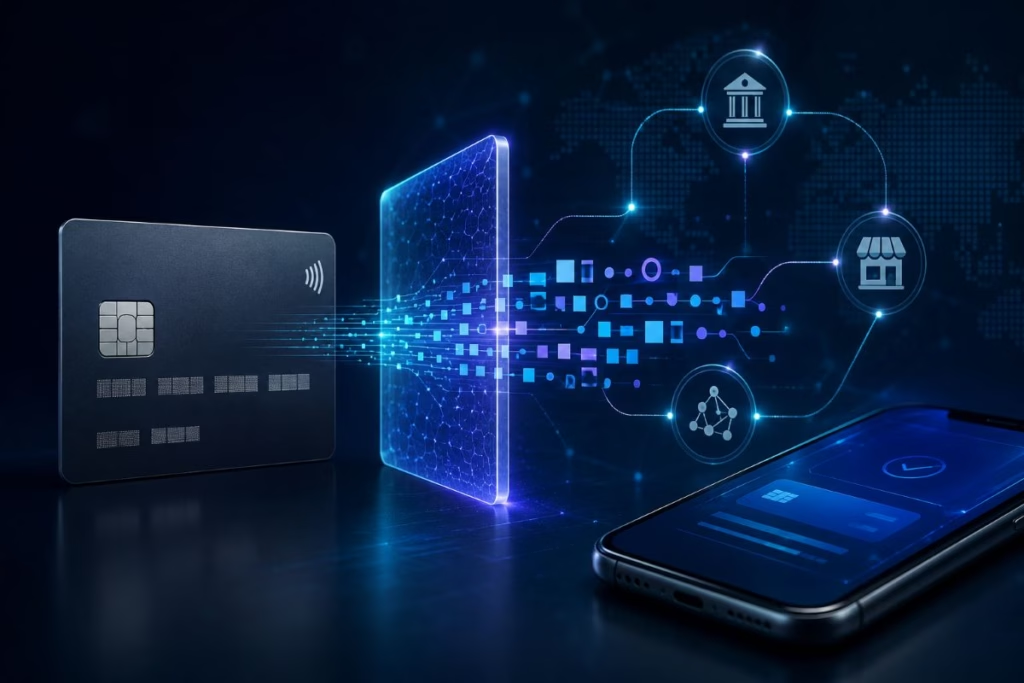
Payment tokenization replaces a card’s primary account number with a substitute digital credential.
The token can be restricted to a specific merchant, device or payment situation. Therefore, stolen token data may have far less value than an exposed card number.
Visa operates Visa Token Service, while Mastercard uses Mastercard Digital Enablement Service. Both connect banks, merchants, payment providers and digital wallets.
However, payment tokens are not cryptocurrencies. They do not represent ownership, carry investment value or require a public blockchain.
Tokenization can reduce fraud and improve payment approval rates. Nevertheless, it cannot prevent every scam, account takeover or merchant dispute.
Saving a card in a shopping app feels simple. You enter the details once, and future payments take seconds.
Behind that convenience, the merchant may not continue using your actual card number. Instead, the payment system can replace it with a token.
That process is known as payment tokenization.
Visa and Mastercard now use network tokens across digital wallets, subscription services and online checkouts. As adoption grows, manual card entry may become much less common.
Yet the word “tokenization” creates confusion. A payment token does not work like a stablecoin, cryptocurrency or tokenized property investment.
This guide explains the difference.
What Is Payment Tokenization?
Payment tokenization replaces sensitive card information with an alternative value called a payment token.
The original card number is known as the primary account number, or PAN. It normally contains between 16 and 19 digits.
Instead of passing that PAN through every part of a digital transaction, the payment system uses a substitute credential.
According to EMVCo, an EMV payment token can be limited to a particular merchant, device or payment scenario. These restrictions make the credential less useful outside its intended environment.
For example, a token issued for a mobile wallet on one phone may not work from another device. Likewise, a merchant-specific token may become useless if someone tries to use it elsewhere.
This is different from the broader meaning covered in our plain-English guide to tokenization. In asset markets, a token may represent ownership rights or a financial claim. Payment tokens simply protect payment credentials.
A Simple Payment Tokenization Example
Imagine that you add a Visa card to a digital wallet.
The wallet does not need to expose your real card number whenever you buy something. Instead, Visa can issue a separate digital credential for that wallet and device.
When you make a payment, the merchant receives the substitute credential rather than your original PAN.
The transaction still travels through the normal payment network. Meanwhile, the card issuer can identify the account connected to the token and decide whether to approve the purchase.
If someone steals the token, usage controls can prevent it from working through another merchant, wallet or device.
The system protects the account number without forcing the customer to change how they shop.
How Payment Tokenization Works
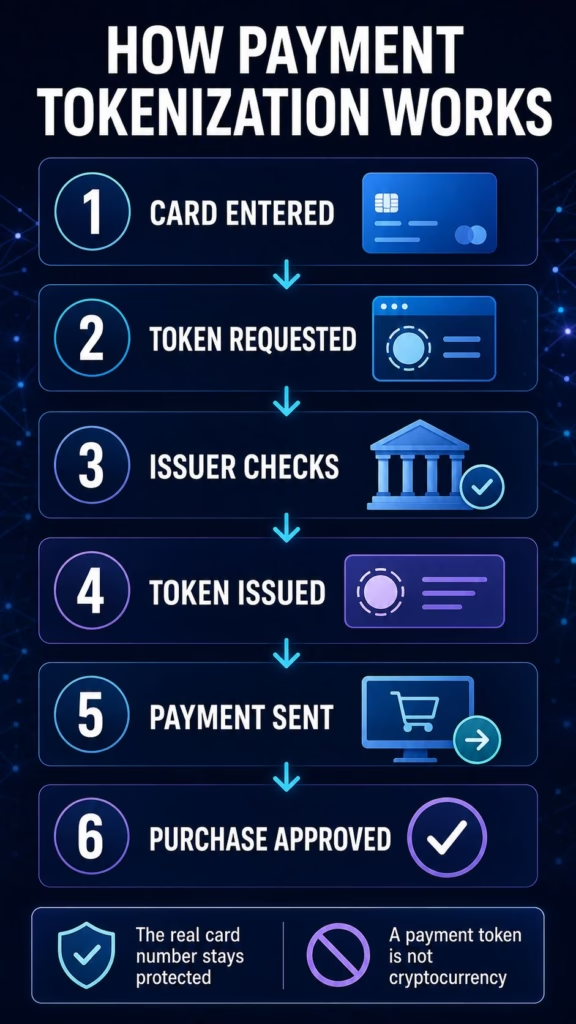
The exact process varies between providers. However, a network-tokenized payment normally follows these stages.
1. The Customer Provides Card Details
A customer adds a card to a digital wallet, saves it with a merchant or selects a tokenized checkout service.
The card details must enter a secure environment during the initial enrollment.
2. A Token Request Is Submitted
The wallet, merchant or payment provider requests a token from a token service provider.
Visa and Mastercard can perform this role through their respective tokenization platforms.
3. The Issuer Checks the Request
The card network and issuing bank assess the request.
They may examine the device, account status, requesting business and other risk signals before approving token creation.
4. The Token Is Issued
Once approved, the payment system generates a substitute credential.
The token may include controls that restrict where and how it works. It can also have its own lifecycle and status.
5. The Customer Makes a Payment
The merchant sends the token through the payment chain instead of transmitting the original PAN.
For some payment types, an additional cryptogram helps prove that the transaction came from an authorized device or payment environment.
6. The Issuer Authorizes or Declines the Purchase
The payment network connects the token to the underlying account.
The issuer then applies its normal checks before approving or rejecting the transaction.
Tokenization protects the credential. It does not guarantee that every purchase will succeed.
Network Tokens Versus Merchant Tokens
Not every payment token works at the same level.
A merchant or payment processor can replace stored card data with a token that only works inside its own system. This approach reduces the amount of raw card information held in merchant databases.
However, that token may stop at the merchant or processor.
A network token can travel through the wider payment chain. Card networks issue and manage these credentials in cooperation with banks, wallets, merchants and payment providers.
Network tokens can also remain linked to current account information. Therefore, a subscription may continue working after a card expires or receives a routine replacement.
That does not happen automatically in every situation. Support depends on the issuer, network, merchant and reason for the replacement.
Payment Tokens Are Not Always Changing Numbers
The phrase “dynamic token” can be misleading.
A network token may remain stable for a particular merchant or device. The system can reuse that credential for future transactions.
However, the security data accompanying each purchase may change. For example, mobile-wallet payments can include a unique cryptogram for individual transactions.
Therefore, the token and the transaction cryptogram perform different jobs.
The token replaces the card number. The cryptogram helps confirm that a particular payment is legitimate.
Payment Tokenization Versus Encryption
Tokenization and encryption both protect sensitive information, but they are not identical.
| Method | What it does | How the original data returns |
|---|---|---|
| Payment tokenization | Replaces a card number with a substitute credential | An authorized token service connects the token to the account |
| Encryption | Converts readable information into protected ciphertext | A system uses the correct decryption key |
| Masking | Hides part of the number from view | The underlying data remains stored elsewhere |
Calling every payment token “encrypted card data” oversimplifies the technology.
A token usually has no mathematical relationship that an attacker can reverse to reveal the original PAN. Instead, authorized systems maintain the connection between the token and account.
Encryption can still protect information elsewhere in the payment process. The two methods often work together.
How Visa Tokenization Works
Visa Token Service, or VTS, substitutes Visa card numbers with digital tokens.
The platform connects participating issuers, merchants, technology companies, digital wallets and payment service providers. It supports mobile wallets, cards stored with merchants and other digital payment experiences.
Visa says it has provisioned 10 billion network tokens since launching its tokenization services. The company also reports that tokenization saved an estimated $650 million in fraud during the year measured by its internal VisaNet data. Visa publishes the figures and methodology on its tokenization page.
Visa has also reported average performance differences between tokenized online payments and payments using ordinary card numbers. Its commercial analysis found approximately:
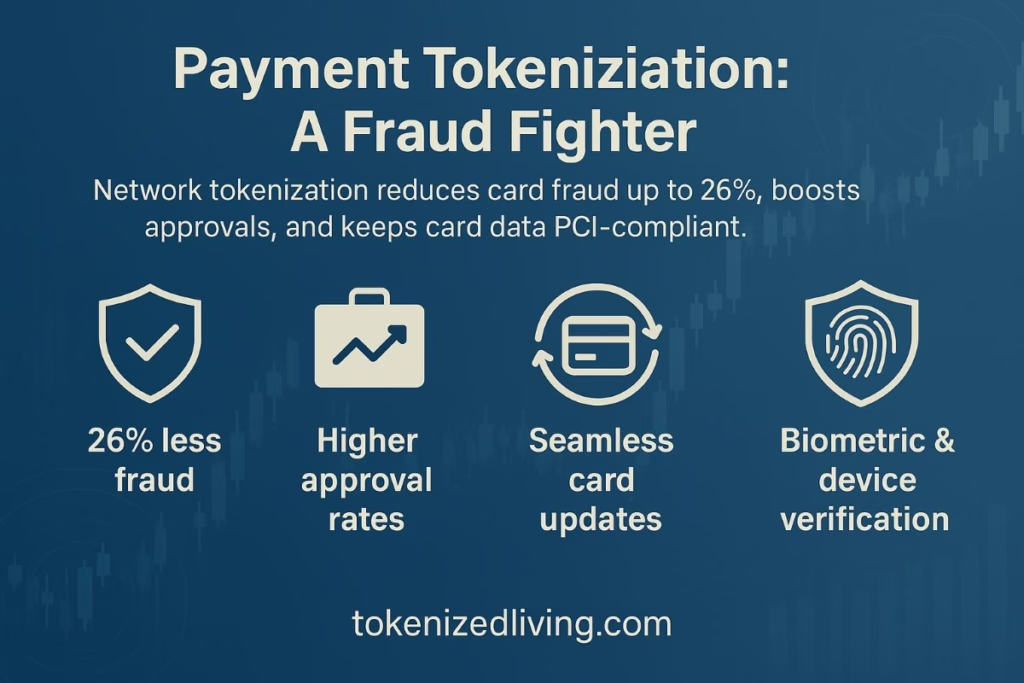
- 30% lower online fraud
- 4% higher authorization rates
- more than a 3% authorization lift for card-not-present transactions
These figures come from Visa’s own network analysis. They should not be treated as guaranteed results for every merchant, country or payment type. Visa explains its findings here.
How Mastercard Tokenization Works
Mastercard operates the Mastercard Digital Enablement Service, commonly called MDES.
MDES replaces eligible card numbers with digital credentials that can work across supported wallets, devices and merchant systems.
A token can be specific to the platform, wallet or device receiving it. As a result, exposing one credential does not necessarily compromise every way the customer uses that card.
Mastercard also combines tokenization with Click to Pay, Secure Card on File and payment passkeys.
The company has set a target of tokenizing 100% of e-commerce transactions in Europe by 2030. Its progress shows how quickly network tokens are moving into ordinary checkout systems.
| Date | Mastercard’s reported European progress |
|---|---|
| June 2024 | Mastercard announces its 100% e-commerce tokenization target |
| June 2025 | Nearly half of European e-commerce transactions are tokenized |
| June 2026 | Three in five transactions are tokenized |
| 2030 | Target date for 100% tokenization |
By June 2026, Mastercard said Secure Card on File was operating in 45 European countries and territories. Click to Pay had also reached 32 European markets.
These remain company-reported figures rather than independent measurements. However, they demonstrate substantial growth within Mastercard’s European network. Mastercard’s 2026 progress report provides the latest details.
Visa Versus Mastercard Payment Tokenization
Visa and Mastercard use different platforms. Nevertheless, their basic objectives are similar.
| Feature | Visa | Mastercard |
|---|---|---|
| Main platform | Visa Token Service | Mastercard Digital Enablement Service |
| Sensitive credential replaced | Visa card PAN | Mastercard account PAN |
| Common uses | Digital wallets, stored cards and online payments | Digital wallets, stored cards and online payments |
| Token controls | May restrict use by merchant, device or payment scenario | May restrict use by platform, wallet, device or merchant |
| Checkout development | Click to Pay and payment passkeys | Click to Pay and payment passkeys |
| Reported scale | 10 billion network tokens provisioned since launch | Three in five European e-commerce transactions tokenized in 2026 |
These numbers are not directly comparable.
Visa reports the total number of tokens provisioned. Mastercard’s European figure measures the share of transactions using tokenized credentials.
More importantly, neither service turns a card balance into a cryptocurrency. Both protect conventional payment accounts.
Why Payment Tokens Can Reduce Fraud
Payment tokenization does not make fraud disappear. However, it can remove one of a criminal’s most valuable targets.
Stolen Tokens Have Limited Use
A raw card number may work across many websites.
By contrast, a token can be restricted to one merchant, device or payment environment. Data stolen from one location may fail somewhere else.
Merchants Handle Less Raw Card Data
Network tokens reduce the need to store and repeatedly transmit PANs.
Consequently, a merchant database breach may expose fewer reusable card credentials.
Cryptograms Add Transaction-Level Protection
Some tokenized payments include a unique cryptographic value for each transaction.
This provides an additional signal that the payment came from an expected device or environment.
Credential Updates Can Prevent Avoidable Declines
Networks can update eligible tokens when underlying card information changes.
That feature benefits subscription companies and other businesses that rely on stored payment credentials.
Issuers Receive Better Context
Tokenized transactions can carry information about the merchant, device and token status.
Issuers can use those signals when deciding whether a payment appears legitimate.
However, performance varies. A merchant should not assume that adopting tokens will automatically produce a specific percentage reduction in fraud.
How Payment Tokenization Benefits Consumers
Most consumers do not need to activate tokenization manually.
The technology often operates behind digital wallets, shopping apps and stored-card services.
Potential advantages include:
- less exposure of the original card number
- faster online checkout
- fewer interruptions after routine card updates
- safer use of phones and connected devices
- fewer legitimate payments incorrectly declined
Consumers may already use tokenized payments without recognizing them.
Adding a card to Apple Pay or another supported mobile wallet commonly creates a device-specific payment credential. Likewise, Click to Pay can use tokenized card details during online checkout.
How It Benefits Merchants
Merchants care about security, but they also care about successful sales.
A payment that looks suspicious may be declined even when the customer is genuine. Token status and device information can help issuers make better decisions.
Tokenization can also reduce exposure to stored card numbers. However, it does not automatically remove every security obligation.
The PCI Data Security Standard applies to environments where organizations store, process or transmit payment account data. Replacing PANs can reduce the number of systems handling that information.
Nevertheless, merchants should not declare themselves outside PCI DSS merely because they use tokens. Their exact scope depends on how payment information enters, moves through and remains within their systems.
Payment Passkeys and Biometrics
Tokenization protects the payment credential.
Authentication asks a separate question:
Is the person attempting this payment authorized to use it?
Payment passkeys can use a fingerprint, face scan or device security control to confirm the user. This may replace passwords and one-time codes during supported checkout flows.
Visa and Mastercard are both expanding passkey-based payment services.
Combining the technologies creates two layers:
- The token limits exposure of the card number.
- The passkey helps authenticate the customer.
One should not be confused with the other.
A token cannot prove that the person controlling an account is honest. Similarly, biometric authentication does not remove the need to protect payment credentials.
What Payment Tokenization Cannot Prevent
Payment tokenization is useful, but old marketing claims often oversell it.
It cannot independently stop:
- account takeover before token provisioning
- social-engineering scams
- authorized push-payment fraud
- dishonest merchants
- chargeback abuse
- malware controlling an authenticated device
- stolen goods purchased through a legitimate account
- poor security elsewhere in the payment chain
Criminals adapt.
For that reason, issuers and merchants still need risk monitoring, device analysis, authentication, transaction controls and customer support.
Tokenization forms one part of a broader security system.
Is Payment Tokenization Based on Blockchain?
Usually, no.
Visa Token Service and Mastercard Digital Enablement Service work through existing payment infrastructure. Their tokens protect card credentials as transactions move between merchants, processors, networks and issuers.
A blockchain token performs a different role.
| Token type | Main purpose | Investment value |
|---|---|---|
| Payment token | Protects a payment credential | None |
| Stablecoin | Represents a digital unit designed to maintain a stable value | May hold transferable value |
| Tokenized deposit | Represents a claim against a commercial bank | Holds monetary value |
| Security or RWA token | Represents investment rights or financial claims | Depends on the underlying structure |
| NFT | Represents a unique digital record or asset identifier | Depends on rights and demand |
If you are researching blockchain-based investments, our beginner’s guide to RWA tokenization covers that separate market.
Visa itself illustrates why the distinction matters.
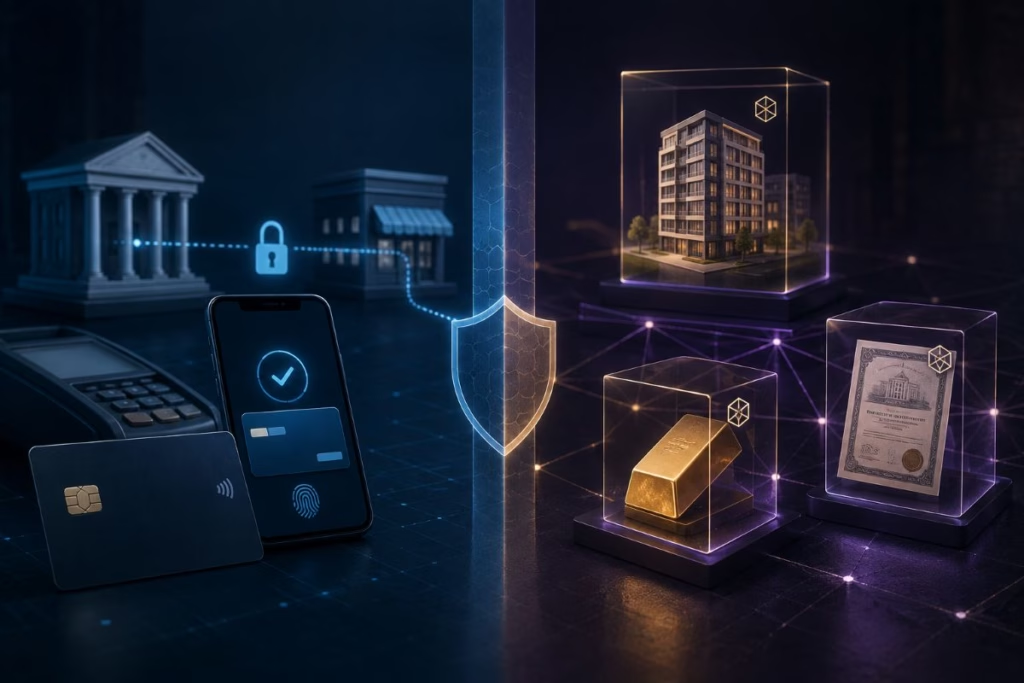
Visa Token Service protects card credentials. Meanwhile, the separate Visa Tokenized Asset Platform helps selected financial institutions test fiat-backed tokens on blockchain networks.
VTAP can support tokenized deposits and stablecoin-related use cases. It is not the system that replaces your card number during an ordinary online purchase. Visa’s VTAP documentation explains that separate platform.
Our guide to tokenized bank deposits explores how blockchain-based commercial bank money differs from stablecoins and payment tokens.
The Future of Payment Tokenization
Card numbers are unlikely to disappear from bank accounts by 2030.
However, consumers may enter them less frequently.
Digital wallets, cards stored with merchants and one-click checkout services can place network tokens between the customer and merchant. Passkeys may also reduce dependence on passwords and text-message codes.
EMVCo continues to update the common technical framework that supports payment tokenization. It published version 2.4 of its Payment Tokenisation Specification in July 2026.
Meanwhile, Mastercard is pushing toward full European e-commerce tokenization. Visa continues expanding its global token infrastructure.
The direction is clear: payment credentials are becoming less visible during everyday commerce.
Still, adoption will not occur evenly. Merchants must upgrade their payment systems, banks must support provisioning, and consumers need compatible devices and services.
Final Verdict
Payment tokenization is not blockchain investing dressed up as payment technology.
It is a practical security layer built around ordinary card accounts.
Visa Token Service and Mastercard Digital Enablement Service replace sensitive card numbers with controlled digital credentials. This can reduce the value of stolen data, support smoother card updates and provide issuers with stronger transaction signals.
However, tokenization does not eliminate fraud or compliance duties.
Its value comes from reducing unnecessary exposure of the PAN while preserving a familiar payment experience.
For consumers, the process often remains invisible.
For criminals, the stolen information becomes harder to reuse.
Frequently Asked Questions
What does payment tokenization mean?
Payment tokenization replaces a card’s primary account number with a substitute digital credential. The token can be restricted to a particular merchant, device or payment situation.
Is a payment token a cryptocurrency?
No. A payment token does not normally use a public blockchain, hold investment value or represent ownership. It protects an existing payment credential.
Does Apple Pay use payment tokenization?
Supported mobile wallets commonly use device-specific network tokens. The wallet presents the token instead of repeatedly exposing the original card number.
Can someone use a stolen payment token?
Usage controls make many tokens difficult to reuse elsewhere. However, no security control is perfect. The result depends on the token type, restrictions and circumstances of the theft.
What is the difference between tokenization and encryption?
Encryption transforms data using an encryption key. Tokenization replaces sensitive data with a substitute value connected through an authorized token system.
Does tokenization stop all payment fraud?
No. It reduces exposure of card numbers but cannot prevent every account takeover, scam, compromised device or dishonest transaction.
What is the difference between Visa and Mastercard tokenization?
Visa uses Visa Token Service, while Mastercard uses Mastercard Digital Enablement Service. Both replace eligible card numbers with digital payment credentials.
Will subscriptions continue after a card expires?
Eligible network tokens can receive updated account information after routine card changes. However, support varies between issuers, networks, merchants and replacement circumstances.
Does tokenization remove PCI DSS requirements?
Not automatically. It may reduce the systems handling card numbers, but merchants must still assess their complete payment environment and applicable PCI DSS obligations.