

If you want to understand how Reental works, start with one simple point.
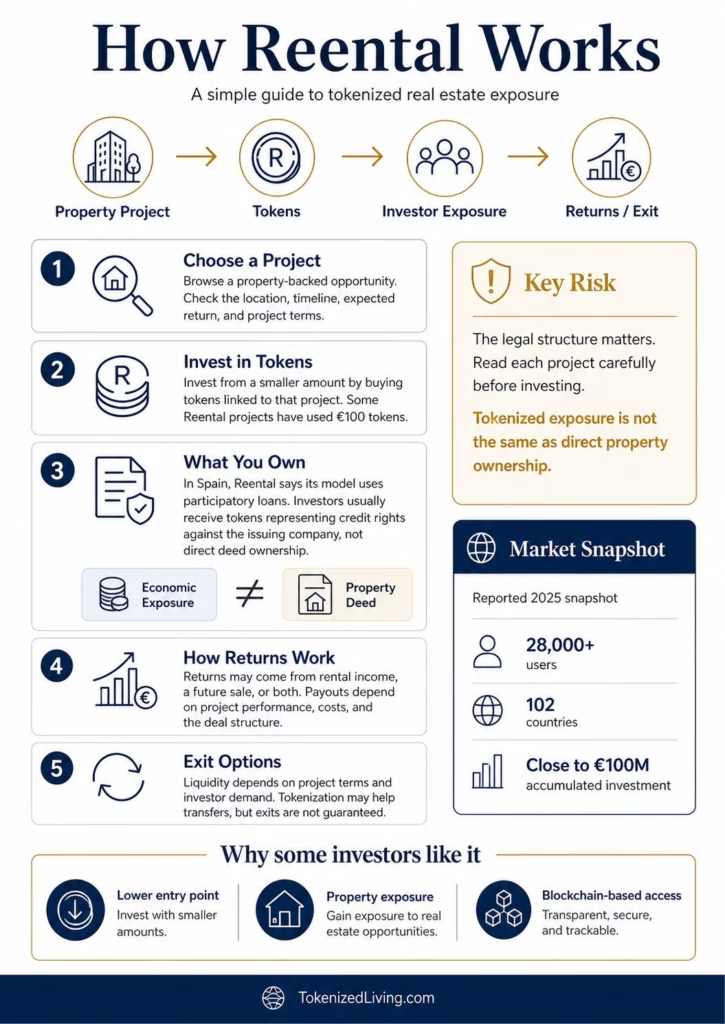
Reental does not usually mean you are buying your name onto a property deed. Instead, the platform gives investors tokenized exposure to real estate projects.
That difference matters.
The token is only the digital wrapper. The real question is what sits behind it. In Reental’s Spanish model, the structure uses participatory loans. Investors receive tokens that represent credit rights against the issuing company.
That may sound technical. But it is important.
You are not just buying “real estate on the blockchain.” You are buying a financial claim linked to a property project. That claim depends on the documents, the issuer, the property, and the project result.
So this guide explains how Reental works in plain English. It also covers what investors actually own, how returns may be paid, and the risks that deserve real attention.
To understand the bigger picture, start with our guide to tokenized real estate.
TL;DR
Reental lets investors access real estate projects through tokens.
In Spain, Reental says its model uses participatory loans. Investors receive STO tokens that represent credit rights against the issuing company.
That means you generally get project-linked economic exposure. You do not automatically get direct deed ownership.
Reental has also grown beyond the small-test stage. A December 2025 report from Cinco Días said the platform had launched 30 projects in 2025, reached more than 28,000 users across 102 countries, and was approaching €100 million in accumulated investment.
That traction is worth noting. However, it does not remove risk.
Returns still depend on property performance, costs, project structure, and exit conditions.
Affiliate Disclosure
This article may contain affiliate links. If you use them, we may earn a commission at no extra cost to you. We only recommend platforms we have researched carefully. We also explain the risks clearly, because tokenized real estate is not risk-free.
What Is Reental?
Reental is a tokenized real estate investment platform. It allows users to invest in property-linked projects without buying a whole building, apartment, or commercial unit.
The basic idea is simple.
Instead of needing a large amount of capital to buy a property, investors can buy tokens linked to a specific project.
However, the legal structure is where the real story begins.
Reental’s own FAQ says that, in Spain, each issue uses a participatory loan. It also says investors receive STO tokens that represent credit rights against the issuing company.
That means the investor usually holds a tokenized financial claim. The investor does not usually hold direct title to the property.
This is not automatically a problem. In fact, it may make the structure easier to manage.
But investors should understand the difference.
Owning a token linked to a property project is not the same as owning the property itself.
How Reental Works Step by Step
1. You choose a real estate project
Reental lists individual real estate projects on its platform. Each project has its own details.
These may include:
- location
- property type
- investment amount
- estimated timeline
- expected return
- project strategy
- payout structure
- exit plan
This is where investors need to slow down.
A good-looking projected return does not tell the whole story. You need to know how the project plans to create that return.
Is it based on rent?
Was it based on a future sale?
Is it based on renovation and resale?
Is it a mix of all three?
Every project should be treated like a separate investment.
That is the first rule.
2. You complete onboarding
Reental works with real-world assets. That usually means users need to complete identity checks.
This may feel annoying if you come from crypto. But it is normal in regulated or semi-regulated real-world asset platforms.
If a platform offers property exposure without asking who you are, that should raise questions.
Real estate is not a meme coin. It involves legal entities, contracts, payments, tax issues, and investor records.
So onboarding is part of the process.
3. You buy tokens linked to the project
After choosing a project, investors buy tokens linked to that specific deal.
The token represents the investor’s position under the project structure.
In Reental’s Spanish model, this usually means a credit right against the issuing company through a participatory loan structure.
That is a key detail.
The token is not magic. It does not replace the legal agreement. It represents rights created by that agreement.
So the real value comes from:
- the issuing company
- the project documents
- the property strategy
- the expected cashflow
- the exit plan
- the legal structure
The blockchain layer may make recordkeeping and transfers easier. But the property economics still matter most.
4. The project uses investor capital
Once funded, the project uses investor capital according to its stated plan.
That may involve buying a property, renovating a unit, refinancing part of a deal, or supporting a development project.
This is where execution risk appears.
A spreadsheet can look clean. Real estate rarely behaves that way.
Renovations can cost more than expected. Sales can take longer. Tenants can leave. Local rules can slow progress. Financing conditions can change.
So investors should not only ask, “What is the projected return?”
They should ask, “What has to go right for this return to happen?”
That question filters out weak thinking fast.
5. Returns depend on project performance
Reental projects may generate returns from different sources.
Common sources include:
- rental cashflow
- capital gain from a future sale
- repayment of the loan principal
- a mix of rent and sale profit
The exact model depends on the project.
This is why investors need to read the project details. A rental-focused deal has different risks from a resale-focused deal.
Rental deals depend on occupancy, tenant quality, repairs, and operating costs.
Sale-based deals depend on market timing, buyer demand, renovation costs, and final sale price.
Both can work. Both can disappoint.
The structure matters.
What Do Investors Actually Own?
This is the most important section of the article.
Investors need to stop using lazy phrases like “I own part of a property” unless the documents actually say that.
In Reental’s Spanish model, the investor generally receives tokens that represent credit rights against the issuing company.
That is different from direct deed ownership.
A simple way to think about it is this:
- The property is the economic engine.
- The issuer is the legal counterparty.
- The token represents the investor’s claim.
- The project terms define the investor’s rights.
That is not a bad model. But it is not the same as putting your name on a land registry.
This is where many beginners get confused.
They see “tokenized real estate” and imagine direct ownership of bricks and mortar. In reality, many tokenized property platforms use companies, loans, notes, shares, or other structures.
So always ask one question first:
What does the token legally represent?
If you cannot answer that, you are not ready to invest more than a test amount.
How Returns Work on Reental
Returns on Reental-style projects are not automatic.
They depend on the project structure and the real estate outcome.
In simple terms, returns may come from two main places.
First, there may be income from the property. This could come from rent after costs.
Second, there may be profit from a future sale. This depends on the final sale price after expenses and project obligations.
That sounds simple. But the details matter.
Before investing, check:
- whether returns are fixed or variable
- when payouts are expected
- what expenses are deducted first
- whether there is a reserve fund
- what happens if the property underperforms
- whether the final sale is required to hit the target return
A projected return is not a guarantee.
It is a forecast based on assumptions.
The job of an investor is to test those assumptions.
Market Insight
Reental has moved beyond the early experiment stage.
Cinco Días reported that the company had launched 30 projects in 2025. The same report said Reental had more than 28,000 users across 102 countries and had moved close to €100 million in accumulated investment since launch.
That matters because scale gives us context.
A platform with real users, real projects, and meaningful reported investment volume deserves more attention than a small landing page with a few mock deals.
But scale is not the same as safety.
Fast growth can bring new pressure. A platform needs strong project selection, clear communication, reliable operations, and good investor support.
So Reental’s growth is a positive signal.
It is not a free pass.
Pros and Cons of How Reental Works
| Pros | Cons / Risks |
|---|---|
| Reental offers access to real estate projects from smaller amounts. | Investors usually do not get direct deed ownership. |
| The platform has reported strong growth in users and project activity. | Growth can increase pressure on operations and project selection. |
| Tokens can make project participation more flexible than traditional property investing. | Liquidity still depends on buyer demand and platform rules. |
| Investors can review individual projects before choosing. | Each project has different terms, risks, and return assumptions. |
| The model may suit investors who want property exposure without managing tenants. | Investors still face real estate risk, platform risk, and structure risk. |
Legal Risk Box
Do not skip this part.
Reental’s model may make real estate investing easier to access. But easier access does not remove legal or financial risk.
Investors need to understand the structure before investing.
The key issue is simple:
Your rights depend on the project documents.
That means you should check:
- who the issuer is
- What the token represents
- whether you hold credit rights, equity rights, or another claim
- What happens if the project underperforms
- How returns are calculated
- What fees apply
- How exits work
- What happens if the issuer or platform has problems
This is not just paperwork.
It is the difference between understanding the investment and guessing.
Watch This Trend: Tokenized Property Is Becoming More Structured
Early tokenized real estate was often sold with simple language.
“Own a piece of property.”
“Earn income from real estate.”
“Invest from small amounts.”
That language helped people understand the idea. But it also created confusion.
The next stage looks more serious.
Platforms now need clearer structures, stronger documentation, better investor education, and more honest risk disclosure.
Reental’s participatory loan model is part of that broader trend. It shows how platforms can connect real estate projects with blockchain-based investor access.
But the future will not belong to platforms with the loudest slogans.
It will belong to platforms that can prove three things:
- the structure is clear
- the properties are well selected
- the investor experience holds up over time
That is the real test.
How Reental works vs Buying Property Directly
Buying property directly gives you more control.
You may own the asset and choose tenants. Or you may control renovations. You may decide when to sell.
But direct ownership takes more capital.
It also brings paperwork, taxes, maintenance, insurance, tenant problems, and local market risk.
Reental offers a lighter route.
You can get exposure to property-linked projects without managing the property yourself.
That is attractive.
But you give up control.
You rely on the platform, the issuer, the project manager, and the structure.
So the trade-off is clear.
Direct property gives more control and more responsibility. Reental gives easier access and less control.
Neither option is perfect.
The right choice depends on your capital, risk tolerance, and patience.
Reental vs RealT
Reental and RealT both sit inside tokenized real estate.
But they should not be treated as identical.
Reental’s Spanish structure uses participatory loans, where tokens represent credit rights against the issuing company.
RealT has often been associated with tokenized interests linked to property-holding entities.
That difference matters.
One model may lean more toward a credit claim. Another may look more like ownership in an entity connected to the property.
Investors should not compare platforms only by headline yield.
That is amateur behavior.
Compare:
- legal structure
- property type
- fees
- liquidity
- tax treatment
- payout reliability
- investor rights
- downside scenario
Projected returns are only one part of the story.
Who Reental May Suit
Reental may suit investors who want property exposure without buying a full property.
It may also suit people who understand blockchain but want exposure to real-world assets instead of another speculative token.
Reental may be a reasonable fit if you:
- want smaller entry sizes
- understand that structure matters
- can read project documents
- accept variable returns
- do not need instant liquidity
- want international real estate exposure
- prefer passive exposure over property management
The key word is “may.”
This is not a product for everyone.
Who Should Avoid Reental
Reental is probably not right for people who want direct deed ownership.
It may also be a poor fit for investors who need guaranteed monthly income.
You should be careful if you:
- dislike KYC
- do not read contracts
- need fast exits
- cannot handle delays
- do not understand credit rights
- expect guaranteed returns
- may overuse leverage
- invest based only on projected yield
That last point matters.
If the only thing you notice is the return percentage, you are not investing. You are chasing.
And chasing usually ends badly.
Due Diligence Checklist Before You Invest
Before investing in any Reental project, ask these questions.
1. What does the token legally represent?
This is the first question. Do not skip it.
2. Who is the issuing company?
Your claim may be against the issuer, so know who stands behind the project.
3. What creates the return?
Rent, sale profit, refinancing, renovation, or a mix?
4. What costs are deducted first?
Management, repairs, taxes, reserves, insurance, and platform fees can all affect returns.
5. What is the timeline?
A short-term project and a six-year project are not the same risk.
6. What happens if the property underperforms?
You need to know the downside case, not only the base case.
7. How do you exit?
A token can be easier to transfer, but that does not guarantee a buyer.
8. Is there a lockup period?
Some projects may restrict exits or make early selling harder.
9. What tax issues apply?
Your country may treat returns differently. Check before investing meaningful money.
10. How much of your portfolio should go into this?
Position sizing matters. Start small until you understand the platform.
Conclusion
How Reental works is by turning real estate project exposure into tokens.
That sounds simple. But the structure behind the token matters more than the technology.
In Spain, Reental says it uses participatory loans. Investors receive tokens that represent credit rights against the issuing company. That gives investors exposure to the project, but it does not usually mean direct deed ownership.
Reental’s reported growth shows real market interest. The platform has reached thousands of users across many countries and has moved close to €100 million in accumulated investment, according to Cinco Días.
Still, traction does not remove risk.
The smart approach is boring, but it works.
Start small. Read the project terms. Understand what the token represents. Check the exit plan. Then decide whether the risk fits your portfolio.
That is how to look at Reental properly.
Not as hype.
Not as magic.
As a real investment structure that deserves real due diligence.
FAQ
How Reental works for beginners?
Reental lets investors buy tokens linked to real estate projects. In Spain, Reental says its model uses participatory loans, with tokens representing credit rights against the issuing company.
Is Reental the same as owning property?
Not in the direct deed-ownership sense. Investors usually get a tokenized financial claim linked to a project structure.
How does Reental pay returns?
Returns depend on each project. They may come from rental income, sale profit, repayment of principal, or a mix of those sources.
Can I sell my Reental tokens anytime?
Tokenization may make transfers easier, but liquidity still depends on buyer demand and platform rules. A token does not guarantee an instant exit.
Is Reental safe?
No tokenized real estate platform should be treated as risk-free. Investors face property risk, platform risk, liquidity risk, and legal structure risk.
What should I check before investing?
Check what the token represents, who the issuer is, how returns are calculated, what fees apply, and how exits work.