

BlackRock’s latest tokenized fund developments extend across European currencies and the Hong Kong dollar. They also raise a practical question: what changes for investors when a familiar cash investment becomes a blockchain token?
The answer depends on the product, its access rules and how investors receive their money back. Faster movement of fund shares is only one part of that process.
Europe adds tokenized share classes
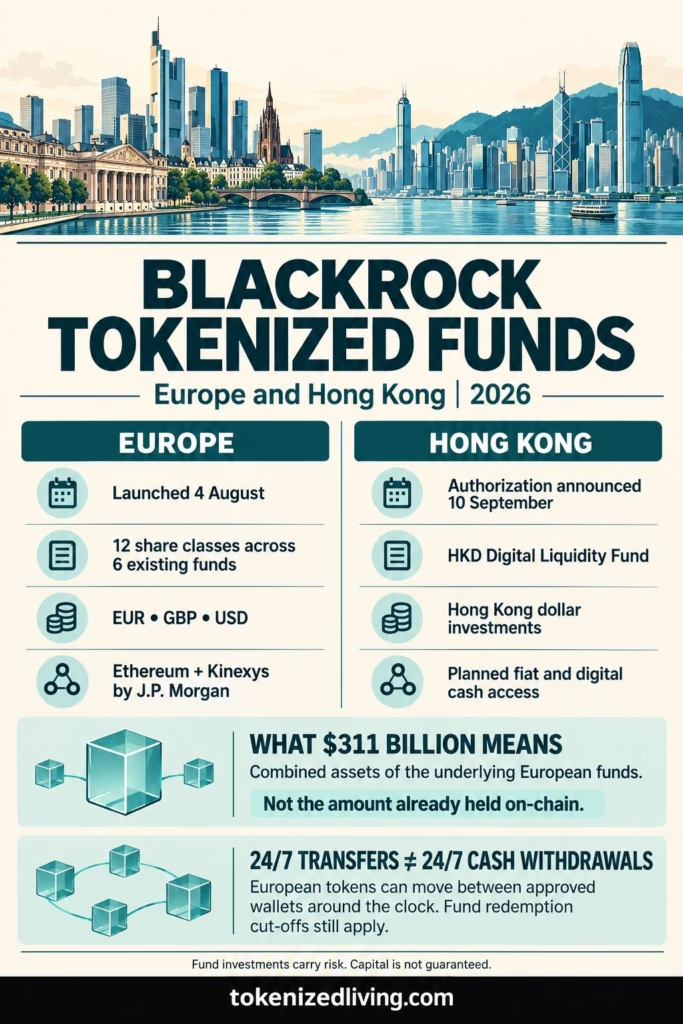
On 4 August 2026, BlackRock announced European on-chain share classes covering six existing Institutional Cash Series money market funds. The 12 classes span euros, sterling and US dollars, with accumulating and distributing options.
Tokens are issued on Ethereum using Kinexys by J.P. Morgan. Each represents an underlying fund share, while the transfer agent continues maintaining the official shareholder register.
BlackRock’s $311 billion headline describes the combined assets of the underlying funds. It does not establish that $311 billion has moved on-chain or flowed into the new share classes.
That distinction matters when measuring adoption. A large fund offering tokenized access and a large balance actually held through tokens are different milestones.
Hong Kong authorizes an HKD fund
On 10 September, BlackRock announced regulatory authorization for its HKD Digital Liquidity Fund. The Hong Kong-domiciled product will invest in short-term Hong Kong dollar instruments, including government bills and deposits.
The planned offering includes eligible local retail and institutional investors. Subscriptions and redemptions will support fiat and digital cash, including tokenized deposits and HKDAP, issued by Standard Chartered-led Anchorpoint Financial.
Standard Chartered will provide custody, administration, trustee and tokenization services. The announcement describes authorization and planned operations; it should not be read as confirmation that every intended access channel is already live.
What does 24/7 access actually mean?
BlackRock’s European operating explanation allows transfers between approved wallets around the clock. Subscriptions and redemptions still follow fund dealing cut-offs, with cash settlement tied to established processing arrangements.
Sending fund tokens to another approved investor is therefore a different transaction from redeeming shares for cash. A weekend transfer does not, by itself, promise a weekend payment into a bank account.
Investors also face identity checks and wallet screening. European on-chain redemptions and peer-to-peer transfers incur blockchain transaction fees payable by the shareholder.
For a broader explanation of the ownership involved, see our plain-English guide to tokenization. The investment documents determine the rights attached to a token.

The investment risks remain
The Hong Kong fund is not a bank deposit or a guaranteed investment. Its disclosures include capital loss, technology failures and possible redemption restrictions.
Its distributing classes aim for a constant net asset value, but cannot guarantee it. Accumulating classes reinvest income and have a fluctuating net asset value.
For investors comparing products, useful questions include which class they can access, the total fees and when redemption proceeds arrive. Currency exposure also deserves attention when comparing funds denominated in different currencies.
What to watch next
Our reading is that these developments broaden the practical uses of tokenized fund ownership. The next evidence to watch is participation: tokenized balances, active investors and completed transactions.
Those measures would help distinguish available infrastructure from regular use. Readers following BlackRock’s earlier work can compare these developments with our BUIDL fund explainer.