

By James | 21 September 2026
The SEC tokenized stock exemption creates a new, conditional route for trading certain U.S. shares on blockchain networks. Announced on 17 September 2026, it raises a practical question for investors: what rights come with the token?
An app can show a familiar company name and a live share price. However, those details alone cannot tell you what you own or who owes you money.
TL;DR
The exemption supports certain tokenized-stock trading venues, subject to conditions and equivalent shareholder rights. Before buying, check the investment documents, custody arrangements, fees and exit process.
What Does the SEC Tokenized Stock Exemption Allow?
The SEC granted temporary relief from the legal definition of an exchange to qualifying Tokenized Securities Venues, or TSVs. These venues use permissioned automated market makers and liquidity pools to trade tokenized National Market System stock.
The relief also covers certain liquidity providers under the dealer definition. Both exemptions are conditional and expire five years after publication, according to the SEC announcement.
An automated market maker uses software to support trading against a pool of assets. Permissioned access means the venue controls which participants can use that trading system.
The SEC also requires limits on stock symbols and trading volume, public smart contracts, operational disclosures and coordinated trading stoppages. These requirements make implementation more specific than simply adding a stock token to an existing crypto app.
For a separate industry development, our NYSE and Blockchain.com tokenized-stock explainer examines their access plans and the details investors still need.
Shareholder Rights Are Central
Eligible tokens must carry the same rights as the equivalent traditional shares, including applicable dividend and voting rights. Synthetic products that only provide exposure to a share price do not qualify under this route.
For third-party tokenization, the underlying company must have an opportunity to object and prevent trading on the venue. Federal rules against fraud and market manipulation also continue to apply.
SEC Chairman Paul Atkins sets out these safeguards in his statement on the Innovation Exemption. He describes the measure as an interim step that needs durable rulemaking to follow.
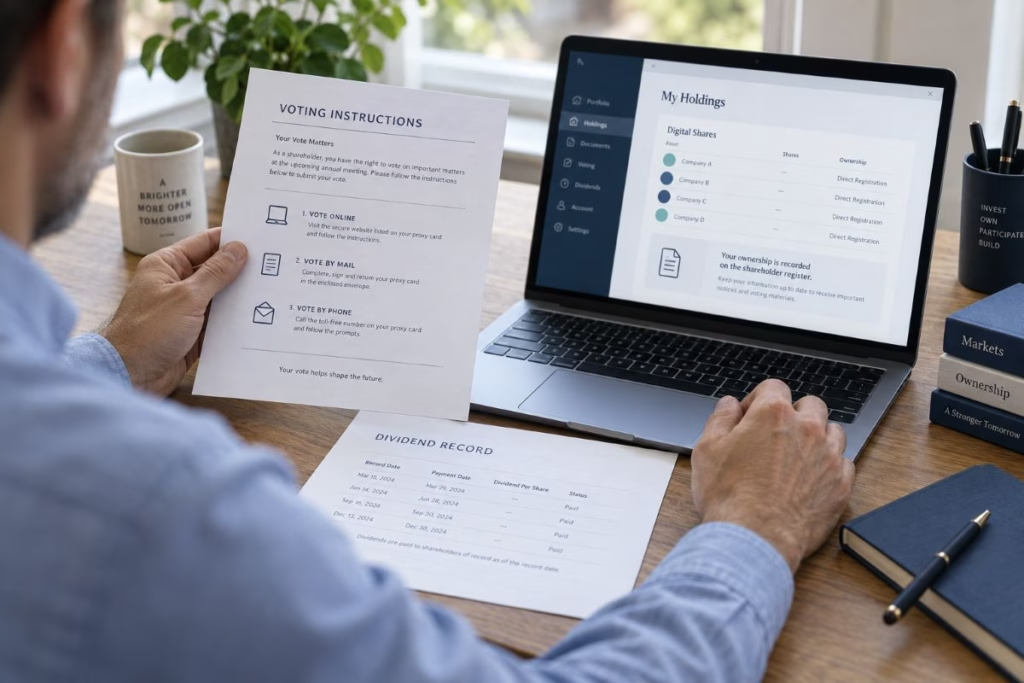
For investors, the practical task is to connect those rights with a working process. Ask how you would receive a dividend, submit a vote or resolve an incorrect account balance.
For example, a platform might say that investors can vote through an online portal. Check who sends the voting instructions, when they arrive and what happens if the portal fails.
A Stock Token Can Represent Different Investments
The SEC staff’s January 2026 analysis distinguishes issuer-sponsored tokens, custodial arrangements and synthetic products. Its statement on tokenized securities explains why their ownership rights and risks can differ.
An issuer-sponsored arrangement can integrate blockchain records into the company’s ownership system. Alternatively, a third-party token can represent an indirect interest in shares held through a custodian.
A synthetic product can instead provide returns linked to another company’s shares without granting rights against that company. Third-party arrangements can also introduce additional exposure to the provider’s failure.
Consider two fictional products that both display the name of Example Company. Product A gives its holder an interest in shares held in custody, while Product B promises a payment linked to their price.
If the share price rises, both account balances might initially look similar. However, answering a voting request or recovering assets after a provider fails could involve very different processes.
This example illustrates the ownership question, rather than confirming either product’s eligibility for the new exemption. Our beginner’s guide to tokenization explains how digital tokens connect with investment rights.
What Should Investors Check Before Buying?
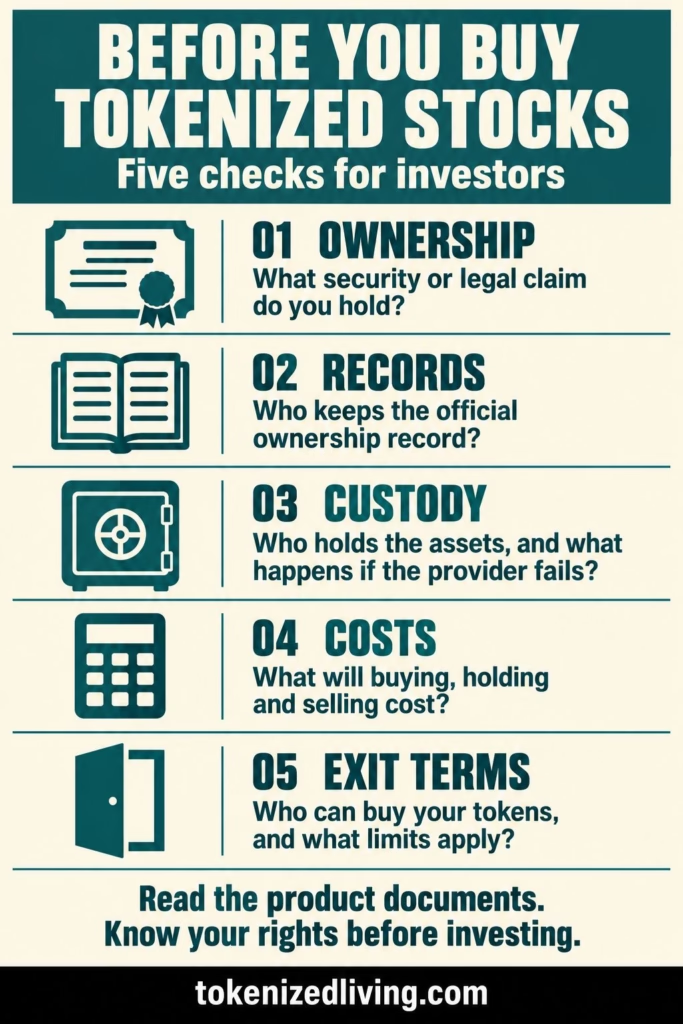
Start by identifying the legal entity offering the investment and the documents governing your account. Then work through five practical questions before sending money.
- Ownership: What security or contractual claim will I hold?
- Records: Who maintains the official ownership record, and how can I obtain evidence of my holding?
- Custody: Who controls the shares and tokens, and what happens if that provider stops operating?
- Costs: What will buying, holding, transferring and selling cost in total?
- Exit: Who can buy my position, and which trading or withdrawal restrictions apply?
Ask for written answers that match the terms of the actual product. A general explanation of blockchain technology cannot settle questions about a specific account.
For example, suppose a token costs $100, with a $2 purchase charge and a $3 withdrawal charge. Those charges already total 5% of the purchase amount, before selling costs or any investment loss.
This is a hypothetical calculation, but it shows why the full cost matters. Compare the complete route from depositing money to withdrawing it, including any currency conversion.
Does This Help Tokenized Real Estate?
The announced exemption concerns tokenized NMS stock, so investors should not assume that private property tokens qualify. Our assessment is that its immediate relevance to property investors is the emphasis on clearly defined rights.
A token connected with a rental building may represent company equity, a loan or another investment arrangement. Its income and exit terms depend on that structure and the property’s finances.
For example, a property loan can promise interest without giving its holder votes over the building’s management. A company interest may offer voting rights while leaving distributions dependent on available cash.
Our complete guide to tokenized real estate explains these structures in more detail. Use those distinctions when comparing property offerings with tokenized public shares.
What Would Show That the Market Is Working?
At Tokenized Living, we would look for evidence of completed trades, clear fees and usable investor records. We would also examine whether holders can exercise their rights without unnecessary delays.
Published procedures matter, but actual service matters too. Useful evidence would include how a venue handles a disputed transfer, a missed distribution or a request to close an account.
Those practical results will determine how useful these products become for ordinary investors. A new trading format earns its place when its costs, access and administration make sense for the people using it.
Frequently Asked Questions
Does the SEC exemption approve every tokenized stock?
No, it provides a conditional route for qualifying venues and securities. A platform’s use of the phrase “tokenized stocks” does not establish that its products meet those conditions.
Is every tokenized stock the same as owning a share directly?
No, some arrangements involve indirect interests through intermediaries, while others provide synthetic exposure. Read the product documents to identify your claim and the parties responsible for it.
Does tokenization guarantee that I can sell quickly?
No, you still need an available trading route and sufficient demand for your position. Check actual trading conditions and withdrawal terms before treating an investment as readily accessible cash.