
September 29, 2026
NYSE tokenized stocks could gain another route to investors through Blockchain.com. On September 23, the companies announced an agreement covering access to a planned digital trading venue.
For readers, the key question is when that plan becomes a service they can use. A partnership announcement alone cannot answer who qualifies, what trading costs or how withdrawals work.
TL;DR
The agreement outlines access to tokenized stocks and ETFs, subject to required approvals. Investors still need launch details, account terms and clear evidence of their ownership rights.
What Did NYSE and Blockchain.com Announce?
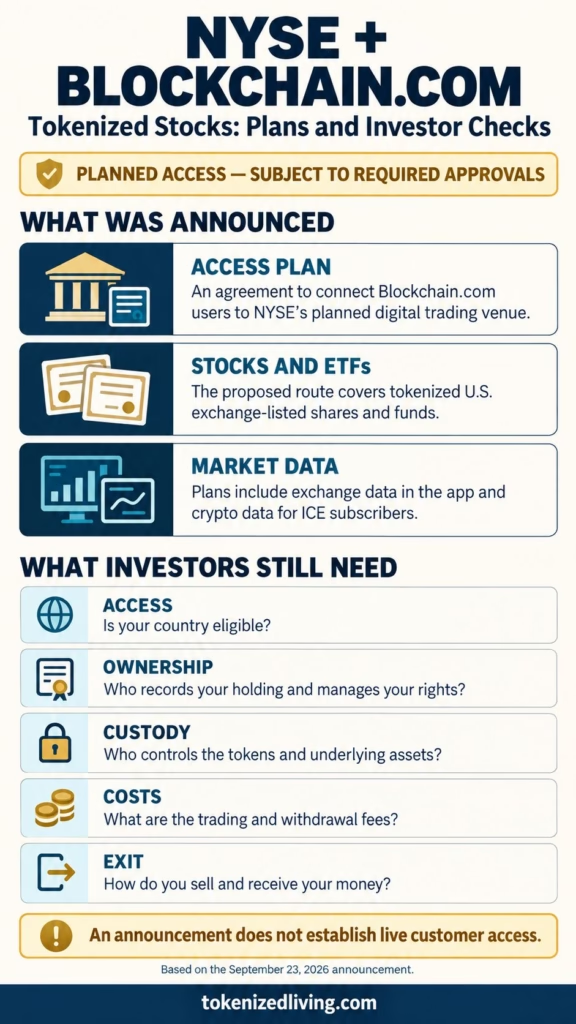
Their September announcement describes a memorandum of understanding, or MOU. It connects Blockchain.com’s customer distribution plans with NYSE’s proposed digital alternative trading system, known as an ATS.
The agreement also covers market data in both directions. ICE Data Services plans to distribute Blockchain.com’s crypto data, while Blockchain.com plans to add exchange data to its app.
However, the release gives no trading launch date, eligible-country list or customer fee schedule. Those missing details limit what investors can conclude today.
How Would NYSE Tokenized Stocks Work?
NYSE outlined its wider platform in its January 2026 announcement. The design includes round-the-clock trading, fractional shares, stablecoin funding and immediate settlement on blockchain networks.
It would support both digital versions interchangeable with conventional shares and securities issued directly as tokens. NYSE also describes dividend and governance rights for tokenized shareholders.
These are stated design features, however, rather than proof of a completed customer experience. For comparison, our Superstate review explains another approach to recording public-company shares on blockchain networks.
Why Does This Agreement Matter?
Our assessment is that distribution is the most useful angle. Building a trading venue solves only part of the problem; investors also need a workable way to reach it.
For example, an investor should be able to understand the full journey through one account. That includes funding a purchase, checking ownership records, selling and getting money back.
Market insight: A large customer base shows potential reach, but it does not measure demand for a new service. Completed trades and repeat use would offer stronger evidence.
Does the SEC Exemption Approve This Service?
The SEC’s September 17 exemption provides temporary, conditional relief for certain tokenized-stock venues. It covers permissioned trading through automated market makers and liquidity pools, with specific safeguards.
Qualifying tokens must preserve the rights of equivalent conventional shares. Venues also face trading limits, disclosure duties and requirements to coordinate trading stoppages.
However, the NYSE–Blockchain.com announcement still makes access subject to required approvals. The broader exemption therefore should not be read as confirmation that this particular service has cleared every requirement.
Our SEC tokenized stock exemption explainer covers the wider investor implications. The practical task here is to verify the eventual service’s own rules and regulatory position.

What Should Investors Check?
Start with the account agreement and the legal identity of each provider. Then ask what happens to your position if a provider fails or suspends service.
- Access: Does the service accept residents of your country?
- Ownership: Who records your holding and administers your rights?
- Custody: Who controls the tokens and any underlying securities?
- Costs: What are the trading, conversion and withdrawal charges?
- Exit: Where can you sell, and how do proceeds reach your bank?
Longer trading hours also deserve a closer look. Compare available quotes and spreads before assuming that an open market offers a good selling price.
For instance, a weekend quote may look convenient when you need cash quickly. Yet a wide spread or delayed withdrawal could make that route costly or unsuitable.
What Should Readers Watch Next?
Look for a launch notice, supported countries, named securities and published customer terms. Those documents would make the proposed service much easier to compare with an ordinary brokerage account.
We would also look for evidence that dividends, voting and withdrawals work as described. Those practical results will determine how useful the new route becomes.
Frequently Asked Questions
Can I buy through this partnership now?
The September announcement does not establish a live trading service. Check for a separate launch notice and eligibility terms before assuming access.
Will every Blockchain.com customer qualify?
The release does not establish that every customer will qualify. A global customer base does not settle local access rules.
Does 24/7 trading guarantee I can sell?
No, trading hours do not guarantee a willing buyer at your preferred price. Liquidity, trading controls and withdrawal terms still matter.