
Updated September 14, 2026
The RealT Detroit lawsuit has changed the outlook for investors in the platform’s affected properties.
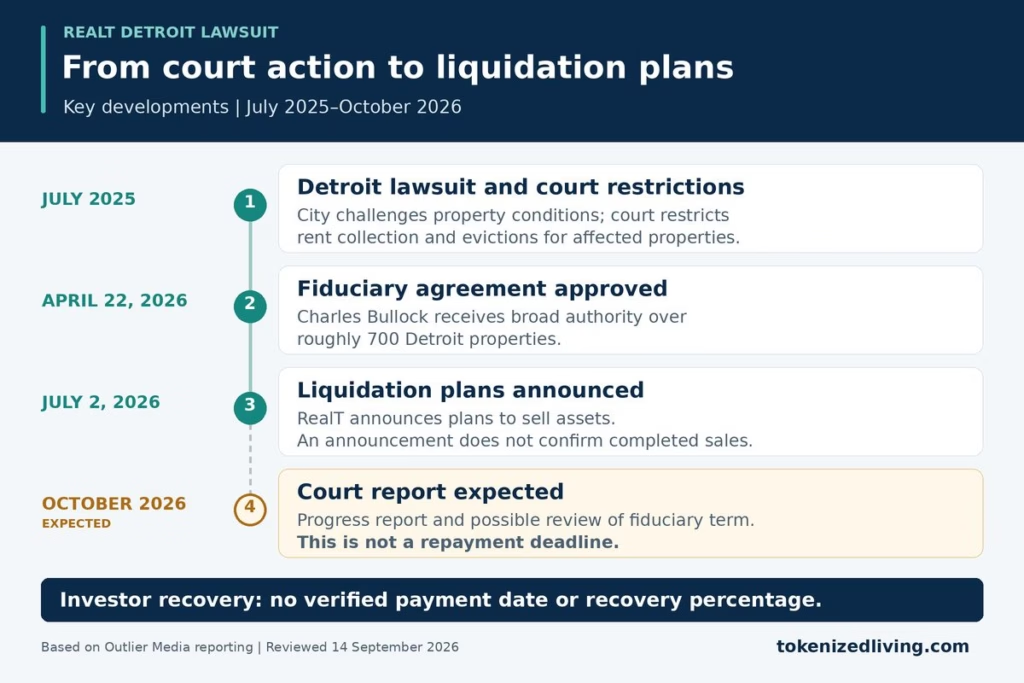
An April agreement placed roughly 700 Detroit properties under special fiduciary Charles Bullock. In July, RealT announced plans to liquidate and sell assets.
However, an announcement does not establish what investors will recover or when they will receive it.
The dispute also concerns people living in these homes. Repairs, safe housing and the future of occupied properties remain central to the case.
TL;DR
- The dispute began with Detroit’s enforcement action over property conditions.
- Court oversight changed how affected properties and their income could be managed.
- RealT later announced liquidation plans, creating further uncertainty.
- French investors have a separate route for joining collective legal action.
- No verified repayment timetable or recovery percentage appears in the sources reviewed for this update.
RealT Detroit Lawsuit: The Key Timeline
What changed with the fiduciary agreement?
Public reporting describes powers to fund repairs from escrow, sell properties, demolish dangerous buildings and control eviction decisions.
Occupied homes with emergency problems were to receive priority. The agreement therefore addressed housing conditions and property management, rather than simply restarting investor payments.
At the time of publication, the full agreement was not public. These details come from Outlier Media’s reporting, republished by Michigan Public.
Our RealT fiduciary analysis examines the arrangement in more detail.
What Did RealT Announce About Liquidation?
Jacobson told investors that RealT intended to sell its assets, citing financial and legal pressure.
However, July reporting left important questions unanswered. These included how the sales would work and whether the plan covered properties outside Detroit.
Bullock retained final authority over Detroit property sales. Detroit’s corporation counsel also said, at that time, that the announcement had not changed the court case.
Those qualifications matter. A company’s stated intention to liquidate does not, by itself, establish a bankruptcy filing or a completed sale programme. Outlier Media’s July report provides the basis for this distinction.
For investors, the useful questions are now more specific:
- Which legal entity owns the property connected to my tokens?
- Has a sale been approved and completed?
- What liabilities attach to that entity or property?
- What documents explain how any remaining proceeds will be distributed?
A broad promise to sell assets does not answer those questions.
French Investor Action: What the Current Notice Says
There is also a separate legal effort involving French investors.
Cabinet Delomel’s public registration page says applications submitted after July 30, 2026 remain valid. However, the firm says it will include those applicants in a later group, with a second complaint planned for late 2026.
The notice says those later applicants should receive a response about their files from October.
The firm describes a collective criminal complaint process directed to the financial division of the Paris judicial court. These are the firm’s stated arrangements, rather than a court ruling on the allegations. See Cabinet Delomel’s RealT action page.
The page does not establish an investor repayment deadline. Nor should joining a legal action be presented as a guarantee of recovery.
Anyone considering participation should confirm eligibility, fees, filing status and the scope of representation directly with the firm.
Why Rent Collection Does Not Guarantee Investor Payments
Rental income passes through several stages before an investor receives a distribution.
A tenant’s payment is gross income. The property still needs money for maintenance, insurance, taxes and other expenses. Legal restrictions can also determine who controls the funds and how they may be used.
As a result, collecting rent and distributing investment income are different events.
The same distinction applies to property sales. A sale price is not automatically the amount available to token holders. Outstanding obligations and transaction costs may reduce the proceeds.
The exact treatment depends on the relevant documents, liabilities and court decisions. Investors should avoid assuming that every RealT offering will produce the same result.
For a broader explanation of the platform and its investment structure, read our updated RealT review.
What Remains Unknown About Investor Recovery?
The sources reviewed for this article do not establish a reliable recovery percentage or payment date.
Several questions must be answered before anyone can make a credible estimate.
Property value: What will buyers actually pay, given the building’s condition and any restrictions?
Liabilities: Which unpaid obligations must the relevant entity address?
Costs: What will repairs, administration and sales cost?
Investor rights: What do the offering documents say about distributions, dissolution and competing claims?
Timing: Which approvals and practical steps remain before money can reach investors?
A dashboard valuation cannot resolve these uncertainties. Neither can the original advertised yield.
Investors should also distinguish a proposed transaction from a completed one. A signed sale agreement, closing statement and distribution notice provide different levels of evidence.
Tenants Are Central to This Case
The financial discussion should not obscure the people who live in the affected properties.
A repair delay can mean prolonged exposure to unsafe conditions. A property sale can create uncertainty about future management and housing stability.
Therefore, progress should include measurable improvements for residents: completed repairs, safer buildings and clear communication.
An investor’s desire for income does not remove the landlord’s responsibilities. Equally, announcing a management change does not prove that living conditions have improved.
Both financial reporting and housing outcomes deserve scrutiny.
What Existing Investors Should Keep
Investors can make their position easier to assess by organising their records.
Useful documents include:
- Purchase agreements and offering documents.
- The names of the issuing entities and associated properties.
- Payment records and relevant wallet transaction references.
- Distribution statements and account exports.
- Platform emails, notices and property updates.
Together, these records help connect an investment to its contractual rights and financial history.
For questions about claims, deadlines or representation, obtain advice that addresses your jurisdiction and specific investment.
What Happens Next?
Earlier reporting identified an expected court report at the end of October 2026, followed by consideration of whether to extend the fiduciary’s term.
That is a review milestone, not a guaranteed return to normal operations or investor payments.
Further updates should focus on documented developments:
- New court orders or fiduciary reports.
- Completed property sales and disclosed proceeds.
- Repair and compliance progress.
- Confirmed legal filings.
- Formal distribution instructions.
A new announcement may be significant. Its practical effect still needs evidence.
Frequently Asked Questions
Has RealT completed its liquidation?
The sources reviewed do not establish that liquidation is complete. The article distinguishes announced plans from verified completed transactions.
Will investors get all their money back?
That remains uncertain. Recovery depends on asset values, liabilities, expenses and the rights attached to each investment.
Does owning a token protect investors from property problems?
No. A token can record an investment interest, but it cannot repair a building, pay overdue bills or create a buyer.
Our complete guide to tokenized real estate explains how the legal and property layers affect the investment.
Does the Detroit lawsuit prove fraud?
The developments described here should not be presented as a final fraud judgment. Allegations, interim orders and negotiated agreements have different legal meanings.
Should investors expect payments in October?
There is no verified basis here for that expectation. A court review date and a lawyer’s client-update schedule are not repayment promises.
The Lesson for Tokenized Property Investors
The RealT case shows why property-level evidence matters throughout an investment’s life.
Investors need to understand who owns the building, who manages it, where income goes and what happens when problems arise.
Blockchain records can help track transactions. Investment outcomes still depend on enforceable rights, sound finances and properly maintained homes.