

Updated 13 September 2026
Buying a home can feel distant when rent, daily expenses, and a deposit compete for the same income. Tokenized real estate offers young investors another way to explore property markets through smaller investments.
However, buying a property token and buying a home serve different purposes.
A token may give you company ownership, repayment rights, or another financial interest connected with property. It usually does not give you somewhere to live.
Understanding that distinction helps you decide whether the investment fits your goals. It also prevents a small starting amount from distracting you from costs, restrictions, and possible losses.
TL;DR
- Tokenized real estate can provide property investment exposure without buying an entire building.
- The contract determines your rights. A token does not automatically put your name on a property deed.
- Money needed for emergencies or a near-term home purchase requires careful attention to access and potential losses.
- Small investments usually produce small cash payments, even when the percentage return looks attractive.
- Fees, vacancies, repairs, and a lower selling price can outweigh rental income.
- Compare tokenized offerings with listed REITs and other investment options before choosing a platform.
- Being young does not make an investment suitable. Your finances, goals, and ability to absorb losses matter more.
This article provides general education. Investment, legal, and tax outcomes depend on the offering and your circumstances.
What Is Tokenized Real Estate?
Tokenized real estate uses blockchain tokens to represent rights connected with a property investment.
For example, a company might own a rental building. Investors buy tokens representing interests in that company and receive distributions under its operating agreement.
Other offerings involve loans, fund units, or contractual payment rights. Consequently, two platforms can use similar language while selling different investments.
Fractional ownership and tokenization also describe different things. Fractional ownership divides an ownership interest, while tokenization provides a digital way to represent or record rights.
You can have fractional property investment without blockchain.
Our complete guide to tokenized real estate explains the structures, income sources, and operating process in more detail.
Property Investment Is Different From Buying a Home
A home provides accommodation and control over how you use the property, subject to local rules and financing arrangements.
A tokenized investment generally provides financial rights. Those might include distributions, votes, information, or a share of remaining sale proceeds.
These benefits can be useful, but they do not replace the practical purpose of homeownership.
Tokens Do Not Automatically Become a Deposit
An investment could contribute towards a future deposit if it produces a gain and you can sell when needed.
However, neither outcome is certain. The property may lose value, distributions may stop, or buyers may be unavailable when you want to exit.
Meanwhile, the home you want to purchase may rise in price independently of your investment.
For example, tokens connected with overseas holiday accommodation may behave differently from starter homes in your local area. Buying one does not guarantee that you will keep pace with the other.
Choose the Goal Before the Product
Start by identifying what the money needs to do.
| Your goal | Main requirement |
|---|---|
| Cover an unexpected expense | Dependable access to money |
| Buy a home within a few years | Preserve the deposit and match the purchase timetable |
| Build wealth over a longer period | Assess growth potential, diversification, costs, and losses |
| Learn about property investing | Understand the investment before deciding whether to commit |
One person can have several goals at the same time. Keeping them separate makes it easier to choose an appropriate approach for each.
Why Tokenized Property May Appeal to Younger Investors
The potential benefits are practical, although they depend on the offering.
Smaller Initial Commitments
A fractional investment can require much less capital than purchasing a whole property.
That may make it possible to research and access individual assets while building a wider portfolio. However, the minimum purchase says little about investment quality.
A small stake in a poorly managed property still carries risk.
More Choice Over Individual Properties
Some platforms allow investors to select particular buildings or projects.
That gives you more influence over the type of exposure you take. You might compare locations, rental strategies, managers, or development stages.
However, selecting individual assets also creates work. You need to understand why one property deserves your money more than another.
Professional Day-to-Day Management
An appointed manager may handle tenants, maintenance, bookings, and other operations.
This can reduce your direct workload. Nevertheless, management costs reduce the cash available to investors, and poor management can damage returns.
Delegating the work does not remove the need to monitor results.
Digital Records and Administration
Online records can make holdings and transactions easier to track. Some platforms also offer digital voting and automated payment allocation.
These features can improve convenience. They cannot independently verify a building’s condition, prove a valuation, or create missing legal rights.

Before Investing, Check Your Financial Position
Age alone is a weak guide to investment suitability.
Two people aged 25 could have very different incomes, responsibilities, debts, and savings. One might tolerate a long holding period, while the other needs access to every spare dollar.
Keep Money Available for Unexpected Costs
A job change, urgent repair, or medical expense can arrive before a property investment is ready to sell.
Consider how you would cover those costs without depending on token sales. The amount of accessible savings you need depends on your circumstances.
Someone with irregular income or dependants may face different demands from someone with stable employment and fewer commitments.
Examine Expensive Debt
Compare the cost of existing borrowing with any projected investment return.
Interest on expensive debt remains payable even when investment income falls short. A speculative return therefore deserves careful scrutiny when borrowing costs are already high.
Investor.gov recommends addressing credit cards and other high-interest debt before investing. Read its explanation of high-interest debt.
Match the Holding Period to Your Goal
A long investment horizon may allow more flexibility around market fluctuations. However, it cannot repair a weak contract or prevent permanent loss.
For a near-term goal, the danger is more immediate: you may need to sell during a decline.
Investor.gov specifically warns about risky investments when saving for goals five years away or less. Its time-horizon guidance explains why.
For someone saving a home deposit, that timing issue deserves more attention than an attractive advertised yield.
What Can a Small Investment Realistically Earn?
Small investments can help you learn and build habits. However, their cash payments will usually remain modest.
Consider a hypothetical $500 investment producing a 6% annual cash distribution.
That would provide $30 over a year, equivalent to $2.50 per month on average. This assumes the full distribution is paid and excludes personal taxes.
The example does not represent a platform forecast or guaranteed return.
A Hypothetical Gain and Loss Example
Assume the same investment pays $30 during the year. There is no separate purchase fee in this simplified example.
The investor then sells the holding, paying a hypothetical 3% selling charge.
| Outcome | Sale at $500 | Sale at $450 |
|---|---|---|
| Sale amount before charge | $500.00 | $450.00 |
| Selling charge | −$15.00 | −$13.50 |
| Net sale proceeds | $485.00 | $436.50 |
| Income received | $30.00 | $30.00 |
| Total receipts | $515.00 | $466.50 |
| Gain or loss on the original $500 | +$15.00 | −$33.50 |
The investor receives the same income in both scenarios. However, the lower sale price produces an overall loss.
Actual results could be better or worse, including a complete loss. This illustration also assumes a buyer is available.
Understand What Reinvestment Requires
Reinvesting distributions can increase your holdings, but the process depends on available investments, minimum purchases, and transaction costs.
Returns can change too. A projection using the same positive rate every year is an assumption, rather than evidence of future performance.
For someone starting with a small balance, regular affordable contributions may matter more than small differences between advertised yields.
The key is maintaining a sustainable saving and investing habit without committing money needed elsewhere.
What Do You Legally Own?
The word “ownership” can conceal several different arrangements.
You might hold shares in a property company, membership interests in an LLC, fund units, or a repayment claim. Some structures provide registered property interests, but that should never be assumed.
Before buying, identify the legal owner of the property. Then establish how your investment connects with that owner.
The documents should explain:
- Your income and information rights.
- Any voting power and its limits.
- Fees, reserves, and potential requests for additional money.
- Existing debt and competing claims.
- Transfer restrictions and exit procedures.
- What happens if the manager or platform fails.
Our fractional ownership agreement guide explains those clauses.
A low purchase price makes an investment easier to enter. It does not necessarily make it easier to understand or leave.
Risks Young Investors Should Take Seriously
Your Money May Be Difficult to Access
A marketplace allows buyers and sellers to meet. It does not guarantee an acceptable sale price or a quick transaction.
Holding periods, investor checks, manager approval, and weak demand can all affect an exit.
Our guide to tokenized asset secondary markets explains how trading and liquidity differ.
Property Expenses Can Reduce Income
Rent is only the beginning of the calculation.
Management, repairs, insurance, taxes, debt payments, and reserves can reduce distributions. Vacancies or unpaid rent add further pressure.
Construction projects introduce additional risks before rental operations can begin.
Several Tokens Can Share the Same Risks
Buying different tokens does not automatically create a diversified portfolio.
The holdings might rely on one manager, one platform, one local market, or the same type of tourist demand.
Examine what connects your investments. Counting tokens alone tells you little about the risks you have spread.
Technology Adds Responsibilities
Wallet access, custody arrangements, network selection, and account security need attention.
An easy interface can hide complicated arrangements behind the scenes. Establish who controls your tokens and what happens after lost credentials or a platform outage.
Cross-Border Investments Add Complexity
The property, issuer, platform, and investor may sit in different countries.
That can introduce currency exposure, unfamiliar legal rights, and additional tax administration. Even a small investment can create paperwork that takes time or money to resolve.
Our benefits and risks of tokenized real estate provides a broader assessment.
How Does Tokenized Property Compare With Other Options?
Tokenization is one route to investment exposure. Compare it with alternatives serving the same goal.
| Option | What it can provide | Main limitation to examine |
|---|---|---|
| Accessible savings | Money for emergencies and planned spending | Inflation, account terms, and applicable deposit protection |
| Listed REIT or REIT fund | Exposure to property businesses through securities | Market-price changes, fees, and concentration |
| Tokenized property investment | Rights linked to a selected asset, company, loan, or fund | Legal structure, operating performance, and uncertain exits |
| Direct homeownership | Accommodation and rights over a home | Upfront costs, financing, maintenance, and limited flexibility |
REITs Already Offer Fractional Property Exposure
A real estate investment trust can own income-producing property or related assets. Investors participate through shares rather than buying buildings themselves.
Listed REITs trade on exchanges. Non-traded REITs have different liquidity conditions and should not be treated as equivalent.
For the distinction, see Investor.gov’s REIT explanation.
Compare the Complete Arrangement
Tokenized offerings may provide access to a particular property you want to research. A listed fund may offer broader exposure with less individual property selection.
Neither label establishes which is suitable for you.
Compare ownership rights, fees, diversification, reporting, administration, and the available exit. Then ask whether the additional complexity serves your goal.
How to Research Platforms Without Chasing Yields
Start with investments you are eligible to buy.
Age requirements, residence, citizenship, and investor classification can affect access. A platform accepting account registration does not establish eligibility for every offering.
Next, compare the documents and costs of specific investments. Platform-wide descriptions may omit important differences between projects.
Our tokenized real estate platform comparison examines these differences across the services reviewed.
For individual examples, the Lofty review explores US property-company interests and trading arrangements.
The Binaryx review explains why rental properties and construction projects need separate assessments.
Use reviews to identify questions. The selected offering’s documents should supply the answers.
Avoid the Pressure to Start Before You Are Ready
Property and investment content can create a sense that everyone else is getting ahead.
However, a screenshot rarely shows the complete picture. It may exclude the original investment, fees, taxes, losses, or money that cannot currently be withdrawn.
A creator may also receive compensation for referrals.
Ask what evidence supports the result and whether it reflects a completed sale or merely a displayed valuation.
There is no financial achievement in entering an investment you cannot explain. Time spent improving your budget, understanding documents, or building accessible savings can be productive progress.
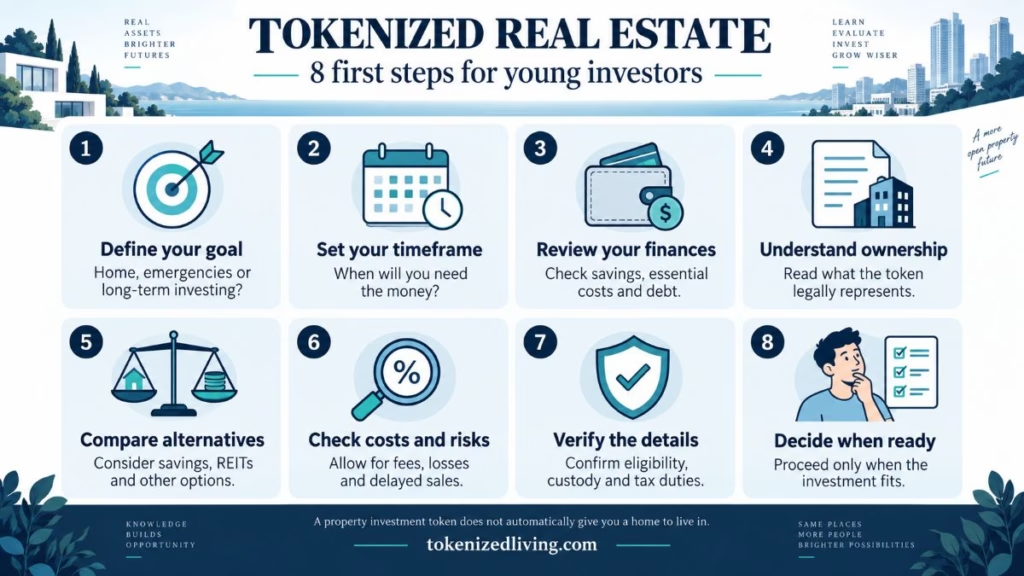
First Steps for Young Investors
- Define the goal. Decide whether the money is for a home, emergencies, education, or longer-term investing.
- Set a realistic timeframe. Write down when you may need access to it.
- Review your finances. Consider essential spending, expensive debt, and unexpected costs.
- Learn the ownership structure. Identify what the token represents and who holds the property rights.
- Compare alternatives. Examine other ways to pursue the same goal.
- Calculate costs and downside. Include fees, lower income, a discounted sale, and a delayed exit.
- Verify eligibility and administration. Check access requirements, custody, and tax reporting.
- Decide whether to proceed. Investing remains optional when the documents or your finances do not support it.
If you decide to invest, keep independent copies of agreements and transaction records.
A modest initial amount can limit the money exposed while you learn the process. However, a successful small transaction does not establish the investment’s long-term safety.
Frequently Asked Questions
Can Tokenized Real Estate Help Me Buy My First Home?
It could contribute financially if the investment performs well and you can exit when needed. However, it can also lose value or remain difficult to sell. Treat saving for a home as a separate planning decision.
Do Property Tokens Give Me Somewhere to Live?
Usually, an investment token provides financial rights rather than accommodation. Personal use requires an explicit right in the agreement.
How Much Money Do I Need to Start?
Minimum purchases vary by platform, offering, and payment method. Check the complete transaction amount, including fees. A low minimum does not establish that the investment suits your circumstances.
Can Young Investors Earn Passive Income?
Rental investments may distribute income after expenses and other deductions. Payments can change or stop. A small investment is also likely to produce a small cash amount.
Is Being Young a Reason to Take More Risk?
Age can influence your investment horizon, but it does not determine your ability to absorb losses. Income stability, debt, responsibilities, savings, and goals all matter.
Is Tokenized Real Estate Better Than Saving?
They serve different purposes. Accessible savings can support planned spending and emergencies, while investments expose money to risk in pursuit of returns. Choose according to the purpose and timeframe.
Should I Borrow Money to Buy Property Tokens?
Borrowing adds repayments and interest costs even if the investment underperforms. An uncertain distribution or resale route is a weak foundation for meeting a fixed debt obligation.
Our Verdict
Tokenized real estate gives young investors another way to explore property investments. Its usefulness depends on the rights, costs, assets, and exit conditions behind the tokens.
Start with your financial goals and the money you can afford to leave invested. Then compare the offering with other ways to achieve those goals.
A sound first investment is one you understand, can administer, and can withstand losing money on. There is no need to rush that decision.