
Updated August 17, 2026
Global supply chains depend on goods, documents, payments, and ownership records moving together. However, these elements often sit in disconnected systems.
One company may use a modern inventory platform. Meanwhile, another still exchanges spreadsheets, emails, and paper documents.
Supply chain tokenization promises to connect these fragmented processes. A token can represent a product, shipment, document, ownership right, or financial claim.
However, tokenization does not automatically create trustworthy data. It also cannot force suppliers, carriers, customs authorities, and banks to cooperate.
So, does supply chain tokenization deliver genuine transparency? Or does it add blockchain terminology to problems that already have simpler solutions?
TL;DR
- Supply chain tokenization represents goods, documents, rights, or claims using digital tokens.
- Traceability, digitization, blockchain, and tokenization are different concepts.
- Tokens can improve ownership records, document transfers, financing, and conditional payments.
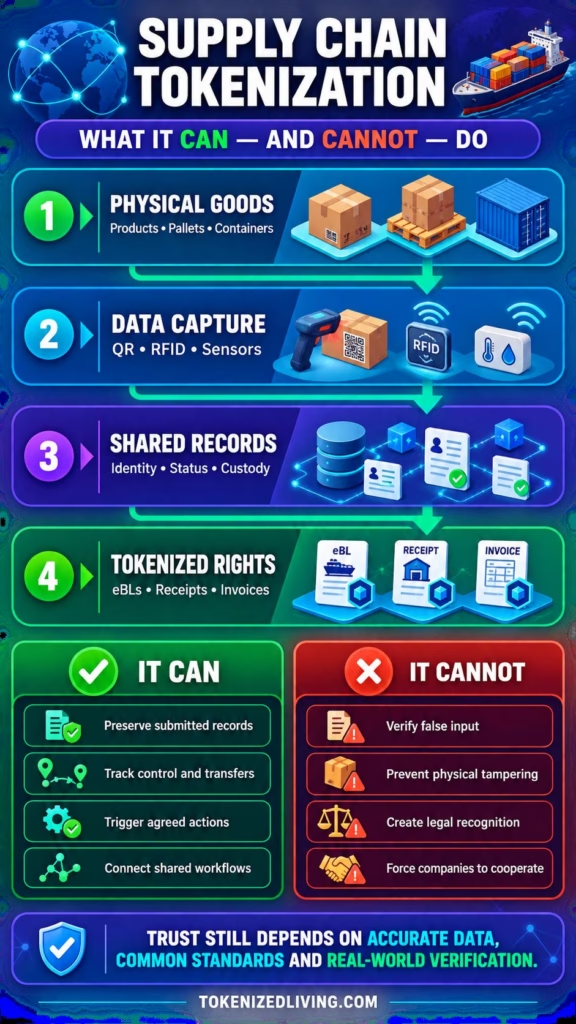
- Blockchain can preserve submitted information. However, it cannot prove that the information was correct.
- Electronic bills of lading offer one of the strongest practical use cases.
- Digital Product Passports improve product transparency without requiring blockchain.
- Poor data, weak standards, legal uncertainty, and limited participation remain major barriers.
- Sometimes, a conventional database remains the faster and cheaper solution.
“A blockchain can preserve a record. It cannot prove that the scanner, sensor, or company entered the truth.”
What Does Supply Chain Tokenization Actually Mean?
Supply chain tokenization creates a digital representation of an asset, document, right, or financial claim.
The token may exist on a blockchain or another distributed ledger. However, not every digital supply chain record needs a token.
A token could represent:
- A product identity
The token identifies a specific product, batch, component, container, or shipment. - A title or control right
The token represents control over goods or a transferable trade document. - A financial claim
The token represents an invoice, receivable, inventory position, or financing agreement. - A compliance record
The digital record provides information about materials, origin, repairability, or environmental performance.
These applications serve different purposes. Therefore, companies should not treat them as one universal solution.
For a broader introduction, read our guide to what tokenization means.
Tokenization vs Digitization vs Traceability
Much of the confusion comes from combining four different technologies.
| Concept | What it does | Simple example |
|---|---|---|
| Digitization | Converts paper processes into digital records | Replacing a paper invoice with a PDF |
| Traceability | Records where a product came from and where it went | Tracking a food batch from farm to retailer |
| Tokenization | Represents an asset, right, document, or claim digitally | Representing a warehouse receipt as a transferable token |
| Blockchain | Maintains a shared ledger across multiple participants | Recording token transfers between companies |
A company can digitize its records without using blockchain. Likewise, it can create traceability without tokenizing any assets.
Meanwhile, a blockchain system could track tokens without providing useful product-level traceability.
Therefore, companies should start with the business problem. They should not begin by deciding that blockchain must provide the answer.
Connecting Physical Products to Digital Tokens
A token exists digitally. However, supply chain products exist in warehouses, containers, factories, and shops.
The link between these two worlds matters more than the token itself.
Companies commonly use:
- QR codes
- Barcodes
- RFID tags
- NFC chips
- Serial numbers
- Tamper-evident seals
- GPS devices
- Internet of Things sensors
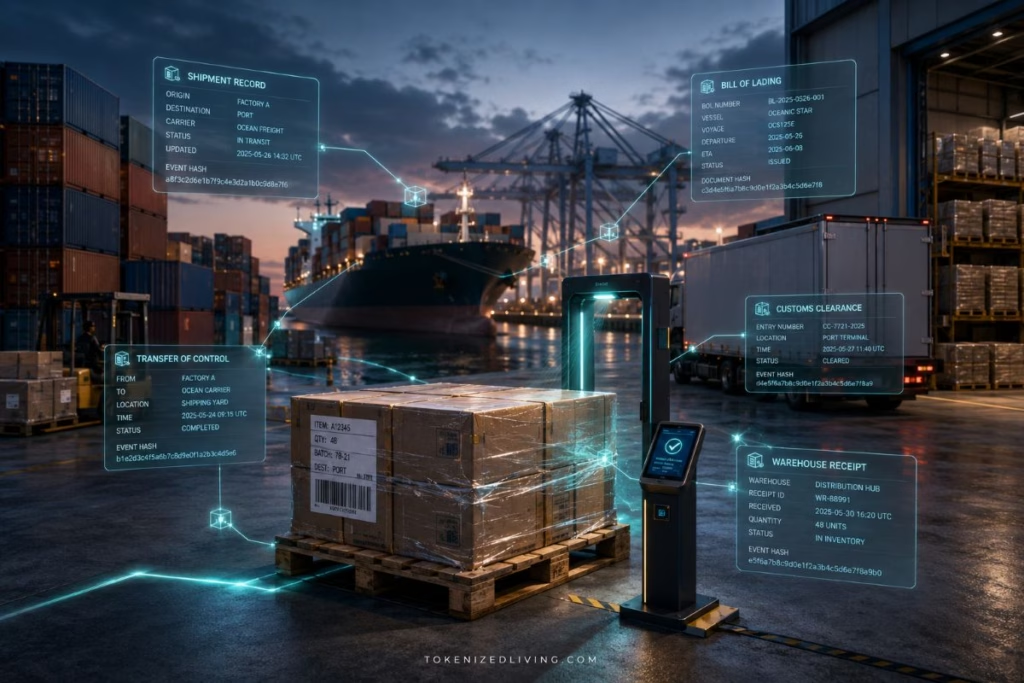
For example, a manufacturer might assign a serialized identifier to a component. Workers can then scan that identifier during production, shipping, and delivery.
Global standards make these records easier to exchange. GS1 Digital Link connects product identifiers to online information. Meanwhile, GS1 EPCIS helps companies exchange supply chain event data.
However, the physical and digital connection can still fail.
A worker may scan the wrong package. A supplier may enter a false origin. Someone may replace the contents after applying the tag.
Sensors can also malfunction. Moreover, companies may control which information enters the system.
Consequently, an immutable record can preserve inaccurate information perfectly.
This problem is sometimes called the “oracle problem.” The ledger must trust the people, devices, and systems supplying real-world data.
Where Tokenization Can Add Genuine Value
Tokenization becomes useful when several parties need to transfer control, ownership, or financial rights.
The strongest applications involve more than product tracking.
Electronic Bills of Lading
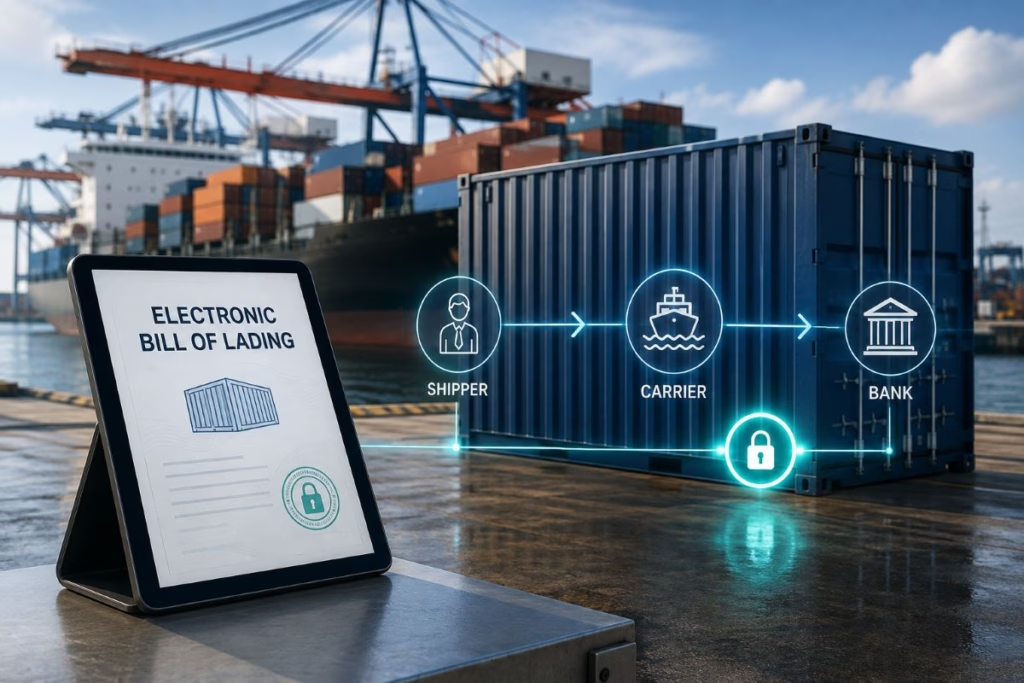
A bill of lading can act as a receipt, shipping contract, and document of title. Traditionally, companies transfer these rights using paper documents.
That process can be slow. Documents may also arrive after the cargo reaches its destination.
An electronic bill of lading, or eBL, can transfer control digitally. A tokenized or ledger-based system can also create a clear sequence of transfers.
This use case solves a real problem. The system must show who controls the document without allowing duplicate transfers.
However, technology alone does not provide legal recognition. Banks, carriers, insurers, and trading partners must also accept the electronic document.
Progress has accelerated. In June 2026, five eBL platforms adopted a shared framework for cross-platform transfers. The participants included CargoX, edoxOnline, TradeGo, WaveBL, and eTEU.
The framework combines a technical standard, a control registry, and common legal terms. As a result, companies no longer need to use one identical platform. DCSA explains the interoperability framework here.
Some participating services use blockchain. Nevertheless, the larger lesson concerns standards, interoperability, and legal trust.
Tokenized Inventory and Warehouse Receipts
Companies often hold valuable goods while struggling to access working capital.
A token can represent inventory stored in a warehouse. Alternatively, it can represent the warehouse receipt or financing claim connected to those goods.
In theory, a lender could verify the inventory and provide financing more quickly. The token could also record whether another lender already has a claim.
However, the lender still needs reliable evidence.
Does the inventory exist? Does the warehouse control it? Has anyone pledged it elsewhere? Is the product damaged or obsolete?
Therefore, tokenized inventory requires trusted warehouses, inspection processes, insurance, and enforceable agreements.
The token improves coordination. It does not replace due diligence.
Tokenized inventory also belongs within the wider real-world asset tokenization market.
Tokenized Invoices and Receivables
An invoice represents money that a buyer owes a supplier. Therefore, companies sometimes sell invoices to receive cash earlier.
Tokenization can make invoice claims easier to record, divide, and transfer. It may also reduce duplicate financing when participants share reliable records.
However, tokenization cannot guarantee that the customer will pay.
Fraudulent invoices can also enter a digital system. Consequently, financiers still need identity checks, accounting controls, and credit analysis.
Conditional Payments and Smart Contracts
Smart contracts can release payments after specific conditions occur.
For example, a contract might release payment after:
- A carrier confirms delivery
- A temperature sensor confirms safe transport
- Customs clears a shipment
- An inspector approves the goods
- A buyer accepts the order
This automation can reduce delays. It may also limit disputes over payment timing.
However, smart contracts depend on trusted data sources. A faulty sensor or disputed delivery record can trigger the wrong result.
Therefore, businesses need exception procedures. They also need human dispute resolution for events the code cannot interpret.
Authenticity and Compliance
Tokenization can help record a product’s origin, ingredients, certifications, or chain of custody.
Food, pharmaceuticals, luxury goods, and critical materials may benefit from these records.
For example, pharmaceutical traceability can help companies identify suspicious products and isolate affected batches. We explore that use case in our guide to tokenization in healthcare.
However, authenticity systems need trustworthy issuers. A token connected to a counterfeit product provides false confidence.
Digital Product Passports Do Not Require Blockchain
The European Union’s Digital Product Passport initiative has increased interest in supply chain data.
A Digital Product Passport, or DPP, stores structured information about a product. Depending on the product group, that information may cover:
- Materials and components
- Product origin
- Safety information
- Environmental performance
- Repairability
- Reuse options
- Recycling instructions
The EU’s Digital Product Passport Registry became operational on July 20, 2026. Certain electric vehicle, transport, and industrial batteries face the first mandatory DPP deadline on February 18, 2027.
A QR code or another data carrier can connect the physical product to its passport. The EU Registry stores identifiers and required metadata. Meanwhile, the full product information remains decentralized.
The European Commission’s DPP guidance focuses on accessible, standardized, and interoperable data.
Importantly, it does not require every product passport to use blockchain.
The DPP initiative proves that structured product data matters. However, it does not prove that tokenization provides the only solution.
A company might use blockchain when several independent parties need a shared record. Another company might use signed databases and secure APIs.
Both approaches can support a product passport.
Why TradeLens Failed
TradeLens remains an important warning for blockchain supply chain projects.
IBM and Maersk developed TradeLens as a blockchain-enabled global trade platform. It aimed to connect carriers, ports, terminals, customs authorities, and other participants.
The platform was technically viable. Nevertheless, Maersk and IBM announced its closure in November 2022.
According to Maersk’s TradeLens closure announcement, the project failed to achieve sufficient industry collaboration and commercial viability.
That outcome reveals a basic truth.
A shared network creates value only when enough participants join it. However, potential members may distrust a platform controlled by a competitor.
Companies may also resist sharing commercially sensitive information. Furthermore, integration costs can outweigh uncertain benefits.
Therefore, successful supply chain systems need credible governance. They also require common standards and a clear economic incentive.
A blockchain cannot manufacture cooperation.
What Blockchain Can and Cannot Prove
| Blockchain can help prove | Blockchain cannot prove alone |
|---|---|
| When someone added a record | Whether the original record was truthful |
| Which account submitted the data | Whether the account represented the correct person |
| Whether someone altered ledger history | Whether someone altered the physical product |
| How a token moved between accounts | Whether legal ownership moved with the token |
| Whether programmed conditions executed | Whether those conditions reflected the real agreement |
| Which system currently controls a digital record | Whether a court will enforce that control |
This distinction determines whether a project creates trust or only appears trustworthy.
Potential Benefits of Supply Chain Tokenization
When implemented correctly, tokenization can offer several benefits.
Faster document transfers
Digital transfers can reduce delays caused by couriers, manual checks, and paper processing.
Clearer control records
A shared system can show who currently controls a document, claim, or tokenized asset.
Improved access to finance
Reliable inventory and document records may help companies use goods or receivables as collateral.
Reduced duplicate claims
Shared control records can make it harder to pledge the same asset several times.
Automated settlement
Smart contracts can coordinate payments with agreed supply chain events.
Better product information
Structured records can help buyers, regulators, repairers, and recyclers access relevant information.
However, each benefit depends on good data and participation. Without them, the system offers little more than an expensive database.
Risks and Implementation Barriers
Inaccurate or fraudulent data
Blockchain does not inspect factories or open containers. Therefore, physical verification remains essential.
Commercial privacy
Suppliers may not want competitors to see prices, volumes, customers, or production locations.
Permissioned systems can limit access. However, they also introduce administrators and access-control decisions.
Weak interoperability
A token has limited value if other platforms cannot interpret or transfer it.
Consequently, identifiers, data models, APIs, and legal frameworks may matter more than the ledger.
Legal uncertainty
A token may represent a claim without carrying legal ownership.
Companies must define what the token represents. They must also establish which law applies and how disputes get resolved.
Governance and administrator risk
Someone must manage software upgrades, identity permissions, emergency controls, and data standards.
Even decentralized systems require governance. Therefore, businesses should identify who can change the rules.
Implementation costs
Companies must connect existing inventory, shipping, finance, and compliance systems.
They must also train employees and support trading partners. These costs can exceed the expected savings.
Network failure
A platform can fail if major suppliers, carriers, banks, or authorities refuse to participate.
TradeLens demonstrated this risk clearly.
When Is a Normal Database Better?
Blockchain and tokenization are not always necessary.
A conventional database may work better when:
- One trusted company controls the process
- Participants do not transfer ownership or control
- Records contain highly sensitive information
- Existing intermediaries already resolve disputes
- The process needs fast and inexpensive transactions
- Trading partners have no reason to run shared infrastructure
- The business problem only requires better data integration
In these cases, APIs and common data standards may solve the problem more efficiently.
However, tokenization becomes more attractive when independent parties transfer valuable rights. It also helps when no single party should control the master record.
Questions Companies Should Ask Before Tokenizing
Before launching a supply chain tokenization project, decision-makers should ask:
- What asset, document, or right will the token represent?
- Why does that representation need to be transferable?
- Who verifies the connection between the token and physical goods?
- Which standards will identify products and record events?
- What happens when someone enters incorrect information?
- Will courts, banks, insurers, and regulators recognize the digital record?
- What information must remain private?
- Who controls software upgrades and access permissions?
- Can the system connect with other platforms?
- Would a shared database solve the problem more cheaply?
- Why will suppliers and trading partners participate?
- What happens if the platform closes?
If a company cannot answer these questions, it is not ready to tokenize its supply chain.
Final Verdict: Transparency or Hype?
Supply chain tokenization is neither a universal solution nor empty hype.
It can improve how companies transfer documents, ownership rights, inventory claims, and payments. Electronic bills of lading provide a particularly strong use case.
Tokenization may also support trade finance and product authenticity. Furthermore, it can reduce duplication across fragmented systems.
However, it cannot guarantee that physical-world information is correct. It cannot create legal recognition or industry cooperation by itself.
The strongest projects combine several elements:
- Reliable product identification
- Trusted data collection
- Shared technical standards
- Clear legal agreements
- Strong privacy controls
- Interoperable platforms
- Credible governance
- Commercial incentives for every participant
Ultimately, transparency does not come from placing records on a blockchain. It comes from creating reliable information that relevant parties can verify and use.
Tokenization can support that goal. However, it should remain a tool rather than the strategy itself.
Frequently Asked Questions
What is supply chain tokenization?
Supply chain tokenization represents a product, shipment, document, ownership right, or financial claim as a digital token. Companies can then record or transfer that token through a digital platform.
Is supply chain tokenization the same as blockchain traceability?
No. Traceability records product movements and events. Tokenization represents an asset or right digitally. Blockchain provides one possible infrastructure for storing and transferring those records.
Can blockchain guarantee supply chain transparency?
No. Blockchain can preserve submitted information and make changes easier to detect. However, it cannot guarantee that the original information was accurate.
What are the best supply chain tokenization use cases?
Strong use cases include electronic bills of lading, warehouse receipts, tokenized inventory, invoice financing, and conditional payments. These applications involve transferable rights or financial claims.
Do Digital Product Passports require blockchain?
No. Digital Product Passports require structured, accessible, and interoperable product data. Companies may use blockchain, but conventional databases and secure APIs can also meet those needs.
Why do blockchain supply chain projects fail?
Projects often fail because participants do not cooperate. Other causes include poor data, weak standards, unclear legal rights, privacy concerns, high costs, and insufficient commercial value.
When should a company avoid tokenization?
A company should avoid tokenization when one trusted party controls the process and no transferable right exists. A conventional database may then provide a simpler and cheaper solution.