
Asset tokenization sounds simple from the outside.
Take a real-world asset, create a digital token, and let investors trade or transfer ownership on a blockchain.
In practice, the hard part is not just creating the token. The hard part is proving what sits behind it, keeping asset data updated, managing compliance, and allowing tokens to move safely across different blockchain networks.
That is where Chainlink becomes important.
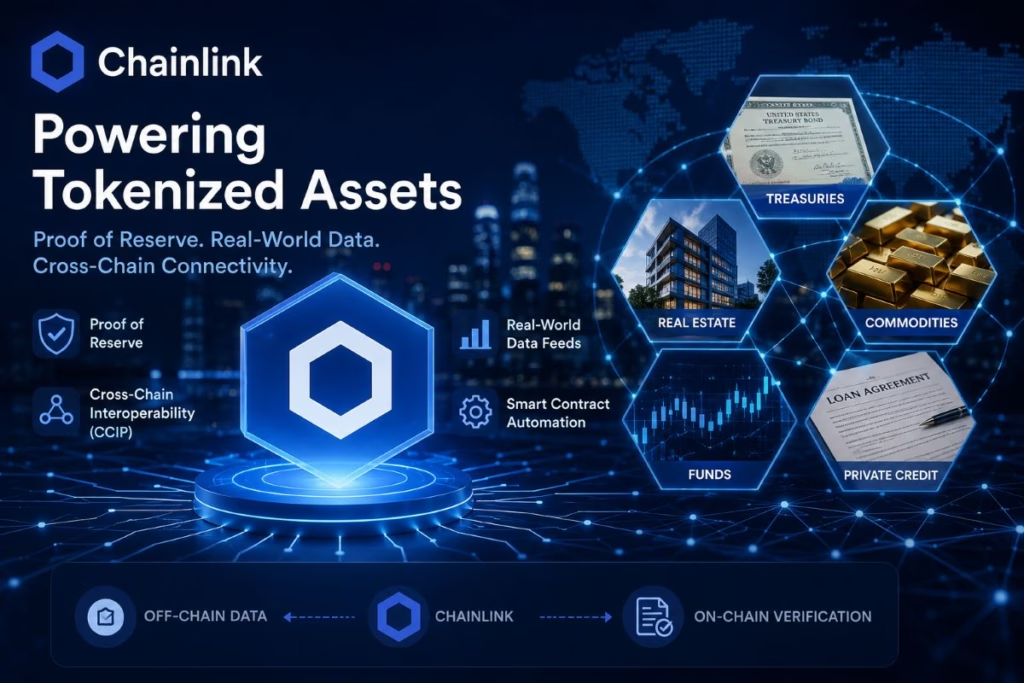
Asset tokens are issued on blockchains such as Ethereum, Polygon or other public and private networks. Chainlink supports these tokens with external data, reserve checks, cross-chain connectivity and automated workflows.
For real-world assets, that distinction matters.
A token is only useful if investors can understand what it represents, how it stays backed, which rules apply, and whether the data behind it can be trusted.
TL;DR: Chainlink and Tokenized Assets
Chainlink does not normally tokenize assets by itself.
Asset tokens are usually issued on blockchains such as Ethereum, Polygon, Avalanche, Base, or other public or private networks.
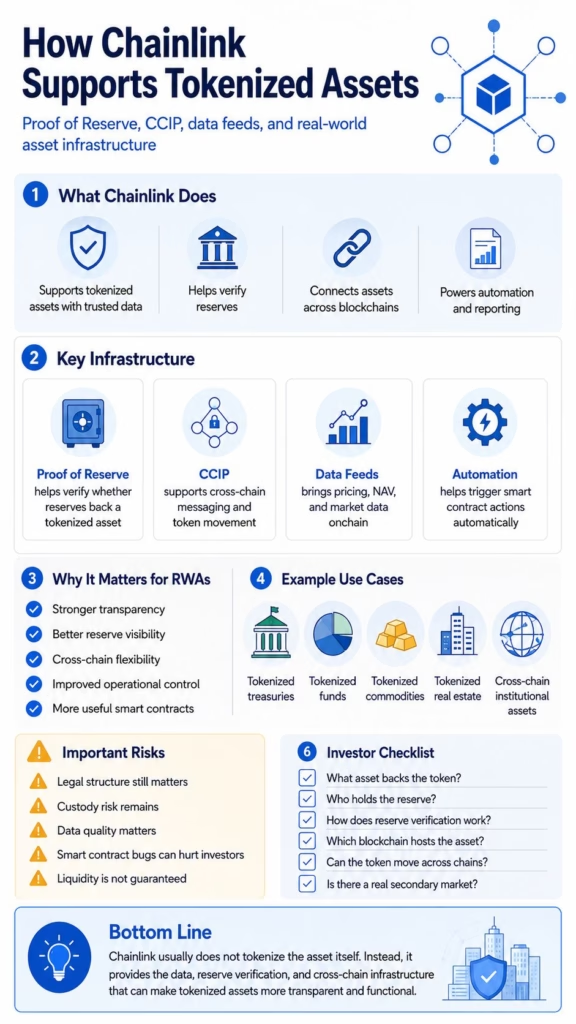
Chainlink can support tokenized assets through Proof of Reserve, price data, NAV data, cross-chain messaging, and automation.
Proof of Reserve can help verify whether a tokenized or wrapped asset has sufficient reserves behind it.
CCIP can help tokenized assets move or interact across different blockchain networks.
For real-world assets, reliable offchain data may matter as much as the token itself.
Investors should still check the legal structure, issuer, custodian, reserve method, liquidity, and regulation behind any tokenized asset.
What Does Chainlink Do for Tokenized Assets?
Chainlink is best understood as infrastructure.
It helps smart contracts connect with data and systems outside their own blockchain environment.
That matters because most tokenized assets depend on information that does not naturally exist onchain.
A tokenized treasury product may need pricing data.
Fund tokens often require net asset value updates.
Commodity-backed tokens may depend on reserve verification.
Real estate structures can require property data, payment information, and compliance rules.
Without reliable data, a tokenized asset can become a shiny wrapper around an unclear claim.
Chainlink tries to solve part of that problem by connecting smart contracts with external data sources, reserve information, and cross-chain messaging systems.
In simple terms, Chainlink can help answer three questions:
What backs this token?
What is the asset worth?
Can the token move or interact safely across networks?
Those questions sit at the center of real-world asset tokenization.
Why Real-World Assets Need Reliable Data
Real-world assets create a data problem.
A blockchain can show that a wallet owns a token. It can show when that token moved. It can also show the smart contract rules behind the token.
But the blockchain does not automatically know whether the real-world asset still exists.
It does not automatically know whether a custodian holds the reserves.
Nor does it automatically know whether the asset value changed.
That creates a gap between the digital token and the real-world asset behind it.
For example:
Gold-backed tokens need reserve data.
Tokenized funds need portfolio and NAV data.
Private credit tokens may require loan and repayment data.
Real estate tokens often depend on income, valuation, and legal-entity data.
Treasury-backed products need pricing, yield, and custody information.
The stronger the data layer, the easier it becomes for investors and platforms to understand the token.
That does not remove risk. However, it can improve transparency and operational control.
Chainlink Proof of Reserve
Proof of Reserve is one of Chainlink’s most important tools for tokenized assets.
It helps provide onchain visibility into reserves that sit offchain or across other chains.
That matters because many tokenized assets depend on collateral or underlying assets held somewhere else.
A token may claim to represent dollars, gold, treasuries, commodities, or another asset. Investors then need a way to check whether the backing exists.
Chainlink Proof of Reserve can help publish reserve information onchain.
That data may come from custodians, auditors, bank accounts, or other external sources.
Smart contracts can then use that information to check whether reserves appear sufficient.
This is especially useful for assets that require ongoing collateral checks.
For example, Proof of Reserve may help with:
Wrapped assets
Stablecoins
Tokenized commodities
Tokenized funds
Cross-chain assets
Other collateral-backed tokens
The key point is simple.
Proof of Reserve does not magically remove risk. It creates a more transparent data layer for checking reserves.
Investors still need to ask who holds the asset, who verifies the data, how often the data updates, and what happens if reserves fall below the required level.
Proof of Reserve and Secure Minting
Proof of Reserve can also support safer minting.
Minting means creating new tokens.
For a backed asset, new tokens should only enter circulation when enough reserves exist behind them.
If a system allows tokens to be minted without matching collateral, investors may face serious risk.
Proof of Reserve can help reduce that risk by linking minting rules to reserve data.
In a stronger design, the system checks reserve data before allowing new tokens to enter circulation.
That kind of control can matter for tokenized assets where supply should match real-world backing.
Still, investors should not treat this as a guarantee.
The system depends on the quality of the reserve source, the legal structure, the custodian, and the smart contract design.
Chainlink CCIP and Cross-Chain Tokenized Assets
Tokenized assets may not stay on one blockchain forever.
Institutions, platforms, and investors often use different networks. Some prefer public chains. Others use private or permissioned systems.
That creates a problem.
How can a tokenized asset move between networks without creating fragmented liquidity, duplicate records, or compliance gaps?
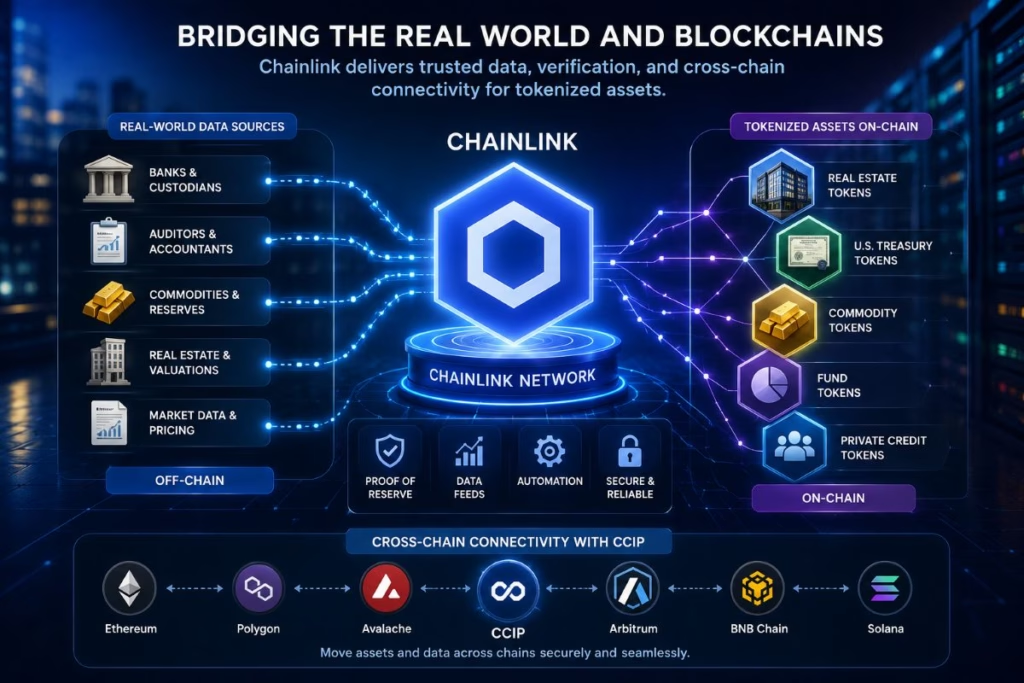
Chainlink’s Cross-Chain Interoperability Protocol, known as CCIP, focuses on this problem.
CCIP allows smart contracts and tokens to communicate across different blockchains.
For tokenized assets, that can support:
Cross-chain transfers
Cross-chain settlement
Institutional workflows across public and private networks
Unified asset data across multiple chains
Better access to liquidity across ecosystems
This matters because real-world asset markets may not grow on one chain only.
Banks, asset managers, exchanges, and tokenization platforms may all use different infrastructure.
If tokenized assets remain trapped inside isolated blockchain networks, the market becomes fragmented.
Cross-chain infrastructure can help reduce that problem.
But cross-chain movement introduces risks too.
Investors and issuers need to consider bridge security, compliance rules, transfer restrictions, and whether the token can legally move to another network.
Chainlink Data Feeds and NAV Data
Many tokenized assets need more than reserve checks.
They also need financial data.
A tokenized fund may need a net asset value feed.
Treasury products may need price and yield data.
Credit tokens may depend on repayment or portfolio data.
Real estate structures may require valuation, income, or occupancy data.
Chainlink can help bring external data into smart contracts.
This can support automated processes such as:
Updating asset values
Triggering compliance checks
Calculating distributions
Monitoring collateral
Supporting settlement
Improving investor reporting
For real-world assets, data quality is not a side issue.
It is part of the product.
A tokenized asset with weak data is harder to trust, harder to price, and harder to manage.
Chainlink CRE and Automated Compliance
Tokenized assets often need several systems to work together. A fund subscription, for example, may involve investor checks, payment confirmation and token delivery.
The Chainlink Runtime Environment (CRE) lets developers coordinate workflows across blockchains, external data sources and existing financial systems. It can connect these steps within a programmed process.
Chainlink’s Automated Compliance Engine (ACE) supports identity checks and rules governing who can receive or transfer tokens. Issuers can use these controls to apply investor eligibility requirements within their applications.
These tools still require careful integration and correctly configured rules. Using them does not automatically make a token legally compliant or give investors permission to trade it.
Chainlink vs Tokenization Blockchains
Chainlink should not be confused with tokenization blockchains.
Ethereum, Polygon, or another blockchain may host the token contract.
A platform such as Securitize, Ondo, or a real estate tokenization provider may issue or manage the product.
The underlying asset may sit inside a legal entity, fund, trust, or SPV.
Chainlink may provide the data and connectivity layer.
These are different roles.
A simple breakdown looks like this:
| Layer | Role |
|---|---|
| Issuer | Creates or manages the tokenized product |
| Legal structure | Defines investor rights and asset backing |
| Blockchain | Records token ownership and transfers |
| Custodian or trustee | Holds the underlying asset or reserve |
| Chainlink | Provides data, reserve verification, and cross-chain infrastructure |
| Marketplace or platform | Supports access, investor onboarding, or secondary trading |
This distinction helps investors avoid confusion.
The token is not the whole investment.
The full structure matters.
A Practical Example: DTCC’s Smart NAV Pilot
In May 2024, DTCC published findings from its Smart NAV pilot with Chainlink and ten market participants. The project tested how fund price and rate data could reach blockchain applications.
DTCC supplied the data and governed the system that stored it onchain. Chainlink’s Cross-Chain Interoperability Protocol (CCIP) provided the connection between blockchain networks.
For a tokenized fund, this could help applications access net asset value data used in reporting and other operations. Smart contracts could also make information about multiple funds available through one application.
The results demonstrated a possible foundation for tokenized fund services. However, this was a pilot exploring data delivery, so it should not be presented as a commercial fund launch.
Benefits of Chainlink for Tokenized Assets
Chainlink can add value in several areas.
Better Transparency
Reserve data and external asset information can become easier to monitor.
That gives investors and platforms more visibility than a token contract alone.
Stronger Risk Controls
Smart contracts can use reserve or pricing data to trigger actions.
For example, a protocol may pause minting or transfers if reserves fall below a required level.
Cross-Chain Access
CCIP can help tokenized assets reach investors and applications across multiple blockchain ecosystems.
That may support broader access and deeper liquidity over time.
Institutional Workflows
Banks, asset managers, and regulated platforms often need more than token issuance.
They need data, settlement, compliance, and operational controls.
Chainlink’s infrastructure can support parts of that workflow.
Risks and Limitations
Chainlink can support tokenized assets, but it does not remove the main risks.
Legal Risk
A token does not automatically prove strong investor rights.
Legal documents decide what the token holder owns, what income they may receive, and what happens if something goes wrong.
Custody Risk
If an asset sits with a custodian, trustee, issuer, or bank, investors need to understand that relationship.
Reserve data helps, but custody quality still matters.
Data Risk
Oracles depend on data sources.
Poor data, delayed data, or incomplete reporting can weaken the whole structure.
Smart Contract Risk
Tokenized assets may depend on smart contracts for transfers, minting, restrictions, or settlement.
Bugs and design errors can create real losses.
Cross-Chain Risk
Cross-chain infrastructure increases flexibility, but it also increases complexity.
More networks, bridges, and messaging systems can create more points of failure.
Liquidity Risk
Better infrastructure does not guarantee buyers.
A tokenized asset may still have limited secondary trading.
Investors should not assume liquidity simply because an asset sits on a blockchain.
Investor Checklist
Before investing in any Chainlink-supported tokenized asset, ask these questions:
What asset backs the token?
Which legal entity issues the token?
What rights does the token holder actually receive?
Who holds the underlying asset or reserve?
How does Proof of Reserve work?
Who supplies the reserve data?
How often does the data update?
Can new tokens be minted without sufficient backing?
Which blockchain hosts the token?
Can the token move across chains?
Are transfers restricted by regulation or platform rules?
Is there a real secondary market?
What happens if the issuer, custodian, or platform fails?
This checklist matters more than the branding around the project.
A strong tokenized asset needs strong legal, operational, and data foundations.
Final Thoughts
Chainlink plays an important role in tokenized assets, but not in the way many beginners assume.
It is usually not the place where the asset is tokenized.
Instead, Chainlink supports the infrastructure around tokenized assets.
Proof of Reserve can help verify backing.
Data feeds can support pricing and reporting.
CCIP can help assets move and interact across networks.
Those tools matter because real-world asset tokenization depends on trust, data, and operational reliability.
Still, investors should stay cautious.
A better data layer does not remove property risk, issuer risk, legal risk, liquidity risk, or tax complexity.
The best way to understand Chainlink’s role is simple:
Chainlink helps tokenized assets connect with the real world.
But the real-world asset still needs to be sound.
Frequently Asked Questions
Can you tokenize assets on Chainlink?
Usually, no. Assets are normally tokenized on a blockchain such as Ethereum, Polygon, Avalanche, Base, or another network. Chainlink supports tokenized assets through data, reserve verification, and cross-chain infrastructure.
What is Chainlink Proof of Reserve?
Chainlink Proof of Reserve helps verify reserve data for assets backed by offchain or cross-chain collateral. It can publish reserve information onchain so smart contracts and users can monitor backing.
Why does Proof of Reserve matter for tokenized assets?
Many tokenized assets claim to represent real-world reserves. Proof of Reserve can help show whether those reserves exist, although investors still need to check the custodian, legal structure, and data source.
What is Chainlink CCIP?
CCIP stands for Cross-Chain Interoperability Protocol. It allows smart contracts and tokens to communicate across different blockchain networks.
Does Chainlink make tokenized assets safe?
No. Chainlink can improve data transparency and cross-chain functionality, but it does not remove legal, market, issuer, custody, liquidity, or tax risks.
How does Chainlink help real-world assets?
Chainlink can provide data feeds, reserve verification, NAV data, automation, and cross-chain messaging for real-world asset tokens.
Is Chainlink a tokenization platform?
Chainlink is an infrastructure platform that supports the creation and management of tokenized assets. Its services connect the blockchains hosting those tokens with external data, compliance tools and other financial systems.