

Updated September 15, 2026
The benefits and risks of tokenized real estate depend on the investment behind the token. Smaller purchase amounts and digital administration can be useful, while property performance, legal rights and resale terms determine the outcome.
An investor might receive rental distributions without managing tenants directly. However, they may also depend on a property manager, issuing company, platform and custodian to keep the investment working.
This guide explains those trade-offs through practical examples. It also compares tokenized property investments with publicly traded REITs and direct ownership.
TL;DR
Tokenized real estate can offer smaller investment units, access to selected properties and digital records. Returns still depend on income, expenses, debt and sale prices, while investors must also assess their rights and ability to exit.
What Are You Actually Buying?
A property token may represent equity in a company, units in a fund or a debt claim. The relevant documents establish what investors receive and who owns the underlying property.
For example, owning 1% of a property company does not usually put your name on the building’s deed. Lending to that company creates a repayment claim rather than the same ownership interest.
These structures also differ in payment priority, voting rights and exposure to losses. Our complete guide to tokenized real estate explains the main models before you compare individual offerings.
The Main Benefits of Tokenized Real Estate
Smaller allocations to individual properties
A tokenized offering may let you invest far less than the cost of buying an entire building. This can make it easier to choose the amount you commit to a particular property.
However, minimum investments and eligibility rules depend on the offering. Traditional funds and other fractional ownership arrangements can also provide smaller entry amounts without using blockchain.
The useful comparison is therefore between actual products, including their fees and rights. A low purchase minimum alone does not make an investment attractive.
Property exposure with less daily management
Managed offerings can handle tenant selection, rent collection and maintenance on investors’ behalf. Depending on the investment, holders may receive distributions from rental cash flow, lending income or fund returns.
This can reduce the work involved in managing a property yourself. In exchange, investors pay fees and rely on the manager’s decisions and reporting.
Professional management and property income are features of the investment structure. Tokenization can support their administration, but the building and its financing generate the financial results.
More control over the mix of properties
Some platforms let investors select individual properties rather than buying into a manager’s entire portfolio. Smaller allocations can leave room for different locations, property types or other investments.
For example, an investor could spread a property allocation between several buildings instead of committing everything to one. The actual diversification depends on what those buildings and their operating arrangements share.
Digital records and administration
Token systems can help maintain balances, record transfers and apply rules for approved transactions. A connected dashboard may also make documents and distribution histories easier to access.
The potential benefit comes from reducing administrative work and improving access to useful records. Actual savings depend on the platform’s design and its connections with banks, managers and official ownership records.
Blockchain activity does not reveal every fact about a property or company. Occupancy, unpaid bills, building condition and debt obligations require separate reporting.
Additional transfer options
An offering may support permitted token transfers or provide a marketplace for resale. That can give holders another possible route out of an investment before the whole property sells.
However, the route only helps when an eligible buyer agrees to the price and the transfer meets applicable requirements. Distinguish an available listing feature from evidence of completed sales.
How Rental Income Reaches Investors
Gross rent is the money collected before the investment pays its bills. The amount available for distribution comes after the relevant expenses, fees, financing payments and reserves.
Imagine a property company with no borrowing collects $100,000 in rent during a year. In this simplified example, all equity holders share distributions proportionately and the company has these cash movements.
| Annual cash-flow item | Amount |
|---|---|
| Rent collected | $100,000 |
| Operating costs, including property management, insurance and property taxes | −$35,000 |
| Administration and platform charges | −$5,000 |
| Money retained for future repairs | −$10,000 |
| Cash available for distribution | $50,000 |
If the company distributes the full $50,000, a 1% equity holder receives $500 before personal taxes. That is their share of distributable cash, rather than 1% of gross rent.
Now suppose collected rent falls to $80,000 and the required reserve rises to $20,000. With the other costs unchanged, available cash falls to $20,000 and that holder’s distribution falls to $200.
These figures illustrate sensitivity to income and costs, rather than forecasting performance. Real offerings may include borrowing, different payment priorities and other expenses or obligations.
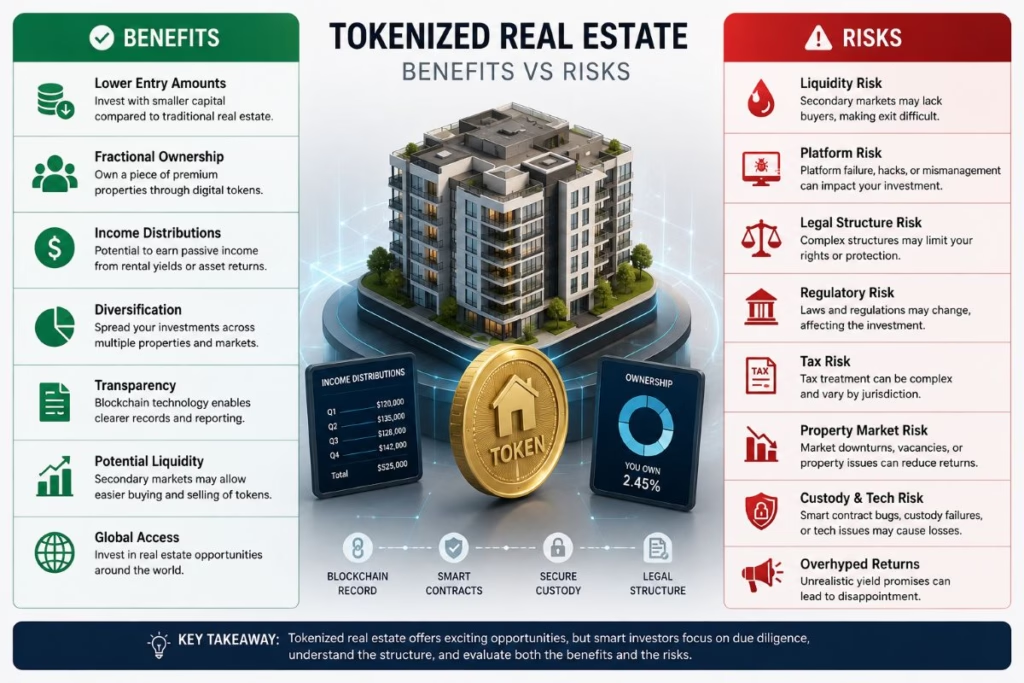
The Main Risks of Tokenized Real Estate
Property performance and borrowing
Vacancies, missed rent, repairs and falling local demand can reduce income or property value. Development projects add construction, permitting and completion risks before rental income may begin.
Borrowing introduces interest payments, loan conditions and eventual refinancing or repayment. If the property cannot meet its obligations, lender enforcement can put investors’ capital at risk.
For equity investors, debt can amplify losses because lenders’ claims generally rank ahead of ordinary equity. Review the loan balance, interest terms, maturity date and the resources available to repay it.
Limited liquidity
A private property interest may take months to sell or have no practical resale route. Holding periods, approval requirements and investor restrictions can further limit possible buyers.
Redemption is a separate process in which the issuer or fund buys back an interest under its terms. Check its funding, limits and suspension provisions before relying on it for access to cash.
The Financial Stability Board’s 2024 tokenization report identifies liquidity mismatch, leverage and operational weaknesses among potential vulnerabilities. For an individual property offering, the practical question is how any promised exit works when the underlying building is hard to sell.
Platform and manager dependence
A platform may coordinate investor records, payments, communications and trading while a separate company owns the property. Failure of the platform can still interrupt these services and make investors’ rights harder to exercise.
The property’s continued existence does not guarantee a smooth recovery. Find out who can maintain records, appoint replacement service providers and continue operations if the platform closes.
Conflicts of interest also deserve attention when the sponsor sells properties to the investment or hires affiliated businesses. Review how prices and fees are approved, what investors learn and whether they can replace an underperforming manager.
Rights, control and additional funding
A small ownership percentage may provide limited influence over borrowing, repairs or the timing of a sale. Some structures give the manager substantial discretion over reserves and distributions.
Certain agreements also permit requests for additional capital when cash runs short. Depending on the terms, investors who decline may face dilution or other consequences.
Read the voting, funding and exit provisions alongside the token terms. Our guide to fractional ownership agreements explains the clauses that establish these responsibilities and rights.
Securities rules and investor eligibility
In the United States, tokenized securities remain subject to securities regulation. Investor.gov’s tokenized securities explanation specifically includes equity interests, debt instruments and real estate fund shares.
An offering’s legal route can affect eligibility, disclosures, marketing and resale. Other jurisdictions apply their own rules, so worldwide online access does not establish permission to buy.
Regulatory status does not establish investment quality or guarantee returns. Check the offering, the relevant service providers and the rights attached to your specific interest.
Technology, custody and payments
Software errors, compromised credentials or service outages can interfere with holdings and transfers. The consequences depend partly on whether investors control their own wallets or use a custodian.
If distributions use stablecoins, receiving and converting those payments introduces further practical considerations. Review supported networks, fees, redemption access and exposure to the payment token’s issuer.
Recovery arrangements matter because the blockchain balance may interact with a separate ownership register. Find out how the investment handles stolen credentials, frozen accounts and corrections to records.
Fees, valuations and tax
The total cost may include acquisition charges, management fees, administration, currency conversion and selling costs. Some charges sit inside the property company, so reviewing only the platform’s transaction fee can understate expenses.
A dashboard valuation may come from an appraisal or model rather than a recent sale. It therefore may differ from what an eligible buyer would pay for your minority interest.
Tax treatment depends on the investment structure, income and investor’s circumstances. Tokenized shares, partnership interests and loans should not all be treated as though they were ordinary cryptocurrency holdings.
Cross-border investments may involve withholding, reporting and currency issues in more than one country. Our tokenized real estate tax guide explains the questions to resolve before investing.

A Resale Discount Can Outweigh Income
Consider a separate hypothetical investment costing $1,000 in total at purchase. During one year, you receive $80 in cash distributions after investment-level charges but before personal taxes.
You then sell the entire holding for $850 and pay a $20 selling fee. Net sale proceeds of $830 plus the $80 received earlier leave you with $910.
Your overall result is a $90 loss, or 9% of the original investment, before personal taxes. The 8% cash distribution did not prevent that loss because the resale price and exit cost also mattered.
This example assumes no other payments, costs or remaining holdings. When comparing offers, examine the assumptions behind both distributions and the eventual recovery of capital.
Several Properties Can Still Share One Risk
Buying interests in several buildings can reduce dependence on a single tenant base or repair bill. However, those investments may still rely on the same platform, property manager or lending arrangements.
For example, five buildings in one city could all suffer from the same local downturn. Even properties in different cities may experience simultaneous disruption if their shared manager stops operating.
Assess diversification across locations, property types, financing and service providers. Counting tokens or property listings alone does not show how independent the risks are.
Tokenized Real Estate, Listed REITs and Direct Property
The most useful comparison considers the particular investment and the work it requires. These broad categories contain different structures, so the table highlights practical differences rather than assigning blanket risk scores.
| Investment route | Main trade-off |
|---|---|
| Private tokenized property interest | May offer a small position in a selected deal; resale and control depend on its terms |
| Publicly traded REIT | Provides exchange-traded property exposure; share prices fluctuate and managers select the assets |
| Direct property ownership | Gives more control over one asset; requires purchase funding, management and a property-sale process |
A publicly traded REIT can provide property exposure without requiring investors to operate buildings or use a crypto wallet. Its exchange listing creates a different trading environment from a private token marketplace.
However, some REITs do not trade on an exchange and can be difficult to sell. Investor.gov’s REIT guide explains why investors must distinguish publicly traded and non-traded products.
Tokenization and REIT status are also different characteristics, so a fund could potentially use both. Compare the actual legal structure, assets and exit arrangements rather than treating the labels as mutually exclusive.
When Might Tokenized Property Be Useful?
A selected property offering may appeal to someone who wants exposure to a particular deal and understands its restrictions. Its value depends on whether the asset, costs and rights justify the added administration and service-provider dependence.
Money needed for near-term spending creates a poor match with an uncertain exit. Investors also need enough information and time to evaluate the property, even when the purchase amount is small.
Our tokenized real estate platform comparison shows how different offerings approach ownership, distributions and resale. Use those details alongside the individual property’s documents rather than treating platform selection as the entire decision.
A Practical Investor Checklist
Before buying, follow the investment from the property through to your rights and eventual exit. These questions help turn broad promises into details you can assess.
- Asset: What are the location, condition, occupancy and evidence supporting the price?
- Debt: How much is owed, when does it mature and what security do lenders hold?
- Rights: What do you own, what can you vote on and can further contributions be required?
- Cash flow: How do collected rent, expenses, reserves and fees become investor distributions?
- Management: Who controls decisions, what conflicts exist and how can a manager be replaced?
- Exit: What transfers or redemptions are permitted, and what completed transactions support the liquidity claims?
- Continuity: Who maintains records and operations if a platform, custodian or manager fails?
- Reporting: Which financial statements, valuations and tax documents will you receive, and how often?
Making the Comparison Count
Tokenized real estate can be useful when it provides suitable access to a well-understood property investment. The digital format should make ownership and administration easier to handle while preserving clear rights and reporting.
Before committing money, compare the expected income with realistic costs and a less favorable exit scenario. That makes the benefits and risks more concrete than a headline yield or minimum purchase amount.
Frequently Asked Questions
What are the main benefits of tokenized real estate?
Potential benefits include smaller allocations, access to selected properties and easier digital administration. The value of each benefit depends on the offering’s costs, rights and available alternatives.
Can tokenized real estate provide passive income?
Some investments distribute rental cash flow, interest or fund income without requiring investors to manage tenants. Payments can fall or stop, and holders still need to review reports and understand their obligations.
Can I sell property tokens whenever I want?
Resale depends on transfer rules, available buyers and the price you will accept. A platform listing or transferable token does not guarantee a completed sale.
What happens if the platform closes?
The outcome depends on the property entity, investor rights and arrangements for replacing service providers. Holdings may remain legally valid while records, distributions or transfers become difficult to access.
Is tokenized real estate safer than direct property?
A smaller position can limit the amount committed to one deal, but the underlying property can still lose value. Tokenized offerings may also introduce service-provider and technical dependencies that differ from direct ownership.
Does buying more tokens improve diversification?
More tokens in the same property increase your exposure to that investment. Interests in different properties may diversify some risks, although shared locations, managers and financing can leave significant overlap.
Is a projected yield the same as my total return?
No, a distribution projection usually describes only one part of the expected result. Your overall outcome also depends on expenses, taxes, resale proceeds and any additional payments or obligations.