
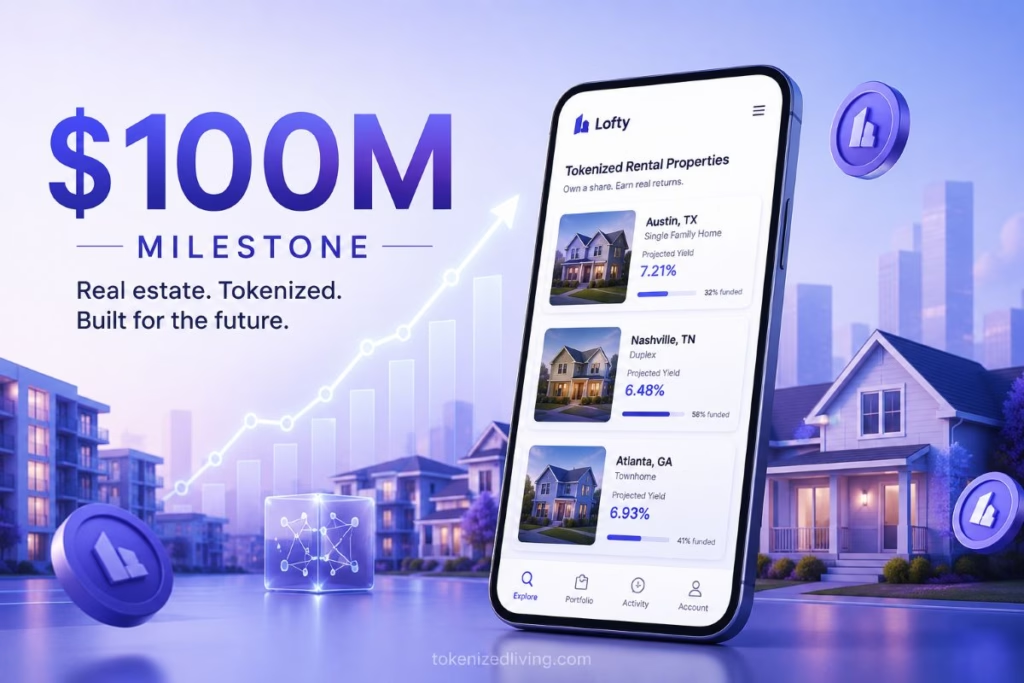
Lofty has passed $100 million in trading volume, according to co-founder Max Ball’s public announcement. The platform lets investors buy and sell fractional interests in U.S. properties.
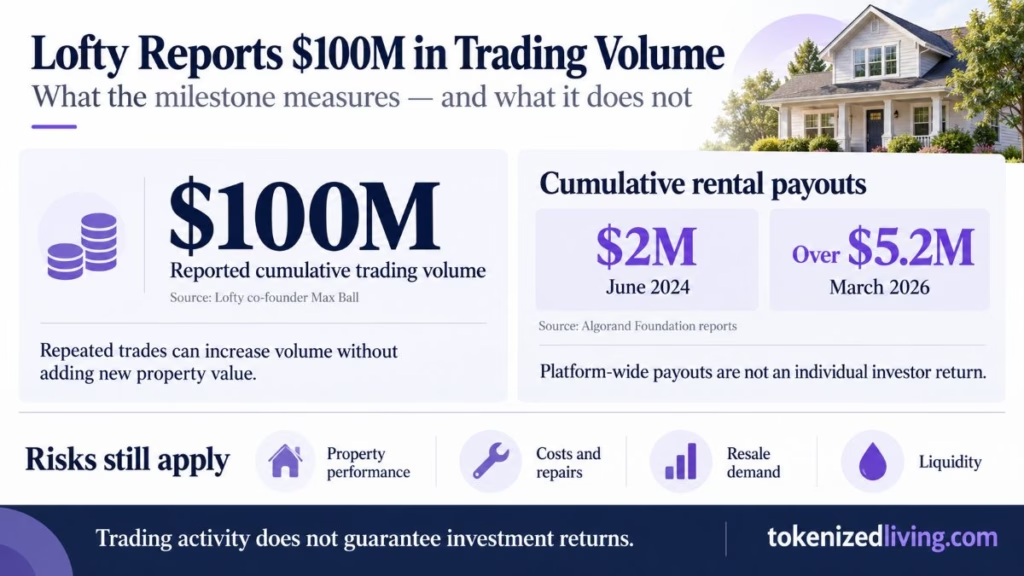
Trading volume measures transaction activity over time. The same property interests can change hands repeatedly, so the figure does not mean $100 million in new property purchases.
Rental distributions provide a separate measure of activity. In its March 2026 ecosystem report, the Algorand Foundation said Lofty had passed $5.2 million in total rental income paid to investors.
These figures describe marketplace activity and cumulative payouts. They do not establish individual investor returns, which depend on purchase prices, property performance, costs and eventual sale proceeds.
Why the Lofty milestone matters
The tokenized real estate sector has had plenty of hype, but far fewer working examples with real users, real properties, and real income distributions.
Lofty’s model allows users to buy fractional ownership in rental properties, often starting from as little as $50. The basic idea is simple: instead of buying an entire rental property, investors can buy smaller property tokens and receive their share of rental income.
That model is part of a broader shift toward real-world asset tokenization, where assets such as real estate, private credit, bonds, and commodities are represented digitally on blockchain networks.
The bigger point is that Lofty is showing demand for smaller-ticket real estate investing. Traditional property investing usually requires a deposit, financing, property management, insurance, repairs, and a long holding period. Lofty reduces some of that friction by turning individual properties into fractional assets that can be bought and sold through its marketplace.
How Far Has Lofty Grown?
An Algorand case study published in June 2024 reported 148 tokenized properties across 11 U.S. states. At that point, Lofty had generated $2 million in rental income for its users.
Algorand’s March 2026 report put cumulative rental distributions above $5.2 million. That represents an increase of more than $3.2 million in reported payouts since the earlier case study.
The Risks Have Not Disappeared
Investors still face the risks of tokenized real estate, including missed rent, repairs and falling property values. These costs can reduce distributions and the value of their holdings.
A marketplace gives investors a way to offer their tokens for sale. However, finding a buyer at an acceptable price depends on demand for that particular property.
Platform-wide trading volume does not show how easily an individual investor can exit. Buyers should examine each property’s finances, fees, ownership terms and available trading activity before investing.
What This Means for Tokenized Real Estate
Lofty’s reported trading milestone shows activity in a marketplace for fractional property interests. It gives the sector a concrete example of investors buying and selling through a tokenized platform.
The next question is how well that marketplace serves investors over time. Property performance, reliable reporting and the ability to sell holdings will matter more than trading volume alone.
For a closer look at the platform, read our Lofty review. It covers the fees, ownership structure and practical risks behind the headline.