
Updated September 15, 2026
Tokenized carbon credits are digital tokens representing carbon credits or defined rights connected with them. They can help buyers track, transfer and request retirement of credits through a blockchain-based system.
However, the token’s usefulness depends on its connection to the carbon registry and the project behind the credit. Reliable digital records cannot make an overstated climate benefit more credible.
TL;DR
A carbon credit generally represents one metric tonne of greenhouse-gas emissions reduced or removed under a crediting program’s rules. Tokenization can improve how credits move and how buyers access information, but project quality, registry controls and valid retirement remain essential.
What Is a Carbon Credit?
A carbon credit is a unit issued for a quantified reduction or removal of greenhouse-gas emissions. One credit normally represents one metric tonne of carbon dioxide equivalent, written as one tCO₂e.
The word “equivalent” allows different greenhouse gases to share a common measurement. For example, a methane-capture project can calculate its credited impact in tonnes of carbon dioxide equivalent.
Projects can include forest restoration, cleaner cooking, landfill methane capture and carbon removal through biochar. Each follows a methodology that sets rules for calculating results and collecting evidence.
Independent reviewers assess the project and its reported performance under the crediting program’s requirements. After the required approvals, a registry issues identifiable credits linked to the project and monitoring period.
Verification gives buyers evidence to examine, but methods and assumptions still matter. Different projects can carry different risks even when their credits use the same one-tonne unit.
Carbon Credits, Allowances and RECs
Environmental markets contain several instruments that serve different purposes. Tokenization changes their digital representation without making them interchangeable.
| Instrument | What it represents |
|---|---|
| Carbon credit | A credited emission reduction or removal, usually one tCO₂e |
| Carbon allowance | Permission to emit a specified quantity under an emissions trading system |
| Renewable Energy Certificate (REC) | Renewable electricity attributes, generally associated with one megawatt-hour of generation |
Owning a carbon credit does not give you shares in the project that produced it. Likewise, an electricity certificate does not automatically give you ownership of solar panels or rights to project revenue.
Our renewable energy tokenization guide explains these different investment and certificate structures. Establish which instrument a platform offers before comparing its price or claimed benefits.
What Does Carbon Credit Tokenization Mean?
Tokenization creates a digital representation of an asset or a defined right. With carbon credits, the token may represent a specific registry unit, an interest in a pool or a contractual entitlement.
For example, a platform might issue one token for each eligible credit held in a controlled registry account. Its rules should explain how holders can transfer tokens, recover credits where permitted or request retirement.
Other systems integrate blockchain into the registry’s own infrastructure. Therefore, a separate off-chain registry account is one possible model rather than a requirement for every digital carbon system.
The essential question is which record the crediting program recognizes as authoritative. Our guide to what tokenization means explains why a token’s technical format does not establish its legal rights.
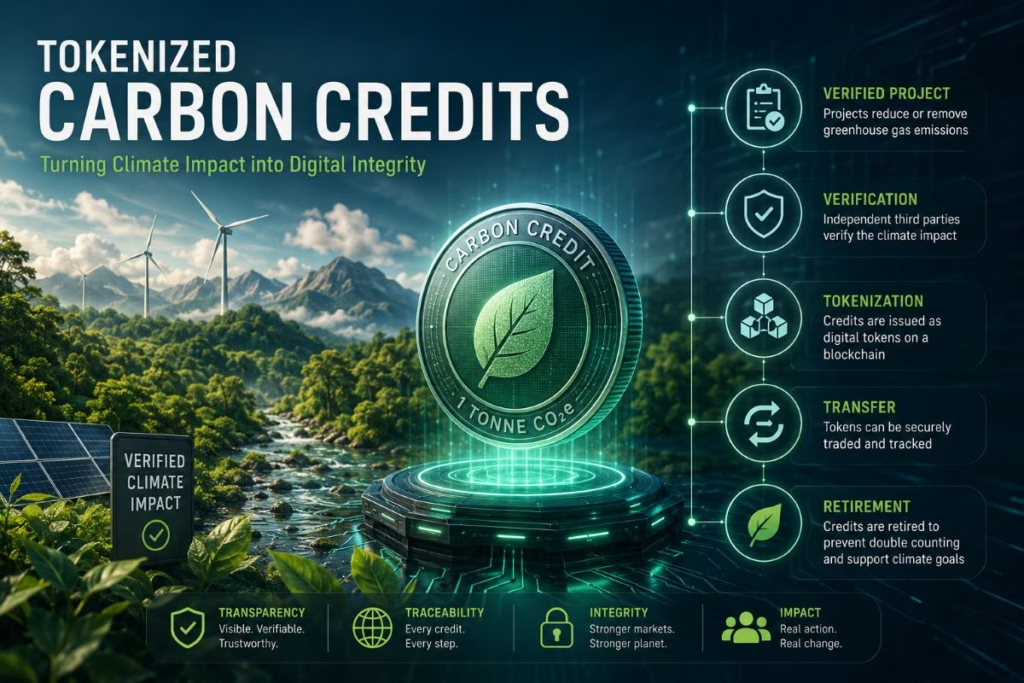
How Tokenized Carbon Credits Work
The following process illustrates a token linked to an existing registry credit. Individual platforms may use different arrangements, so buyers should check the actual program and product rules.
1. Identify an eligible credit
The platform checks the project’s identity, methodology, credit vintage and registry records. Vintage refers to the period when the credited reductions or removals occurred.
It must also establish whether the relevant registry and program permit the proposed token arrangement. A genuine credit can still be unsuitable for a particular platform or intended use.
2. Control the underlying unit
A custodian or other responsible party holds the credit under the agreed arrangement. Controls should prevent someone from selling the same unit separately while its token circulates.
The documents should identify who controls the registry account and how balances are checked. Buyers also need to know what happens if the platform or custodian stops operating.
3. Issue and transfer the token
The system creates tokens according to its specified backing ratio and eligibility rules. A one-token-per-credit model is straightforward, although some products use fractional units or pools.
Approved holders may then transfer tokens or trade through a supported marketplace. Technical transfer speed does not tell buyers how much trading occurs or how easily they can sell.
4. Request retirement
A holder who wants to use a credit for a climate claim requests retirement through the authorized process. The platform may burn, surrender or permanently disable the corresponding token as part of that workflow.
The underlying credit’s authoritative record must then show the appropriate final status. A token burn on its own does not establish that a separate registry has retired its credit.
A Simple Example
Imagine a platform holds 1,000 eligible, unretired credits and issues 1,000 corresponding tokens under a permitted arrangement. Each token represents the right to request retirement of one specified credit.
A company buys 100 tokens and requests retirement for its stated purpose. The process retires 100 underlying credits and removes the corresponding tokens from circulation as active credits.
The remaining balance would be 900 active credits supporting 900 active tokens, assuming no other transactions. Buyers should be able to trace the retirement to the relevant units and named beneficiary.
This example illustrates recordkeeping rather than proving an environmental claim. The company must still assess credit quality and follow the requirements governing its intended statement.
Holding, Trading and Retiring Are Different
Holding a token may give you control of a credit or a contractual right connected with it. Selling transfers the relevant interest to another buyer, subject to the product’s terms.
Retirement removes a credit from active circulation for use toward a stated purpose. Once retired, that credit should not become available again as an unused environmental benefit.
A digital certificate can remain visible after retirement because it records what happened. However, that historical record is different from a tradeable token representing an active credit.
Retirement also does not automatically justify a claim such as “carbon neutral.” The wording depends on the emissions assessed, credit eligibility, accounting rules and applicable claims requirements.
Why Registry Permission Matters
In May 2022, Verra prohibited creating instruments or tokens based on retired credits. It explained that retirement was understood as consuming the credit’s environmental benefit.
The same announcement discussed exploring immobilization of active credits for possible tokenization. That proposal did not give every platform permission to create tokens backed by Verra credits.
Verra’s original announcement explains the historical distinction. Buyers should check current registry terms and evidence of permission for the specific arrangement being offered.
A 2026 Example: Digital Monitoring Without a Tradeable Token
Gold Standard announced a fully digitized cookstove-credit issuance with ATEC Global on March 25, 2026. The eCook Bangladesh project used connected devices to record usage and provide data for independent audit.
Following approval, Gold Standard issued the credits through its Impact Registry. A non-tradeable digital twin appeared on the Hedera public ledger, providing a traceable representation of the credits.
This distinction is explicit in Gold Standard’s announcement. The example demonstrates digital monitoring and traceability, rather than the launch of a freely tradeable carbon token.
It also shows why “blockchain carbon project” can describe several different activities. Improving the evidence behind a credit may be valuable even when there is no new token to buy.
What Can Tokenization Improve?
Access to information
A well-designed interface can connect tokens with project documents, registry identifiers and retirement records. This makes it easier for buyers to inspect the information relevant to a purchase.
However, an interface must preserve the details that distinguish one credit from another. A generic pool label can obscure differences in project type, methodology and vintage.
Transfers and administration
Shared records and programmed instructions may reduce manual work when updating balances or processing approved transfers. Some systems can also coordinate payment with delivery of the digital asset.
The overall result depends on custody, banking, registry connections and operating procedures. A quick blockchain transaction may still sit inside a longer purchase or retirement process.
Retirement tracking
Automation can help connect a buyer’s instruction with the required retirement workflow. It may also make confirmations and supporting records easier to retrieve.
Operators still need to reconcile the token system with the authoritative credit record. Any failed or delayed update should remain visible until the problem is resolved.
What Blockchain Cannot Verify
Blockchain can preserve a record of submitted information, but the information still needs reliable measurement and review. A forest’s condition or a stove’s actual use requires evidence beyond token transactions.
The ICVCM Core Carbon Principles identify quality requirements including additionality, permanence, conservative quantification and safeguards. These questions remain relevant when credits use blockchain infrastructure.
- Additionality: Would the credited reductions or removals have occurred without the incentive from carbon-credit revenue?
- Permanence: Could stored carbon return to the atmosphere, and how would the program address that reversal?
- Quantification: Do the baseline, measurements and assumptions support the quantity of credits issued?
- Safeguards: Does the project protect affected communities and address social and environmental harm?
For example, a wildfire can release carbon stored by a forest project. An accurate token ledger cannot stop that event or replace the program’s response to the loss.
Similar verification challenges arise in agricultural tokenization, where a digital record still depends on inspections, reliable storage and evidence that the underlying grain exists.

The Main Risks for Buyers
Duplicate representation or use
Problems arise if several tokens represent the same unit without a valid fractional structure. Another risk occurs when a registry credit remains independently tradable alongside its token.
Matching identifiers, controlled accounts and regular reconciliation help detect these conflicts. Retirement and claims records also need to prevent the same environmental benefit from being used inconsistently by different parties.
Unclear holder rights
Some buyers may hold a contractual claim against a platform rather than direct control of the underlying credit. That difference matters if they request delivery, retirement or recovery after a business failure.
Read the agreement to identify the responsible entity and the available remedies. The broader real-world assets guide explains why similarly named tokens can provide different rights.
Technology and custody failures
Smart-contract errors, stolen credentials or compromised accounts can interrupt access and transfers. A security audit provides useful information, but it does not eliminate these risks.
Buyers should understand who holds the keys and who can authorize sensitive actions. Recovery procedures and controls over token issuance deserve the same attention as the trading interface.
Poor liquidity and changing eligibility
A listed token may attract few buyers or sell only at a substantial discount. Demand also depends on the underlying credits and whether they qualify for buyers’ intended uses.
Tokenization does not itself make a credit eligible for a compliance program or a particular corporate claim. Check the exact unit’s status, rather than relying only on the registry’s name.
Are Tokenized Carbon Credits Investments?
Carbon credits can change in price, but holding a credit does not inherently generate interest or rental income. Any lending, staking or yield arrangement adds a separate set of counterparties and risks.
A project’s governance token is another distinct product and may provide no rights to individual credits. Therefore, distinguish buying credits from investing in a platform that serves the carbon market.
For someone planning to retire credits, eligibility and dependable retirement may matter more than resale potential. A speculative buyer instead needs to assess demand, fees and the chance of finding an eligible future buyer.
A Buyer Checklist
Start with the underlying credit and follow its connection through to the token. These checks help establish what the platform actually offers.
- Identify the units. Check the project, registry, serial numbers, methodology and vintage.
- Confirm the arrangement is permitted. Look for evidence that the registry’s current rules support the proposed token model.
- Establish your rights. Determine whether you control a credit, hold a contractual claim or own a pool interest.
- Check the backing. Review custody arrangements, token quantities and reconciliation records.
- Examine quality. Read the verification evidence, project assumptions and relevant safeguards.
- Follow the retirement process. Confirm the authoritative record, beneficiary, timing, fees and treatment of failed requests.
- Check the intended use. Establish whether the specific credits meet the relevant program and claims requirements.
- Understand the exit and failure plan. Review resale activity and what happens if the platform closes.
The Practical Outlook
Tokenized carbon credits have a useful role when they improve an already credible crediting and registry process. Their value depends on clear rights, reliable data and controls that keep every representation consistent.
The strongest question for buyers is whether the digital system makes those checks easier to perform. Our beginner’s guide to RWA tokenization applies the same approach to other asset categories.
Frequently Asked Questions
What does one tokenized carbon credit represent?
It may represent one registry credit, a fraction, a pooled interest or another defined right. Read the product terms because one token does not always equal one tonne of carbon dioxide equivalent.
Does buying a carbon token mean I have offset emissions?
A purchase alone does not complete retirement or establish an offsetting claim. The underlying credit must meet the relevant requirements, and the buyer must follow the appropriate retirement and claims process.
Is burning a token the same as retiring a credit?
Only if the authorized system makes that action complete the required retirement in the authoritative credit record. In a separate registry model, burning a token without updating the registry leaves the process incomplete.
Can a retired credit be sold again?
A retired credit should not return to circulation as an unused environmental benefit. A visible digital record of its retirement can remain, but that record serves a different purpose.
Are carbon-credit tokens shares in a forest or solar project?
Usually, a credit token concerns an environmental unit or rights linked to it. Ownership of land, equipment or a project’s profits requires a separate, clearly defined investment structure.
Does blockchain guarantee a high-quality carbon credit?
No, quality depends on the project’s evidence, methodology and crediting controls. Blockchain records cannot independently establish that an emissions reduction or removal occurred as claimed.