
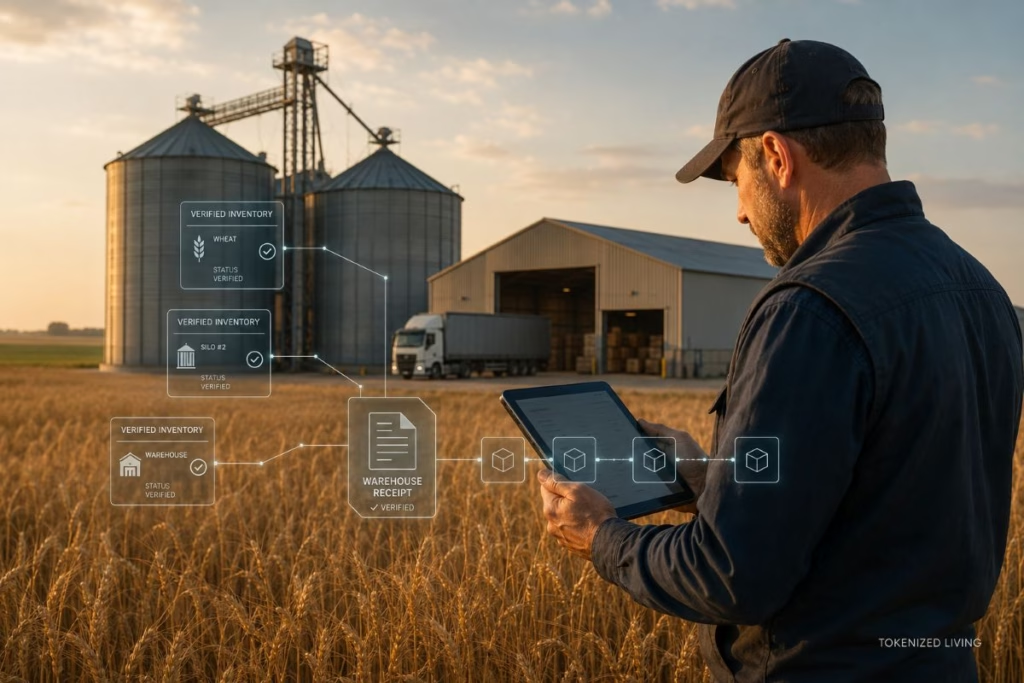
Updated: 26 thAugust 2026
A tonne of grain cannot live on a blockchain. Neither can a field, tractor or herd of cattle.
Instead, agriculture tokenization creates a digital token linked to rights over an off-chain asset. That asset might be stored grain, farmland, a farm loan or future crop revenue.
The distinction matters.
A token does not prove that grain exists inside a warehouse. It does not guarantee legal ownership of a field. Moreover, it cannot prevent drought, crop disease or falling commodity prices.
Tokenization can improve recordkeeping, settlement and collateral management. However, it only works when legal agreements, inspections, custody and reliable data support the token.
This guide explains how tokenization in agriculture works, where it may provide real value and which risks the usual blockchain sales pitch leaves out.
This article provides general information. It does not constitute financial, investment, legal or tax advice.
TL;DR
- Agriculture tokenization creates digital tokens linked to agricultural assets, documents or financial rights.
- A token may represent stored grain, a warehouse receipt, a trust certificate, debt or future crop revenue.
- The token rarely gives its holder direct ownership of a field or a specific pile of grain.
- Electronic warehouse receipts already help farmers use stored crops as collateral. Blockchain is one possible technical layer.
- Tokenization may improve settlement, audit trails and collateral monitoring.
- It does not automatically create liquidity, eliminate fraud or protect farmers from price volatility.
- Justoken, formerly associated with the Agrotoken brand, provides a current commodity-tokenization example.
- Argentina’s Landtoken shows how farmland exposure can use a regulated financial trust instead of direct land-title ownership.
- Storage loss, incorrect grading, double pledging, weak legal rights and unreliable data remain major risks.
- Investors must examine the legal wrapper and the underlying agricultural operation before looking at the blockchain.
What Is Tokenization in Agriculture?
Tokenization means representing an asset, document or legal right through a digital token.
In agriculture, the underlying item may include:
- Stored wheat, corn, soybeans or coffee
- A warehouse receipt covering agricultural commodities
- Shares or certificates linked to farmland
- A loan made to a producer or agricultural company
- A promise to deliver part of a future harvest
- An account receivable from a buyer
- Livestock or machinery
- A carbon credit or environmental certificate from agricultural activity
These products belong to the broader category of real-world assets, or RWAs. Their value comes from assets and agreements outside the blockchain.
However, the word “tokenized” does not tell you what the buyer owns.
One token might provide a redemption claim for a specified quantity of grain. Another may represent a certificate in a financial trust that owns farmland. A third could represent debt owed by an agricultural business.
Those structures create completely different rights and risks.
The first question should never be, “Which blockchain does the token use?” It should be, “What legal right does this token represent?”
Five Main Agriculture Tokenization Models
Agriculture tokenization is not one product. Several models sit beneath the same label.
| Model | What the token may represent | Main off-chain dependency | Major risk |
|---|---|---|---|
| Commodity-backed token | A claim linked to stored grain or another commodity | Warehouse, inspection and custody | Missing, damaged or over-issued collateral |
| Tokenized warehouse receipt | A digital representation of a receipt for stored goods | Receipt law and warehouse operator | Weak transfer or enforcement rights |
| Agricultural credit token | A loan, receivable or debt instrument | Borrower and servicing structure | Default and poor underwriting |
| Farmland investment token | A share, trust certificate or contractual interest | Legal entity and land manager | No direct title, illiquidity and operating risk |
| Future-production token | A right linked to future crops or revenue | Farmer’s ability to produce and deliver | Weather, crop failure and counterparty risk |
Environmental assets create another category. For example, a farm may generate carbon credits through soil or land-management projects. Yet the tokenized carbon credit still depends on its methodology, registry and verification process.
How Grain Tokenization Can Work
Stored commodities provide one of the clearest agricultural use cases.
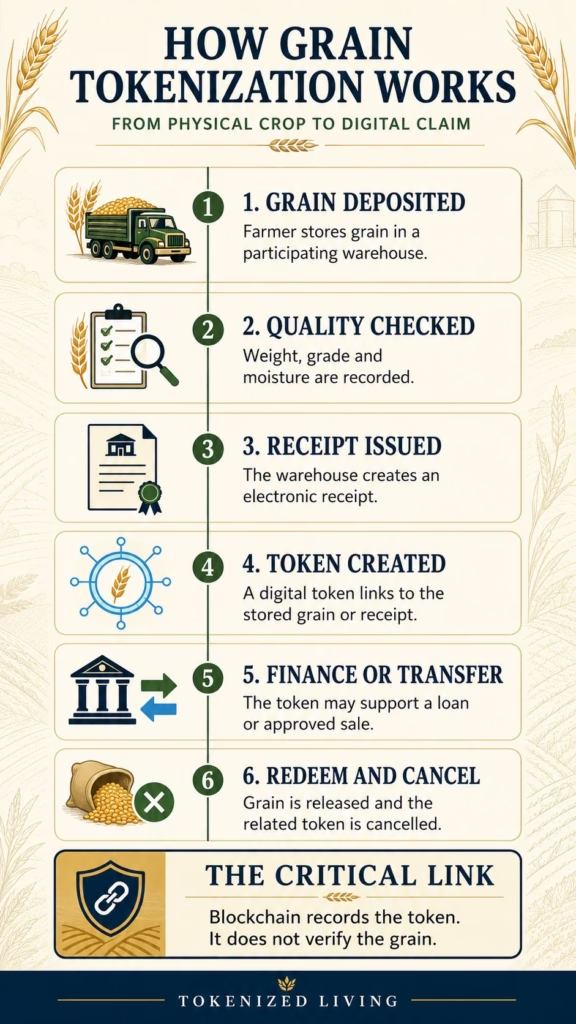
Consider a farmer who deposits 100 tonnes of soybeans at a participating warehouse.
1. The Warehouse Receives the Grain
First, the warehouse weighs the delivery. It also records details such as moisture, grade, origin and quality.
These details affect value. One tonne of damaged or high-moisture grain is not equal to one tonne that meets an approved trading grade.
2. An Inspector or Approved Party Verifies the Deposit
Next, an authorized party confirms the quantity and condition. The process may also include insurance, lien and ownership checks.
Blockchain cannot perform this inspection. It can only store or reference the information someone provides.
3. The Warehouse Issues a Receipt
The warehouse may then issue a paper or electronic warehouse receipt.
A warehouse receipt acknowledges that the operator holds specified goods. Depending on local law, the holder may transfer the receipt or use it as collateral.
The 2024 UNCITRAL–UNIDROIT Model Law on Warehouse Receipts supports both paper and electronic receipts. It also covers transfers, warehouse duties and security rights.
The model law is technology-neutral. Therefore, an electronic receipt does not need a blockchain.
4. A Platform Creates the Digital Token
A tokenization platform may create tokens linked to the receipt or stored commodity.
The structure must define:
- Who can issue tokens
- How many tokens correspond to the deposit
- Whether tokens confer ownership, redemption or collateral rights
- Who controls transfers
- How the platform prevents duplicate issuance
- What happens when grain leaves the warehouse
For example, one token might correspond to one tonne of grain. Still, that ratio means little without enforceable terms and verified reserves.
5. The Farmer Uses the Token
The farmer may transfer the token to an approved buyer. Alternatively, a lender might accept it as collateral for a loan.
This structure can help producers obtain working capital while the commodity remains stored. The World Bank identifies warehouse-receipt financing as a possible route to credit for farmers who lack conventional real-estate collateral.
However, the lender will still assess the farmer, warehouse, commodity and legal structure. A token does not replace credit underwriting.
6. The System Handles Repayment or Redemption
Finally, the farmer may repay the loan and recover control of the token. A buyer might instead redeem the token and collect the grain.
The platform must then burn, cancel or lock the related token. Otherwise, someone could trade a digital claim after the warehouse released the commodity.
This last step is critical. Issuance attracts attention, but redemption proves whether the structure works.
Electronic Warehouse Receipts Are Not Automatically Tokens
Many articles confuse electronic records with tokenization.
An electronic warehouse receipt can exist in a conventional database. In fact, the United States already has approved electronic warehouse-receipt providers for grain and other agricultural products.
The US Department of Agriculture lists authorized providers under the United States Warehouse Act.
Blockchain becomes relevant when participants want features such as shared records, programmable transfers or integration with on-chain finance. Even then, it remains an infrastructure choice.
The UNCITRAL Model Law on Electronic Transferable Records can accommodate registries, tokens and distributed ledgers. It does not require one specific technology.
That point kills one of the sector’s weakest arguments.
If a trusted database can solve the problem more cheaply, adding a token may create expense without adding value.
Agriculture Tokenization Versus Supply-Chain Blockchain
Tokenization and traceability can work together. However, they solve different problems.
| System | Main purpose | Typical information |
| Tokenization | Represents and transfers a right or financial claim | Ownership, collateral, redemption and transfer status |
| Traceability | Tracks a product’s history and movement | Origin, location, certification, custody and processing |
| Digital settlement | Coordinates invoices and payments | Buyer, seller, price, delivery and payment status |
| Inventory software | Manages stock and operational records | Quantity, grade, storage location and movements |
For example, a coffee supply-chain platform may track beans from a farm to a retailer. That does not mean anyone created a tradeable coffee token.
Likewise, a token can transfer between wallets without proving where the underlying coffee originated.
Our guide to tokenization in supply chains examines traceability, data quality and the physical–digital gap in greater detail.
Current Examples of Agriculture Tokenization
Several projects show genuine activity. Nevertheless, each one uses a different model.
Justoken and the Agrotoken Legacy
Agrotoken became known for digital tokens linked to soybeans, corn and wheat in Latin America.
By 2026, the old Agrotoken website redirected to Justoken. The broader platform now covers commodities, energy and natural resources.
Justoken reports more than $500 million in tokenized commodity value. It also reports more than one million tonnes across 11 commodities and eight certification types.
Those figures come from the company rather than an independent audit. Therefore, readers should treat them as self-reported operating data.
The model remains useful because it shows how verified agricultural assets may support digital guarantees and financing. However, it does not prove that every issued token has a deep secondary market.
Landtoken: Farmland Through a Financial Trust
Landtoken provides a different example.
The project gives investors financial exposure to productive farmland in Argentina. Yet investors do not simply place a land deed in a wallet.
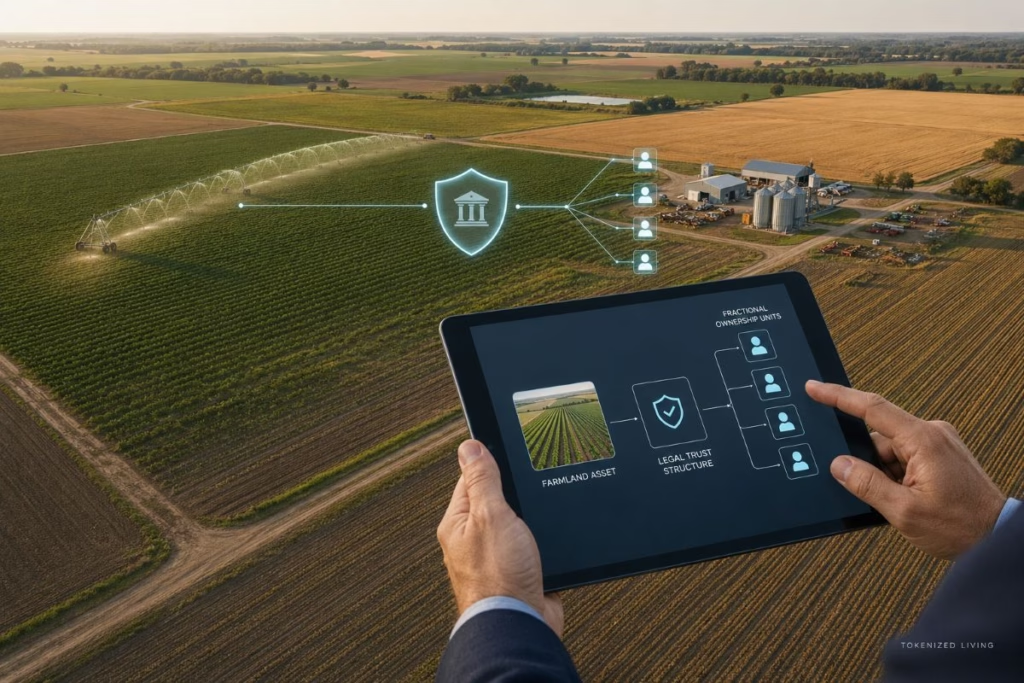
The structure uses a financial trust. Its investors receive certificates of participation connected to that trust.
Argentina’s securities regulator maintains public filings for the Landtoken financial trust. The records include prospectus documents, contracts, placement results and continuing disclosures.
This case demonstrates the legal-wrapper principle.
The token serves as a digital representation of a regulated financial instrument. The trust and its documentation create the investor’s rights.
Therefore, buying the token is not the same as placing the buyer’s name directly on the land title.
GrainChain: Useful, but a Different Category
GrainChain remains active in agricultural technology. Its official website describes a cloud-based platform using blockchain and IoT across transactions, inventory and logistics.
However, GrainChain should not be described casually as a public grain-token investment platform. Its current offering focuses on operational infrastructure for farmers, traders, warehouses and logistics providers.
It belongs in the wider blockchain-in-agriculture discussion. Still, it is not evidence that retail investors can buy tokens redeemable for farmers’ grain.
Why AgriDigital Is No Longer a Strong Tokenization Example
The old version of this article listed AgriDigital as an agriculture-tokenization case.
The current AgriDigital website markets grain and fertilizer management, inventory records, contracts, reporting and digital settlements. It does not present a live tokenized-asset product.
AgriDigital may provide useful agricultural software. However, including it as a current tokenization case would blur the article’s central definition.
Potential Benefits of Agriculture Tokenization
Tokenization can create value. Yet every benefit depends on implementation.
Better Collateral Visibility
A shared system can help lenders monitor which assets support a loan. It may also record transfers, releases and changes in collateral status.
This feature can reduce reconciliation work. However, the system still needs accurate inspections and controls.
Faster Settlement
Smart contracts can connect delivery information with payment instructions. As a result, approved transactions may settle faster.
Nevertheless, a smart contract cannot decide whether wet grain meets the agreed quality. Someone must supply trustworthy data.
Programmable Transfer Controls
Issuers can restrict transfers to approved wallets. They can also apply investor, jurisdiction or holding-period rules.
These controls may support compliance. Still, they can also limit resale and reduce liquidity.
Fractional Access
A financial trust or company can divide an agricultural investment into smaller units. That may lower the entry amount for investors.
However, fractional access does not make the underlying asset safer. A small share of a weak project remains a weak investment.
More Consistent Records
Shared digital records can reduce mismatches between producers, warehouses, buyers and lenders.
Yet blockchain only preserves submitted data. False information becomes a permanent false record unless someone corrects it.
New Financing Channels
Tokenized debt, receivables or commodity collateral may connect agricultural businesses with new lenders.
Even so, access depends on identity checks, legal documentation, credit standards and reliable internet access. Small farmers do not benefit merely because a platform uses blockchain.
What Tokenization Does Not Guarantee
Agriculture-tokenization marketing often turns possible benefits into promises. That is where the nonsense begins.
| Marketing claim | Reality |
| “Instant liquidity” | A token still needs willing and eligible buyers. |
| “Price stability” | Tokenization does not stop grain, land or livestock prices from falling. |
| “Fraud-proof records” | Bad inspections and false data can still enter the system. |
| “No intermediaries” | Warehouses, inspectors, custodians, lawyers and lenders remain essential. |
| “Direct asset ownership” | Many tokens represent shares, debt or contractual claims instead. |
| “Global access” | Securities, sanctions, tax and platform rules can restrict participation. |
| “Guaranteed farmer finance” | Lenders still evaluate collateral, repayment ability and counterparty risk. |
Tokenization changes the transaction layer. It does not repeal economics, law or agriculture.
The Main Risks
Agricultural tokens combine digital-asset risk with physical-asset risk.
The Physical–Digital Gap
The blockchain may show 100 tokens. The warehouse might hold only 80 tonnes of acceptable grain.
That gap can arise through theft, incorrect measurements, duplicate receipts or deliberate fraud.
Regular audits and reconciliation can reduce the risk. They cannot make it disappear.
Storage and Custody Risk
Stored commodities can suffer from:
- Fire or flooding
- Pest damage
- Contamination
- Spoilage
- Excess moisture
- Weight loss
- Theft
- Poor handling
- Warehouse insolvency
Insurance may cover certain losses. However, exclusions, deductibles and claims delays still matter.
Quality and Grading Risk
Agricultural commodities vary by quality, origin, age and condition.
A token described as “one tonne of wheat” needs more detail. Buyers should know the grade, delivery location, inspection rules and acceptable tolerances.
Otherwise, equal token quantities may hide unequal assets.
Double Issuance and Double Pledging
An operator could issue multiple digital claims against the same commodity. A farmer might also pledge the same crop to more than one lender.
Strong systems need a single authoritative record, regular reconciliation and clear lien priority.
Legal and Enforcement Risk
The token holder needs enforceable rights outside the blockchain.
Key questions include:
- Does local law recognize the electronic record?
- Does transferring the token transfer the underlying right?
- Has the lender perfected its security interest?
- Who has priority if several creditors make claims?
- What happens during warehouse or issuer insolvency?
- Can the holder demand physical delivery?
- Which court or arbitration process handles disputes?
A smart contract cannot answer these questions by itself.
Oracle and Data Risk
Platforms may use sensors, satellite images or inspection reports. These tools can improve monitoring.
However, devices can fail. Data feeds can also contain mistakes or manipulation.
The blockchain protects stored records from casual alteration. It does not guarantee that an external measurement was correct.
Commodity-Price Risk
Grain and other agricultural products can move sharply in price.
Weather, harvest volumes, trade restrictions, transport costs and currency movements all affect value. Tokenization does not hedge those risks unless a separate contract provides a genuine hedge.
Farming and Climate Risk
Future-production tokens face an additional problem: the asset may not exist yet.
Drought, flooding, disease or input shortages can reduce the harvest. Therefore, a promise linked to future crops creates production and delivery risk.
Liquidity Risk
A digital token can remain difficult to sell.
Agricultural products often serve specialized markets. Transfer restrictions may shrink the buyer pool further.
Therefore, investors should never treat a marketplace listing as proof of liquidity. The same lesson applies across the wider tokenized-asset market.
Platform and Cybersecurity Risk
Wallet theft, lost keys, smart-contract bugs and platform failure can block access to a token.
Moreover, the issuer may control minting, freezing and transfers. Investors must understand those permissions.
Farmland Operating Risk
Farmland tokens introduce land-specific concerns.
Income depends on tenants, crop choices, leases, management costs and local conditions. Land valuations can also fall.
In addition, foreign-ownership restrictions may shape the investment structure. That is why many projects use a company, fund or trust rather than direct title.
The risks overlap with those covered in our guide to the benefits and risks of tokenized real estate.
A Due-Diligence Checklist for Agricultural Tokens
Before buying or accepting an agricultural token, investigate the entire structure.
Legal Rights
- What exactly does the token represent?
- Do you own a commodity, security, debt claim or contractual right?
- Which entity issued the token?
- Which jurisdiction’s law governs it?
- Can the issuer freeze, cancel or replace the token?
Underlying Asset
- Where is the grain, land or other asset located?
- Who owns and controls it?
- How often does an independent party verify it?
- Does insurance cover the main physical risks?
- How does the system prevent double issuance or double pledging?
Valuation and Income
- Who sets the asset value?
- Which commodity grade, location and delivery terms apply?
- Where does any promised income come from?
- Which fees reduce the investor’s return?
- What happens after a poor harvest or borrower default?
Redemption and Exit
- Can holders redeem the token for the underlying asset or cash?
- What minimum quantity applies to physical delivery?
- Who pays transport, storage and inspection costs?
- Is there real secondary-market volume?
- Which investors can legally buy the token from you?
Technology and Governance
- Who controls the smart contract and administrator keys?
- Has anyone audited the code?
- Which data sources connect the physical asset to the token?
- What happens if the blockchain or platform stops operating?
- Can holders access legal records without the platform dashboard?
If the issuer cannot answer these questions, do not let polished blockchain graphics distract you.
When Does Blockchain Add Real Value?
Blockchain may help when several organizations need to share and transfer the same authoritative record.
For example, a farmer, warehouse, inspector, lender and buyer may all need access to current collateral information. A permissioned ledger could reduce repeated reconciliation between separate systems.
Tokenization may also help when a regulated asset needs programmable transfers or integration with digital settlement.
However, blockchain adds little when one trusted party already controls the entire process. A conventional database may then prove cheaper and easier to maintain.
The right question is not whether agriculture can use blockchain.
It can.
The right question is whether blockchain improves a specific process enough to justify its legal, technical and operational complexity.
The Future of Agriculture Tokenization
The strongest near-term uses will probably remain institutional rather than speculative.
Banks may use verified digital collateral. Commodity companies may connect inventory with financing. Meanwhile, regulated trusts may offer smaller investment units linked to farmland or agricultural debt.
Digital monitoring should also improve. Sensors, satellite data and geospatial systems can help confirm crop conditions, land use and storage activity.
Still, technology cannot replace independent verification.
The market will mature only when projects prove three things:
- The underlying asset exists.
- The token creates enforceable rights.
- Holders can recover value when something goes wrong.
Issuing a token is easy. Building a reliable agricultural-finance system around it is the hard part.
Frequently Asked Questions
What is tokenization in agriculture?
Tokenization in agriculture creates digital tokens linked to agricultural assets, documents or financial rights. Examples include stored grain, warehouse receipts, farmland trust certificates, loans and future crop revenue.
Does an agricultural token provide direct ownership?
Not necessarily. A token may represent a redemption claim, debt instrument, company share or trust certificate. Investors must read the legal documents to understand their rights.
Can farmers use tokenized grain as collateral?
Potentially. A verified warehouse receipt or commodity-backed token may support a loan. However, lenders still need enforceable security rights, reliable storage and proper valuation.
Does tokenization protect farmers from falling prices?
No. Digitizing a commodity does not stabilize its market value. Price protection requires a separate hedging strategy or contract.
Is a blockchain supply-chain platform the same as tokenization?
No. A supply-chain platform may track products without creating transferable tokens. Tokenization represents and transfers a defined right or financial claim.
Are tokenized agricultural assets liquid?
Some products may trade on approved platforms. Nevertheless, liquidity depends on buyer demand, market access and transfer rules. A token can be technically transferable but commercially illiquid.
What is the biggest risk?
The largest risk is often the connection between the token and the off-chain asset. Holders need reliable verification, custody and enforceable legal rights.
Final Verdict
Agriculture tokenization has practical uses. Commodity collateral, electronic warehouse receipts and regulated farmland instruments deserve serious attention.
However, the blockchain never becomes the farm, warehouse or legal system.
Every agricultural token still depends on people and institutions. Warehouses must protect commodities. Inspectors must report accurate data. Lawyers must create enforceable rights. Lenders must assess credit. Farmers must produce the crop.
Therefore, investors should judge the agricultural asset and legal structure before evaluating the token.
Tokenization can make agricultural finance more connected and programmable. It cannot turn weak collateral, bad data or an unreliable issuer into a sound investment.