
Updated: August 21, 2026
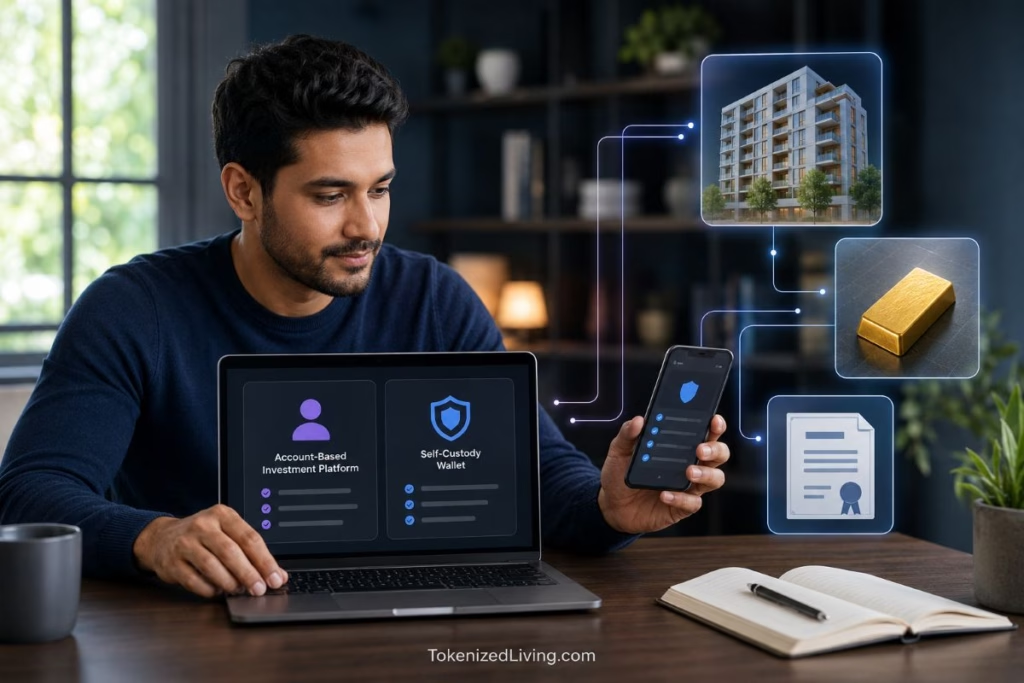
Buying a tokenized asset can be as simple as opening an account and paying by bank transfer. In other cases, you may need a crypto wallet, stablecoins and the correct blockchain network.
This guide explains how to buy tokenized assets through each route without confusing an easy checkout with a safe investment.
The buying process depends on the asset, platform and legal structure.
That point matters because a token does not always represent direct ownership. It may represent shares in a company, units in a fund, debt, income rights or another contractual claim.
Therefore, the first step is not choosing a wallet. It is understanding exactly what you are buying.
If you are new to the subject, start with our plain-English guide to what tokenization means.
TL;DR
- There is no single marketplace for every tokenized asset.
- Some platforms accept bank transfers or cards. Others require a compatible wallet and cryptocurrency.
- A token may represent equity, debt, fund units, property rights or a contractual claim.
- KYC checks do not prove that an investment is safe or properly structured.
- Always confirm investor eligibility before sending money.
- Wallet users must select the correct token, contract address and blockchain network.
- A marketplace or sell button does not guarantee liquidity.
- Start with a small purchase and keep copies of every legal and transaction record.
Disclosure: Some links in this article may be affiliate or referral links. Tokenized Living may receive a commission or reward if you use one of those links. This does not affect our analysis. This article provides general information and does not constitute financial, investment, legal or tax advice.
What Does It Mean to Buy a Tokenized Asset?
Tokenization connects an off-chain asset or legal right with a digital token.
However, the token is only the digital layer. The legal documents determine the rights behind it.
For example, a property token could represent:
- shares in a company that owns a building
- membership interests in a property-holding LLC
- a loan made to a real estate project
- units in a property fund
- rights to part of an income stream
- a registered fractional property interest
These arrangements do not give investors the same rights.
The same distinction applies to other assets. A gold token may represent allocated bullion held by a custodian. Meanwhile, a tokenized stock product might provide economic exposure without making the holder a registered shareholder.
Our beginner’s guide to RWA tokenization explains how these off-chain rights connect with blockchain records.
Where Can You Buy Tokenized Assets?
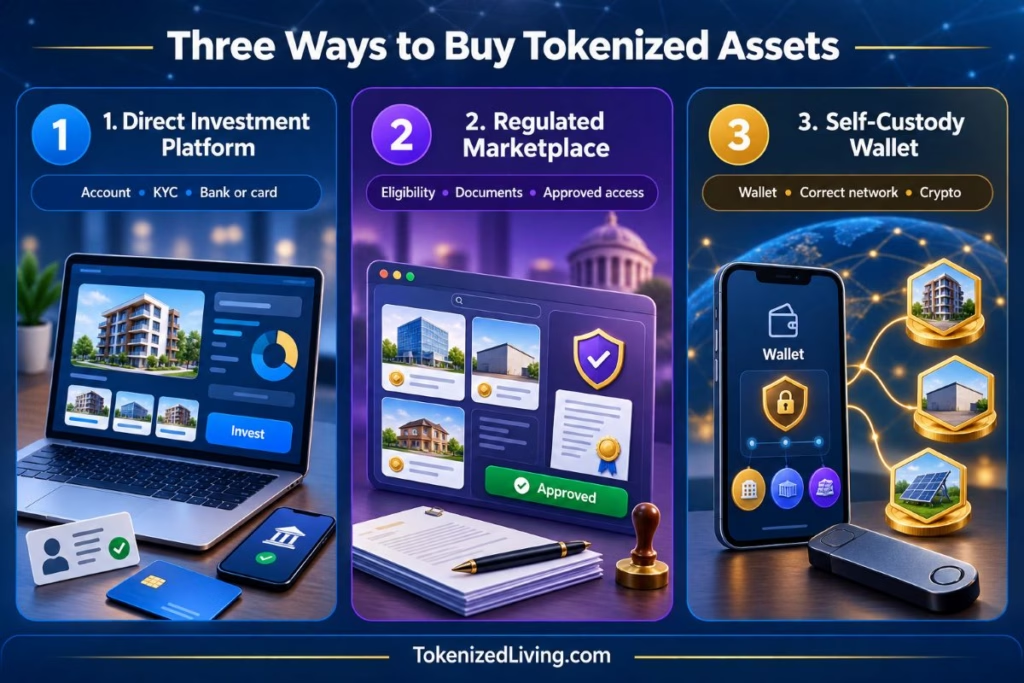
Most purchases follow one of three routes.
1. Directly Through an Investment Platform
This is usually the simplest route for beginners.
The platform handles the account, identity checks, documents and transaction interface. It may also provide an embedded or custodial wallet behind the scenes.
Depending on the provider, investors might pay by:
- bank transfer
- debit or credit card
- stablecoin
- another supported cryptocurrency
For example, Lofty says investors can fund an account by bank transfer or buy property shares by card. Its platform also includes an embedded wallet. Reental says it accepts card and cryptocurrency payments for its property-linked tokens.
Ease of use does not remove investment risk. You still need to review ownership, fees, property performance and exit conditions.
2. Through an Issuer or Regulated Marketplace
Tokenized securities, funds, private credit and Treasury products may use a more controlled process.
Investors normally create an account, complete identity checks and confirm their jurisdiction. Some offerings also require accredited, professional or qualified-investor status.
Furthermore, the token may use an allowlist. Only approved wallets can receive or transfer it.
This route often feels more like opening a brokerage or private-investment account than using a cryptocurrency exchange.
3. Through a Self-Custody Wallet
Some assets can be purchased or received through a compatible blockchain wallet.
The buyer may need to:
- install a wallet
- add the correct network
- obtain the required payment token
- hold the network’s gas token
- connect to the official platform or marketplace
- approve and confirm the transaction
This route provides more direct control. However, it also places more responsibility on the investor.
The SEC’s Investor.gov explains that wallet access depends on private keys. Losing the only key can permanently remove access to the assets. Read its crypto asset custody guide before choosing self-custody.
Examples of Different Buying Routes
The following examples show why no universal buying process exists. They are not rankings or recommendations.
| Example | Asset type | Typical purchase route | Important limitation |
|---|---|---|---|
| Lofty | Fractional US real estate | Account, bank transfer or card | Each property and marketplace exit requires separate review |
| Reental | Property-linked investment tokens | Account, card or supported cryptocurrency | The legal claim can differ from direct property ownership |
| PRYPCO Mint | Dubai real estate and gold | Verified platform account | Marketplace eligibility currently includes UAE identity requirements |
| Ondo Stocks | Tokenized stock and ETF exposure | Eligible users connect a wallet and complete onboarding | The product is unavailable to US persons and other restricted users |
| PAX Gold | Gold-backed token | Paxos or a supported exchange and wallet | Custody, spreads, fees and redemption conditions still apply |
Explore Lofty Properties
To see how Lofty works in practice, you can browse the properties currently available on its marketplace.
Review each property’s ownership structure, projected income, expenses, fees and supporting documents before investing.
This is an affiliate link. If you use it, we may earn a commission at no extra cost to you.
Lofty describes its payment process on its official How Lofty Works page. Reental lists its approximate token minimums in its official FAQ.
However, Reental’s structure also shows why buyers must look beyond the payment screen. Our guide to how Reental works explains the credit rights behind its property-linked tokens.
PRYPCO Mint’s current rules show how narrow eligibility can be. Its marketplace requirements include age, Emirates ID, passport and verified-account conditions.
Ondo provides another model. Its Ondo Stocks page says eligible non-US investors can connect a wallet, complete onboarding and buy directly. Paxos states that one full PAXG token represents one fine troy ounce of allocated gold, although buyers can purchase smaller fractions.
Our comparison of PAXG, XAUT and tokenized gold examines custody, backing and redemption in more detail.
For a deeper property-specific comparison, read our guide to tokenized real estate platforms in 2026.
Important RealT update: The old version of this article named RealT as a beginner platform. That recommendation is no longer appropriate. RealT announced its intention to enter voluntary liquidation on July 2, 2026. Our updated RealT review and liquidation guide explains the current risks.
How to Buy Tokenized Assets Step by Step
Step 1: Decide Which Asset Exposure You Want
Start with the underlying investment, not the blockchain.
Someone seeking property income needs a different product from someone seeking gold exposure or short-term government debt. The risks also differ.
Common tokenized asset classes include:
- real estate
- government bonds and Treasury products
- private credit
- investment funds
- gold and commodities
- stocks and exchange-traded funds
- art, music rights and collectibles
Next, decide whether you want income, long-term growth, diversification or short-term trading. A product that does not fit that goal is unsuitable, regardless of how advanced its technology appears.
Our broader guide to investing in tokenized assets covers asset selection and investor due diligence in more detail.
Step 2: Identify What the Token Represents
Do not accept vague phrases such as “backed by real estate” or “linked to gold.”
Instead, answer these questions:
- Who legally owns the underlying asset?
- What legal right does the token give you?
- Is your position equity, debt, a fund unit or a contractual claim?
- Who holds the property, securities or commodity?
- Can the issuer change the token-holder terms?
- What happens if the issuer or platform fails?
- Can you enforce your rights in the asset’s jurisdiction?
Marketing pages provide a starting point. They do not replace offering documents, operating agreements, loan terms or risk disclosures.
This is especially important with fractional property. Our guide to fractional ownership explains why divided exposure is not always direct ownership.
Step 3: Check the Platform, Issuer and Eligibility Rules
Confirm the legal name of the company behind the product. Then check its stated regulator, licence or exemption through the regulator’s own database.
US investors can use Investor.gov to review the registration and disciplinary history of investment professionals through IAPD and FINRA BrokerCheck.
However, registration has limits. A regulated company may still offer products that sit outside the protection attached to its regulated services. ESMA has warned investors about this “halo effect” around regulated crypto providers.
Also check:
- supported countries
- residency rules
- age requirements
- sanctions restrictions
- investor classification
- minimum investment
- required documents
- currency and payment restrictions
Complete these checks before buying stablecoins or paying transfer fees.
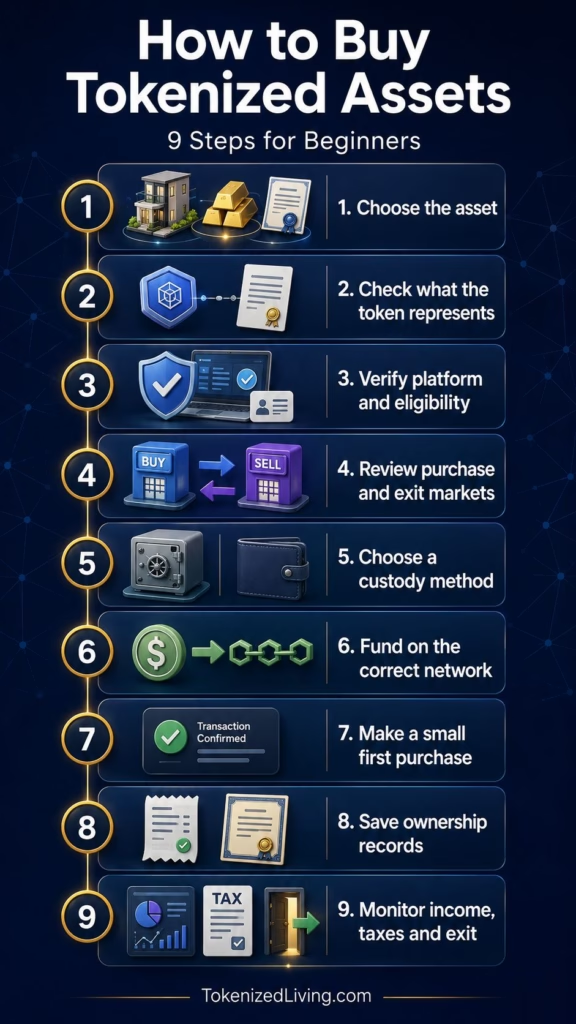
Step 4: Review the Purchase and Exit Markets
A primary offering sells newly issued tokens. A secondary market allows existing holders to sell later.
Do not confuse the two.
A project might sell every token during its initial offer yet have almost no resale activity. Therefore, successful issuance does not prove liquidity.
Before purchasing, ask:
- Is there a lock-up period?
- Who is allowed to buy the token from you?
- Does the platform operate an active secondary market?
- Can the issuer redeem the token?
- How is the resale price calculated?
- Can transfers be paused or restricted?
- What happens if the marketplace closes?
Our guide to tokenized asset secondary markets explains why a sell button does not guarantee a buyer.
Step 5: Choose Between Platform Custody and Self-Custody
An account-based platform may control the wallet or provide an embedded wallet. This can simplify password recovery and transactions.
However, you depend more heavily on that provider.
With self-custody, you control the private keys. You also accept responsibility for backups, approvals, network selection and wallet security.
Before deciding, ask:
- Can the token move to an external wallet?
- Does the issuer allow only approved wallets?
- Can the platform freeze transfers?
- Is there a recovery process?
- Who controls the private key?
- What happens to access if the platform fails?
Neither custody method is automatically best. The right choice depends on the token’s design and your ability to manage security.
Step 6: Fund the Purchase Correctly
First, confirm every supported payment method on the official platform.
If the provider accepts fiat currency, a bank transfer may reduce blockchain complexity. Card payments may be faster, although fees can be higher.
For wallet-based purchases, confirm:
- the required cryptocurrency or stablecoin
- the correct blockchain network
- the official token contract address
- the gas token needed for transaction fees
- deposit minimums
- platform, exchange and withdrawal fees
USDC, for example, exists natively on many different networks. The same ticker does not mean every version or network will work with a particular platform. Circle maintains an official list of supported USDC networks.
MetaMask also warns users never to send tokens directly from one network to another without using the correct transfer route. Its network and sidechain guide explains the risk.
Therefore, do not guess. Copy the network and deposit instructions from the official platform.
Step 7: Make a Small First Purchase
Beginners should test the process with an amount they can afford to lose.
Before confirming the transaction:
- check the website domain
- verify the wallet address
- compare the contract address with the issuer’s official source
- check the token amount
- review the network fee
- read every wallet approval
- take a screenshot or save the transaction record
Anyone can create a token with a familiar name. MetaMask therefore advises users to verify the token address rather than trusting the name or ticker.
After the small transaction succeeds, confirm that the correct asset appears in your account or wallet. Only then should you consider a larger purchase.
Step 8: Confirm Your Ownership Records
Save more than the blockchain transaction hash.
Your records should include:
- account and identity confirmations
- subscription or purchase agreements
- offering documents
- ownership or token certificates
- transaction hashes
- wallet addresses
- bank, card or exchange receipts
- fee records
- income statements
- tax documents
The blockchain record may prove that a wallet received a token. It may not prove the complete legal claim behind that token.
Step 9: Monitor Income, Reporting and Exit Conditions
Buying is only the beginning.
Property income can fall because of vacancies, repairs, insurance, taxes or management costs. Debt products can default. Gold tokens do not generate income by themselves. Meanwhile, secondary markets can lose activity.
Track:
- asset performance
- issuer reports
- cash distributions
- platform fees
- custody changes
- regulatory updates
- marketplace activity
- redemption conditions
- tax records
Property investors should also review the broader benefits and risks of tokenized real estate before treating a projected yield as reliable income.
Tax treatment depends on your location and the legal structure. Income, token sales, cryptocurrency payments and currency conversions can create different reporting obligations. Our guide to tokenized real estate taxes in 2026 explains the property side in more detail.
What Fees Should You Check?
The token price is not the complete cost.
Possible charges include:
- platform or subscription fees
- card-processing charges
- bank-transfer fees
- currency-conversion spreads
- crypto exchange fees
- blockchain gas fees
- withdrawal charges
- custody fees
- asset-management fees
- property-management fees
- secondary-market fees
- redemption or early-exit charges
Some costs appear only after purchase. Therefore, calculate the likely cost of buying, holding and selling before committing money.
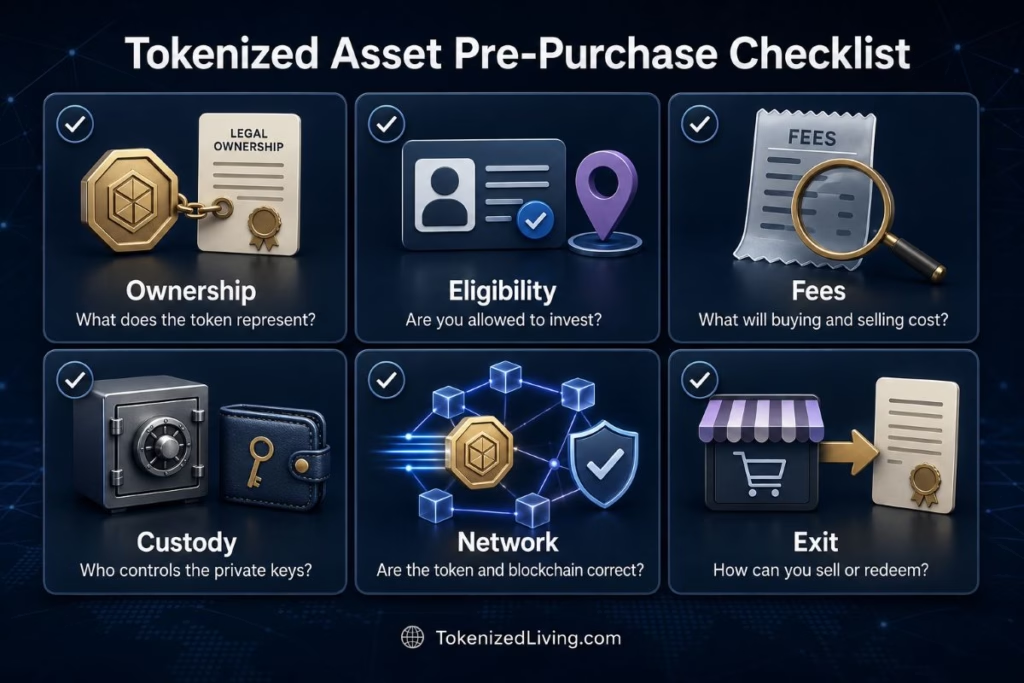
Tokenized Asset Pre-Purchase Checklist
Use this checklist before approving a payment.
- I know what the token legally represents.
- I identified the issuer and underlying asset owner.
- I read the offering documents and risk disclosures.
- I confirmed that I am eligible to invest.
- I checked the platform or professional through an official regulator.
- I understand every purchase, holding and exit fee.
- I know who controls the private keys.
- I verified the blockchain, token and contract address.
- I understand the income source and payment schedule.
- I checked the lock-up, resale and redemption conditions.
- I know what happens if the platform or issuer fails.
- I considered tax and cross-border reporting duties.
- I am starting with an amount I can afford to lose.
Common Beginner Mistakes
Assuming Every Token Represents Ownership
Many tokens represent financial claims rather than direct title. Read the legal definition, not the marketing label.
Treating KYC as Proof of Safety
Identity checks help platforms meet compliance duties. They do not verify asset quality, honest management or investor protection.
Sending Funds on the Wrong Network
Ethereum, Polygon, Solana, Stellar and other networks are not interchangeable. A wrong-network transfer may be difficult or impossible to recover.
If you want to understand these differences, see our guide to choosing a blockchain for tokenization.
Believing Liquidity Claims
Technical transferability is not market liquidity. You still need an eligible buyer at an acceptable price.
Ignoring the Underlying Asset
Blockchain cannot repair a vacant property, prevent a borrower from defaulting or create gold that is missing from a vault.
Chasing the Highest Advertised Yield
Projected returns are not guaranteed. High yields may reflect development, credit, currency, jurisdiction or platform risk.
Legal and Risk Warning
Tokenized assets remain subject to securities law, property law, contract law, tax rules, sanctions controls and local investor restrictions.
Moreover, legal protection can vary by product. The EU’s Markets in Crypto-Assets Regulation covers crypto-assets that do not already fall under existing financial-services legislation. Tokenized financial instruments may sit under different rules. ESMA explains this distinction on its MiCA overview.
FINRA also warns that crypto assets can be volatile and less liquid than traditional investments. Its crypto asset risk guide notes that investors may struggle to sell when they want.
Always review the rules that apply to your location and the product’s legal structure. Seek qualified advice when the documents or tax treatment remain unclear.
Tokenized Living Insight: Blockchain can change how an investment is recorded and transferred. It cannot make weak ownership rights, poor assets or absent buyers disappear.
Final Verdict
Buying tokenized assets is becoming easier. Evaluating them is not.
Some investors can use a familiar account, bank transfer and card. Others need a wallet, stablecoins and the correct blockchain network. Regulated products may also restrict access by country or investor type.
Therefore, do not start by asking which token to buy.
Start with five questions:
- What does the token represent?
- Who controls the underlying asset?
- What rights can I enforce?
- How can I sell or redeem?
- What happens if the issuer or platform fails?
Once those answers are clear, the purchase itself is usually the easy part.
FAQs About Buying Tokenized Assets
Do I Need Cryptocurrency to Buy Tokenized Assets?
Not always. Some platforms accept bank transfers or cards and provide an embedded account or wallet. Others require stablecoins or another cryptocurrency. Check the official payment instructions before opening an exchange account or transferring funds.
Do I Need a Crypto Wallet?
No. Account-based and custodial platforms can manage the blockchain side for you. However, self-custody or wallet-connected products require a compatible wallet. Some regulated tokens also restrict transfers to approved wallets.
What Is the Minimum Investment?
There is no universal minimum. Some property platforms start around $50 or €100. Other products require hundreds, thousands or considerably more. Minimums can also change by offering and investor type.
Can Anyone Buy Tokenized Assets?
No. Eligibility can depend on residence, citizenship, location, age, sanctions rules and investor classification. Some products exclude US persons. Others accept only accredited, qualified or professional investors.
Are Tokenized Assets Safe?
They carry several layers of risk. These include the underlying asset, issuer, platform, legal structure, custody, smart contract, blockchain network and exit market. Tokenization can improve recordkeeping or settlement, but it does not guarantee safety.
Do Tokenized Assets Produce Passive Income?
Some do. Property investments may distribute net rental income, while debt and Treasury products may pay interest or yield. Tokenized gold and many stock-linked products do not automatically create income. Every payment depends on the product terms and performance.
Can I Sell a Tokenized Asset Whenever I Want?
Not necessarily. Lock-ups, transfer restrictions and limited buyer demand may prevent a quick sale. Even a 24-hour marketplace cannot guarantee that another investor will accept your price.
Is a Tokenized Property Token the Same as a Property Deed?
Usually not. The token may represent shares in an LLC, a loan, fund units, contractual income rights or another legal interest. A few systems connect tokens more directly with official property records, but investors must check each offering.
What Is the Safest Way to Make a First Purchase?
Use the official website, confirm your eligibility, read the legal documents, verify the payment network and start with a small amount. Never share a recovery phrase or private key with a platform representative or support account.