
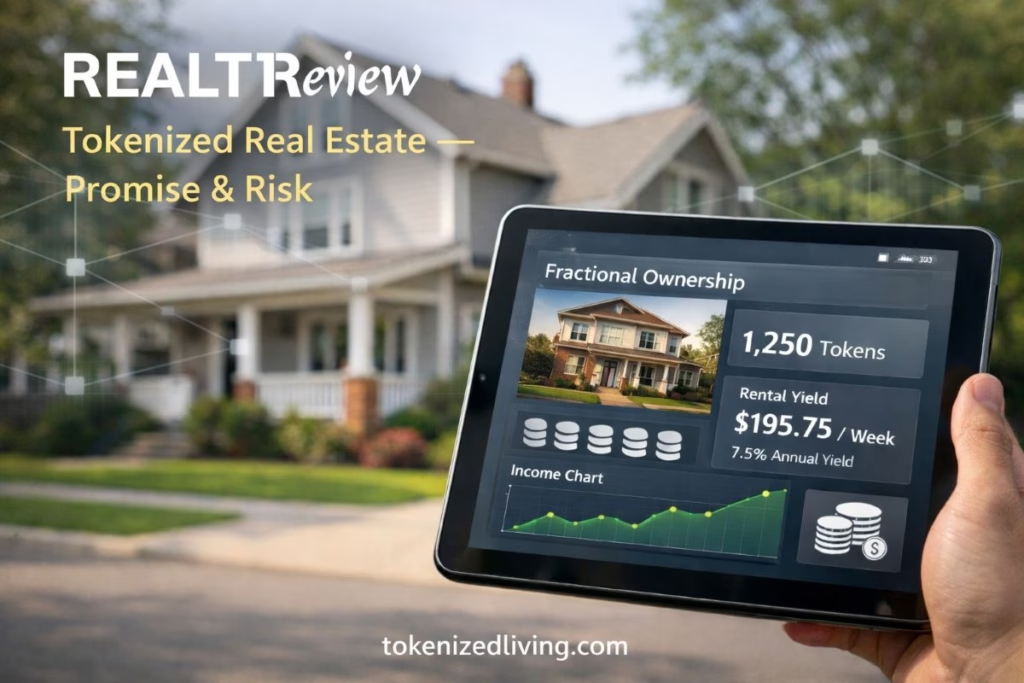
Updated August 14, 2026
A normal RealT review would examine minimum investments, rental yields and token liquidity.
That is no longer enough.
On July 2, 2026, RealT announced its intention to begin voluntary liquidation and sell its property portfolio. Normal distributions from much of the affected portfolio had already stopped. Meanwhile, approximately 700 Detroit properties remain under the authority of a court-appointed fiduciary.
Therefore, this review does not recommend RealT as an investment platform.
Instead, it explains what investors bought, why the model broke down and what existing token holders may face next.
TL;DR — RealT Review 2026
| Category | Current position |
|---|---|
| Platform status | Voluntary liquidation announced on July 2, 2026 |
| Tokenized Living verdict | Do not invest |
| Historical model | Fractional interests in property-owning companies represented by blockchain tokens |
| Normal distributions | Largely suspended across affected properties |
| Detroit portfolio | Approximately 700 properties under special fiduciary Charles Bullock |
| Property sales | Planned, but Detroit sales remain subject to fiduciary control |
| Token liquidity | Highly uncertain |
| Investor recovery | No reliable timetable or verified recovery estimate |
| Major legal issues | Detroit litigation and an investor action developing in France |
| Next major checkpoint | Fiduciary report expected around the end of October 2026 |
Editorial disclosure: Tokenized Living previously included affiliate links to RealT. We have removed those links following the liquidation announcement. We do not currently recommend purchasing RealT tokens.
What Is RealT?
RealT launched in 2019 under founders Rémy and Jean-Marc Jacobson.
The platform allowed mainly international investors to buy fractional interests connected to US rental properties. It became one of the most recognizable names in retail real estate tokenization.
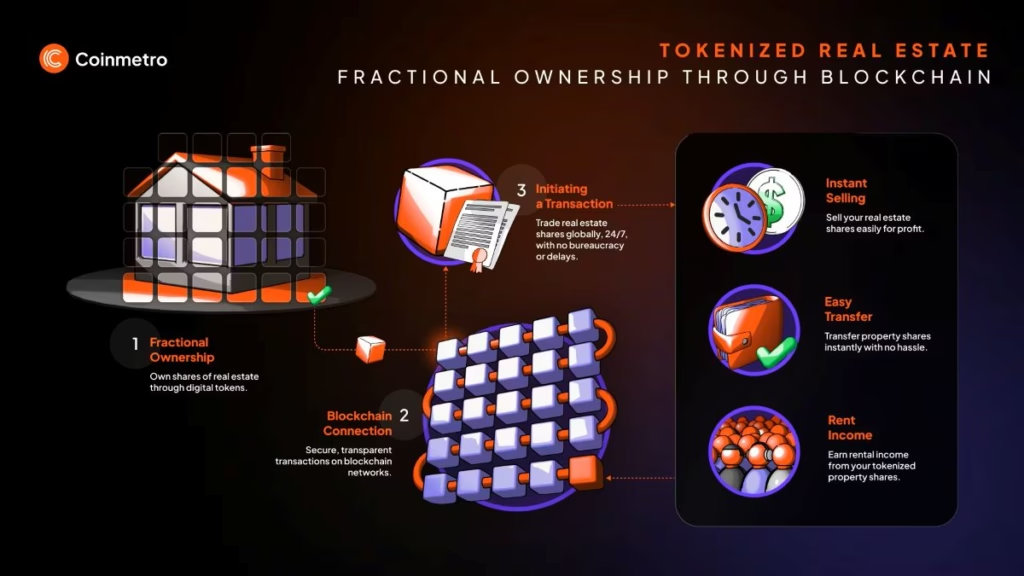
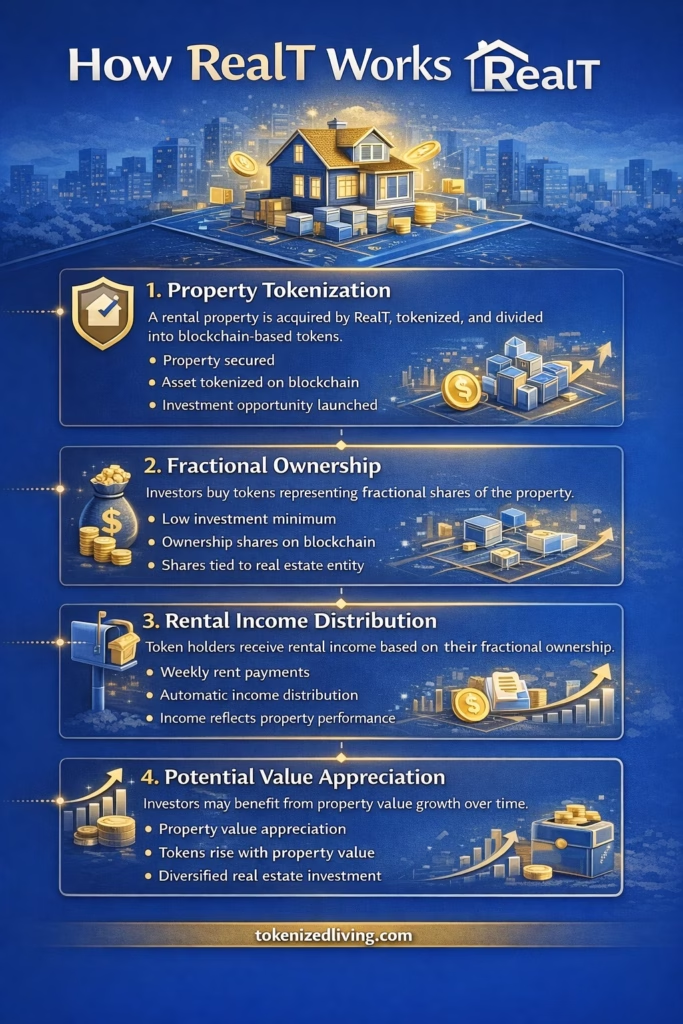
Historically, investors could enter with a relatively small amount. They then received blockchain tokens linked to a property-owning legal entity.
According to RealT’s own explanation, a RealToken represented ownership in an LLC or corporation that held the property deed. The investor did not personally appear on the deed.
That distinction now matters more than ever.
At its peak, RealT promoted:
- fractional access to US rental properties
- property-specific investments
- weekly stablecoin distributions
- ownership records on Ethereum and Gnosis Chain
- secondary-market trading
- professional property management
- entry prices that often started near $50
The model looked simple on the surface. However, the legal and operational structure underneath it was far more complicated.
How RealT’s Tokenization Model Worked
RealT did not place a physical property deed directly on a blockchain.
Instead, the platform generally used a property-specific legal entity.
The process worked broadly like this:
- A company or LLC acquired, or intended to acquire, a property.
- That entity issued a limited number of shares or membership interests.
- Blockchain tokens represented those interests.
- Investors purchased the tokens and signed offering documents.
- Property managers collected rent and handled maintenance.
- RealT distributed net income to token holders.
- Investors could attempt to sell their tokens through available secondary channels.
Earlier offerings used a Delaware series LLC structure. Later documents also described property-specific corporations issuing tokenized shares.
Therefore, investors must check the documents for their individual offering. Not every RealToken necessarily used an identical legal structure.
What Did a RealToken Actually Represent?
A RealToken generally represented an interest in a legal entity connected to a property.
It did not give the holder direct personal ownership of the deed.
| What investors held | What investors did not hold |
|---|---|
| Tokenized shares or membership interests | Personal title to the building |
| Economic exposure to a property-owning entity | Direct control over tenants or repairs |
| Rights defined by offering documents | Guaranteed rental payments |
| A blockchain record of token ownership | Guaranteed liquidity |
| Possible voting or economic rights | Protection from property or platform failure |
The blockchain could record who held the token.
However, it could not ensure that the property remained insured, maintained, occupied or legally compliant. Nor could it guarantee that taxes and utility bills were paid.
For a detailed breakdown, read our guide explaining how RealT’s ownership structure worked.
Historical RealT Property Example
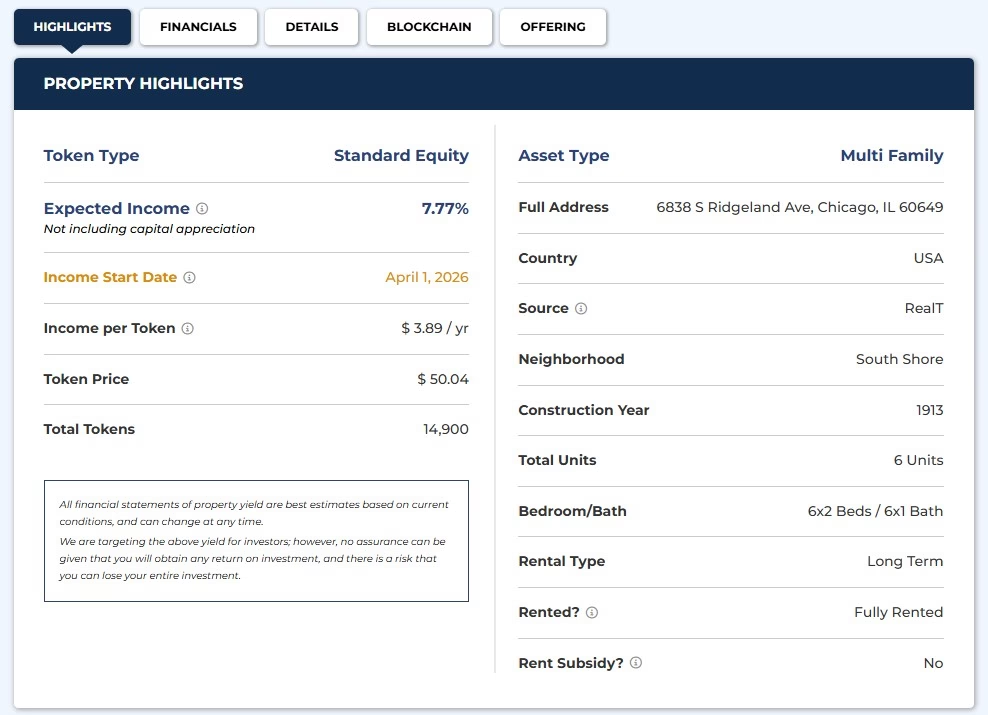
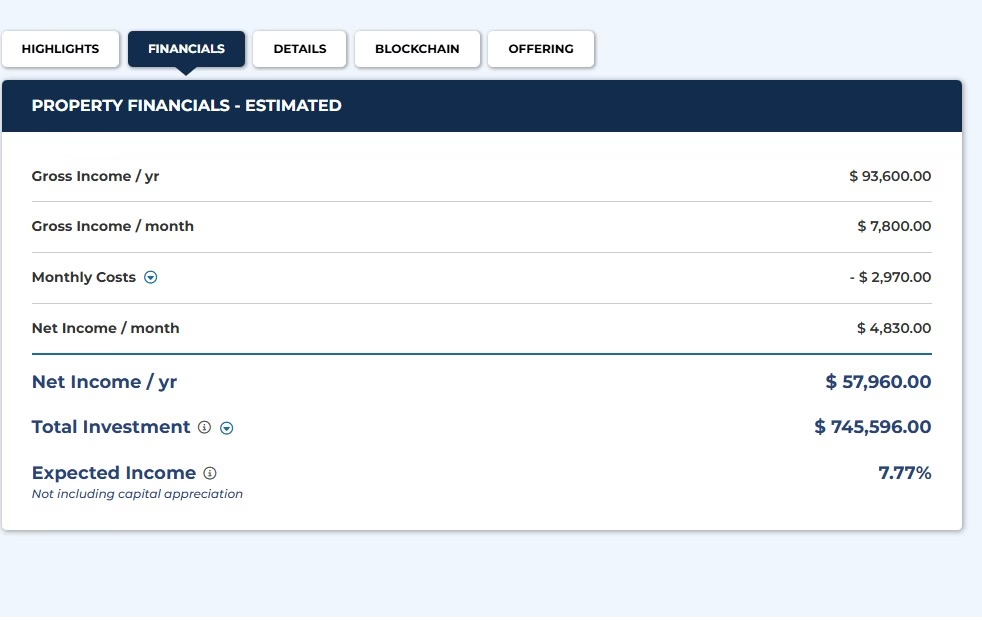
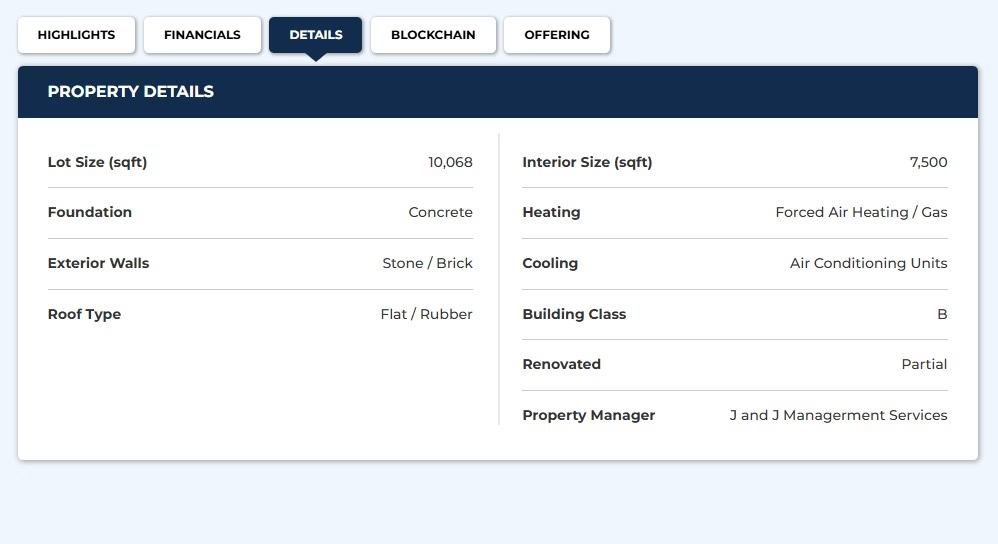
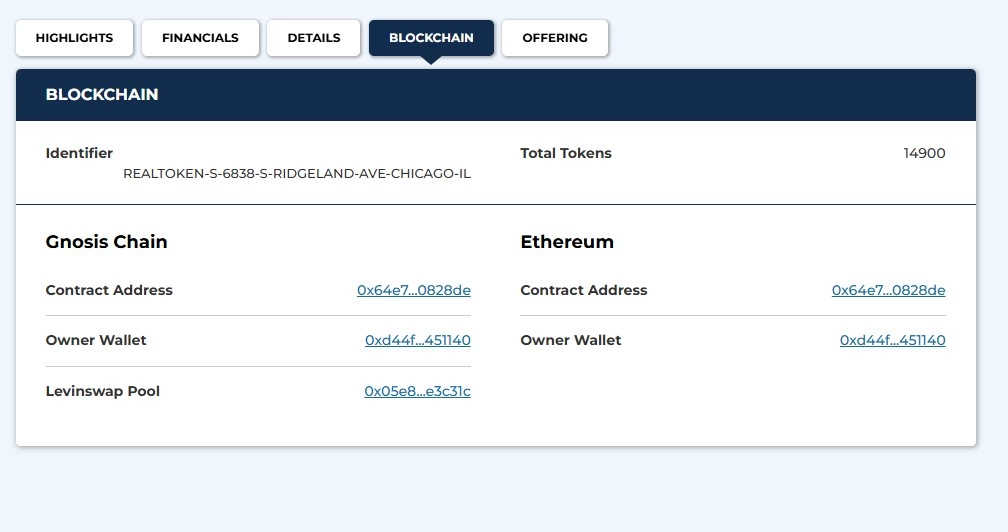
RealT property pages displayed information such as:
- token price
- total offering size
- expected rent
- projected yield
- property specifications
- blockchain contract addresses
- anticipated expenses
This gave investors more property-level information than many conventional investment products.
Nevertheless, projected figures were not guarantees.
A dashboard could display a token price and expected return. It could not show every future repair, legal dispute, vacancy or unpaid bill.
That gap between digital presentation and physical property risk became central to RealT’s collapse.
What Happened to RealT?
RealT’s problems did not begin with the July 2026 liquidation announcement.
The crisis developed over several years.
RealT Timeline
| Date | Development |
|---|---|
| 2019 | RealT launched its fractional US property model. |
| 2024–2025 | Investigative reporting raised questions about property conditions, management and ownership records. |
| July 2025 | Detroit sued RealT, its founders and 165 affiliated entities over alleged public nuisance violations involving more than 400 properties. |
| July 2025 | A judge restricted rent collection and evictions at non-compliant properties. Rent went into escrow for repairs. |
| Early 2026 | RealT’s financial and property-management problems intensified. Most weekly investor distributions stopped. |
| April 22, 2026 | A judge approved an agreement placing approximately 700 Detroit properties under special fiduciary Charles Bullock. |
| July 2, 2026 | RealT announced its intention to begin voluntary liquidation and sell its assets. |
| July 16, 2026 | Wider public reporting revealed the liquidation announcement and growing investor legal action. |
| End of October 2026 | Bullock is expected to report progress to the court. The judge may then review or extend his authority. |
The Detroit Lawsuit
In July 2025, the City of Detroit brought legal action against RealT, the Jacobson brothers and 165 affiliated corporate entities.
The case involved more than 400 residential properties.
Detroit alleged that the defendants failed to keep properties compliant with essential building, health and safety requirements. The complaint included accusations involving deteriorating buildings, unsafe conditions and extensive code violations.
These remain allegations within an ongoing legal process. However, the court did impose significant restrictions.
According to the City of Detroit, RealT could not collect rent normally from non-compliant properties. The court also restricted evictions and directed rent into escrow accounts intended for repairs.
That decision attacked the core of RealT’s income model.
Investors expected rent to move from tenants through property expenses and into their wallets. Instead, the court redirected affected cash flow toward compliance work.
Blockchain automation could not override that order.
Why Did RealT’s Model Break Down?
No single problem explains RealT’s collapse.
Several failures appear to have compounded one another.
Property Management Problems
RealT relied heavily on local property managers and contractors.
The company blamed some former managers for mishandling funds and failing to complete necessary work. Detroit officials, however, argued that RealT and its affiliates remained responsible for the properties.
Whatever the final allocation of blame, the result was clear.
Tenants reported serious maintenance problems. Properties deteriorated, while investors remained geographically and operationally distant from the buildings behind their tokens.
Insufficient Reserves
Tokenized property marketing often emphasizes yield.
Yet repairs, roofs, insurance, taxes and vacancies require cash reserves.
In early 2026, RealT acknowledged structural problems with its funding model. The company discussed larger reserves and possible management fees as ways to support future expenses.
Those changes came too late.
A property model can appear efficient when rent arrives regularly. However, thin reserves become dangerous when several properties need repairs at the same time.
Unpaid Expenses and Financial Pressure
In March 2026, Outlier Media reported that RealT had stopped almost all weekly payouts.
The same report described millions of dollars in unpaid property taxes, water bills and blight tickets. It also said hundreds of Detroit properties faced possible tax foreclosure.
These financial pressures weakened the entire operating model.
Geographic Concentration
RealT concentrated a large share of its property exposure in Detroit.
Concentration helped the company scale its local acquisitions. However, it also exposed investors to the same property managers, municipal authorities, housing conditions and enforcement actions.
Once Detroit intervened, the problem affected a large part of the portfolio.
Weak Practical Liquidity
RealT tokens could technically move between blockchain wallets and secondary markets.
That did not create guaranteed liquidity.
When confidence fell, investors still needed willing buyers. Moreover, a smart contract could not create demand for a token linked to a distressed property or uncertain legal entity.
Transferability is not the same as liquidity.
RealT Loses Control of Its Detroit Portfolio
On April 22, 2026, a judge approved an agreement placing approximately 700 Detroit properties under special fiduciary Charles Bullock.
This was more than a change in property management.
Bullock received broad authority to:
- oversee repairs
- use available escrowed funds
- make decisions across the portfolio
- sell properties to raise money
- demolish buildings considered dangerous
- control certain eviction decisions
- report progress to the court
Public reporting also described a repair target of around 12 properties per month, with 210 properties expected to reach compliance by October 2027.
That is a slow recovery schedule compared with the portfolio’s size.
More importantly, Bullock has final authority over Detroit property sales. RealT’s founders cannot simply liquidate those assets independently.
Read our complete RealT Detroit fiduciary update for more details.
RealT Announces Voluntary Liquidation
On July 2, 2026, Jean-Marc Jacobson told investors that RealT intended to enter voluntary liquidation and sell its assets.
According to Outlier Media, Jacobson cited growing financial and legal pressure.
This announcement marked a fundamental break from RealT’s original investment model.
Investors bought tokens expecting ongoing property exposure and rental income. Now, the proposed strategy is to sell the underlying assets and wind down the associated structures.
However, several major questions remain unanswered.
- Which RealT companies are included?
- Does the plan cover every property-owning entity?
- Will properties outside Detroit also be sold?
- Who will supervise sales outside the fiduciary-controlled portfolio?
- How will liabilities be calculated?
- When will investors receive property-level statements?
- How will any remaining proceeds reach token holders?
RealT reportedly owned approximately 170 properties outside Detroit. Public reporting did not establish whether every one of those assets would enter the same process.
Is RealT Legally Bankrupt?
Not based on the public evidence currently available.
RealT announced voluntary liquidation during an investor call. That does not automatically prove that the parent company has filed for bankruptcy or completed a formal court-supervised liquidation.
Detroit officials said the announcement had not, at that point, changed the existing court case.
Therefore, the accurate wording is:
RealT has announced its intention to liquidate its property portfolio.
It would be premature to claim that every RealT entity has completed a legal liquidation process.
This distinction matters because RealT used multiple companies and property-specific issuers. Different entities may hold different assets, debts and investor obligations.
What Could Existing Token Holders Recover?
Nobody can currently provide a reliable figure.
A property may sell for more or less than the value previously displayed on RealT’s platform. Before token holders receive anything, the relevant entity may need to address property-specific obligations.
These could include:
- unpaid property taxes
- water and utility bills
- repair expenses
- insurance costs
- legal expenses
- fiduciary charges
- property-sale costs
- secured debts or liens
- other liabilities attached to the issuer or property
The precise order of payments will depend on the legal entity, offering documents, debts, court orders and sale terms.
Therefore, investors should not assume that a property’s gross sale price will flow directly to token holders.
A $100,000 sale does not create $100,000 of distributable investor value if the property carries major liabilities.
Some properties may retain meaningful equity. Others could sell at a substantial discount or produce little after expenses.
Until verified property-level statements appear, any recovery estimate is speculation.
What Existing RealT Investors Should Do
Existing holders should focus on documentation rather than online rumours.
Preserve Your Records
Save copies of:
- purchase agreements
- offering memorandums
- property documents
- wallet addresses
- token balances
- transaction hashes
- distribution histories
- platform statements
- emails from RealT
- tax records
- communications concerning suspended payments
Do not assume that the online dashboard will remain available indefinitely.
Identify the Issuing Entity
Find the exact LLC, corporation or series connected to each token.
A portfolio balance alone is insufficient. Investors need to know which entity issued the security and which property or contractual rights support it.
Check the Property
Where possible, verify:
- recorded ownership
- tax status
- liens
- compliance certificates
- occupancy
- pending legal action
- sale notices
- local property records
A token can exist even if the associated property has severe problems.
Treat Unofficial Recovery Offers Carefully
Distressed investors often attract opportunists.
Avoid giving wallet seed phrases, private keys or account access to anyone claiming they can recover funds. Verify the identity and professional status of lawyers, recovery services and investor representatives.
Obtain Professional Advice
RealT investors span multiple jurisdictions.
That creates legal and tax complications. A French investor, for example, may face different options from an investor in Asia or Latin America.
Investors with significant exposure should consult a qualified lawyer or tax professional familiar with securities, insolvency and cross-border investments.
French Investors Are Organizing Legal Action
A large portion of RealT’s investor base reportedly came from France.
French lawyer Arnaud Delomel has organized a collective legal action involving RealT investors. His firm says the process aims to support a criminal complaint submitted to the financial division of the Paris prosecutor’s office.
The Cabinet Delomel information page estimates approximately 22,000 RealT clients worldwide, including around 14,000 in France.
Treat those numbers as estimates rather than independently audited totals.
Participation in a collective action also does not guarantee compensation. Furthermore, allegations submitted by investors do not establish guilt.
The French process remains separate from Detroit’s housing case.
Was RealT a Scam?
Calling RealT a scam would go beyond the established public evidence.
RealT operated a genuine platform, issued investment documents, tokenized interests and distributed income to many investors for years. The company also acquired and managed a substantial property portfolio.
However, those facts do not prove that its disclosures, property operations or financial controls were adequate.
Investigative reports and legal actions have raised serious questions about:
- property ownership records
- building conditions
- unpaid liabilities
- investor communication
- management oversight
- reserve funding
- sales involving affiliated entities
- the accuracy of some property representations
Courts and regulators must decide whether any conduct crossed from mismanagement into fraud or another legal violation.
Our conclusion is narrower but still severe:
RealT’s model failed to protect investors and tenants from major operational, financial and legal risk.
That alone makes the platform unsuitable for new investment.
Historical Strengths Versus the 2026 Reality
| Historical selling point | 2026 reality |
|---|---|
| Low investment minimum | A low entry price did not reduce the risk of loss |
| Weekly stablecoin distributions | Most affected distributions stopped |
| Property-specific investment | Court intervention created portfolio-wide consequences |
| Blockchain transparency | On-chain records did not reveal every off-chain liability |
| Professional management | Management failures became a central risk |
| Secondary trading | Buyer demand weakened when confidence collapsed |
| Separate legal entities | Investors still face complex, interconnected legal proceedings |
| Passive property exposure | Investors had little direct control when operations failed |
The problem was not that RealT used blockchain.
The problem was that the blockchain layer appeared stronger than the property operations supporting it.
RealT and Roofstock onChain: What Happened?
In March 2023, Roofstock onChain transferred a Georgia single-family rental to RealT through an NFT transaction conducted through OpenSea.
Roofstock brought experience in sourcing and transferring property-holding structures. RealT intended to provide fractional investment exposure after the acquisition.
However, this was not a combined Roofstock and RealT retail marketplace.
Investors did not receive a shared dashboard where they could browse Roofstock properties and buy fractional shares directly. Instead, the transaction demonstrated how an entire property-owning company could change hands through an NFT before separate fractional interests were created.
The deal remains an interesting historical tokenization example.
It does not change RealT’s current liquidation risk. Nor should it be treated as evidence that Roofstock guarantees or supports existing RealT tokens.
What RealT Teaches the Tokenization Industry
RealT may become one of the most important case studies in tokenized real estate.
Unfortunately, the lesson is not the one the industry wanted.
Blockchain Is Only One Layer
A token can record ownership efficiently.
It cannot replace inspections, maintenance, insurance, accounting or local law.
Property Reserves Matter More Than Frequent Payouts
Weekly income looks attractive.
However, aggressive distributions can become dangerous if the underlying entities lack enough cash for taxes, vacancies and major repairs.
Legal Separation Needs Testing Under Stress
Property-specific entities may help separate assets and liabilities.
Yet investors must understand who controls those entities, who manages the properties and what happens during portfolio-wide litigation.
Liquidity Must Be Real
The ability to transfer a token does not guarantee a fair exit.
True liquidity requires buyers, reliable information and confidence in the underlying asset.
Investors Need Failure Procedures
Every platform should explain:
- what happens if the manager fails
- who replaces the property manager
- how investors access records
- who controls property sales
- how liabilities get paid
- whether token holders can vote
- how remaining funds reach investors
If a platform cannot explain its failure procedure, investors do not understand the real product.
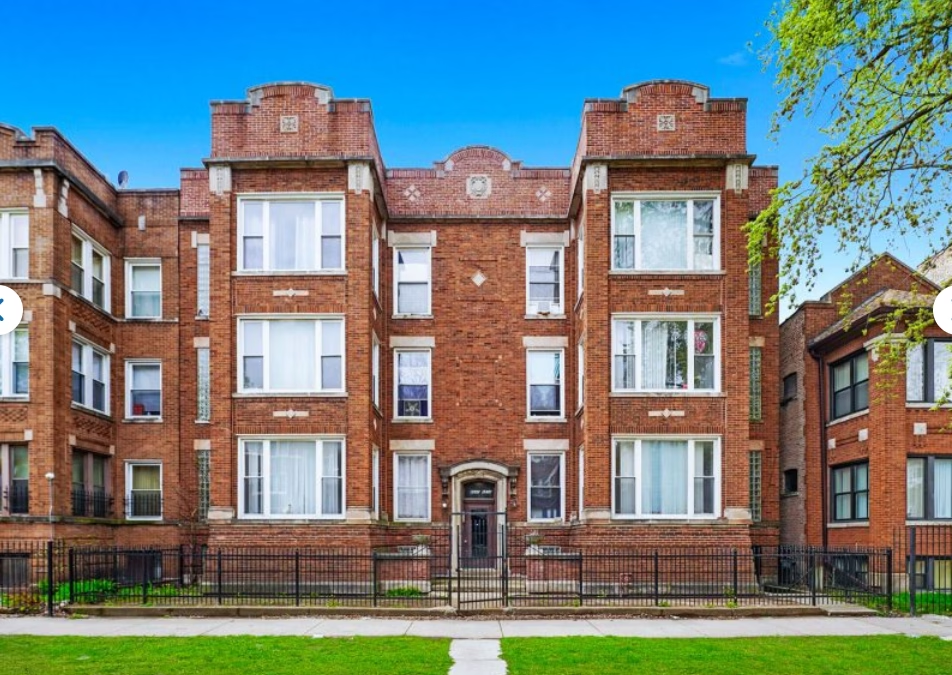
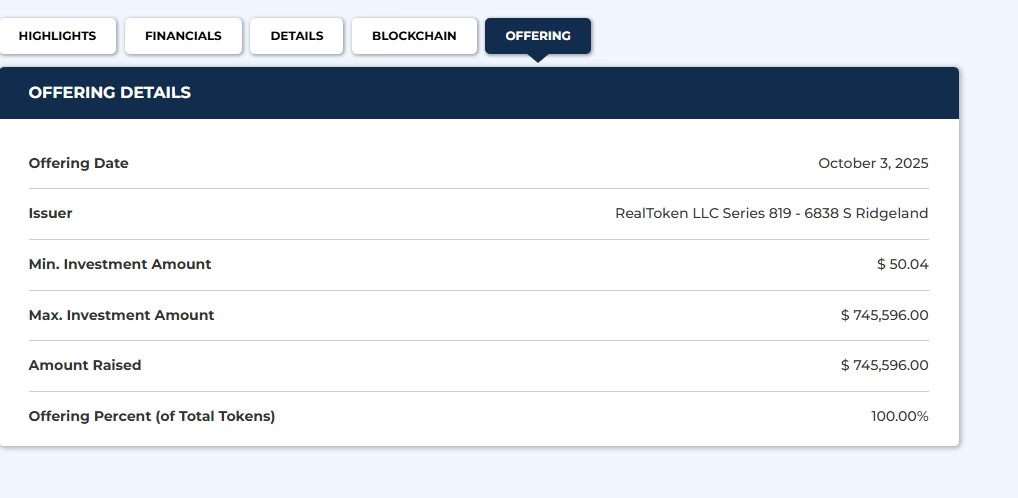
RealT Property Example
Here is a real example of how Realt tokenizes a property, from the building itself to projected income, blockchain data, and offering details.
RealT Review 2026: Final Verdict
RealT helped prove that real estate interests could be divided, represented on-chain and distributed to international investors.
It also proved something far less comfortable.
Tokenization can make a weak property investment easier to sell without making it safer.
RealT’s Detroit concentration, management failures, inadequate reserves, legal disputes and uncertain liquidity overwhelmed the advantages of its blockchain infrastructure.
The July 2026 liquidation announcement ended any reasonable case for treating RealT as a normal investment platform.
Existing token holders now face a distressed-asset recovery process. They do not have a dependable distribution schedule, exit route or recovery estimate.
Therefore, our verdict is clear:
Do not purchase RealT tokens. Existing holders should preserve their records, identify the legal entities behind their tokens and follow verified court and liquidation developments.
RealT is no longer one of our recommended tokenized real estate platforms.
It is now a warning about what happens when the token works but the real-world system underneath it fails.
For current alternatives and their risks, read our tokenized real estate platform comparison.
RealT Review 2026 FAQs
Is RealT still operating?
RealT’s website and parts of its infrastructure may remain accessible. However, the company announced its intention to liquidate its property portfolio in July 2026. It should not be treated as a normally operating investment platform.
Is RealT bankrupt?
Public information available as of August 14, 2026 does not confirm a completed bankruptcy filing covering every RealT entity. RealT has announced voluntary liquidation, but the precise legal scope remains unclear.
Are RealT rental distributions suspended?
Public reporting in March 2026 said almost all weekly payouts had stopped. Detroit-related cash flow has also been redirected toward escrow, repairs and portfolio stabilization.
Who controls RealT’s Detroit properties?
Special fiduciary Charles Bullock controls approximately 700 Detroit properties under an agreement approved by a judge in April 2026. He has broad authority over repairs, sales and other property decisions.
Will RealT token holders recover their money?
The outcome remains unknown. Recovery will depend on property-sale prices, liabilities, legal expenses, court orders and the rights contained in each offering’s documents.
Can investors still sell RealTokens?
Some tokens may remain technically transferable. However, transferability does not guarantee buyers, fair pricing or meaningful liquidity.
Are RealTokens direct property deeds?
No. RealTokens generally represented shares or membership interests in a legal entity associated with a property. Investors did not personally hold the property deed.
Should new investors buy RealT tokens?
No. Tokenized Living does not recommend new investment in RealT following its liquidation announcement, suspended distributions and unresolved legal problems.
What happens next?
The Detroit fiduciary is expected to report to the court around the end of October 2026. Investors should also watch for formal liquidation filings, verified property sales, entity-level financial statements and information about how proceeds will be allocated.
Primary Sources and Further Reading
- RealT announces plans to sell its portfolio — Outlier Media
- Detroit properties placed under a special fiduciary — Outlier Media
- RealT’s financial and property-management crisis — Outlier Media
- Detroit’s 2025 rent and eviction restrictions
- RealT’s historical explanation of RealTokens
- French RealT investor action — Cabinet Delomel
.