

Updated September 14, 2026
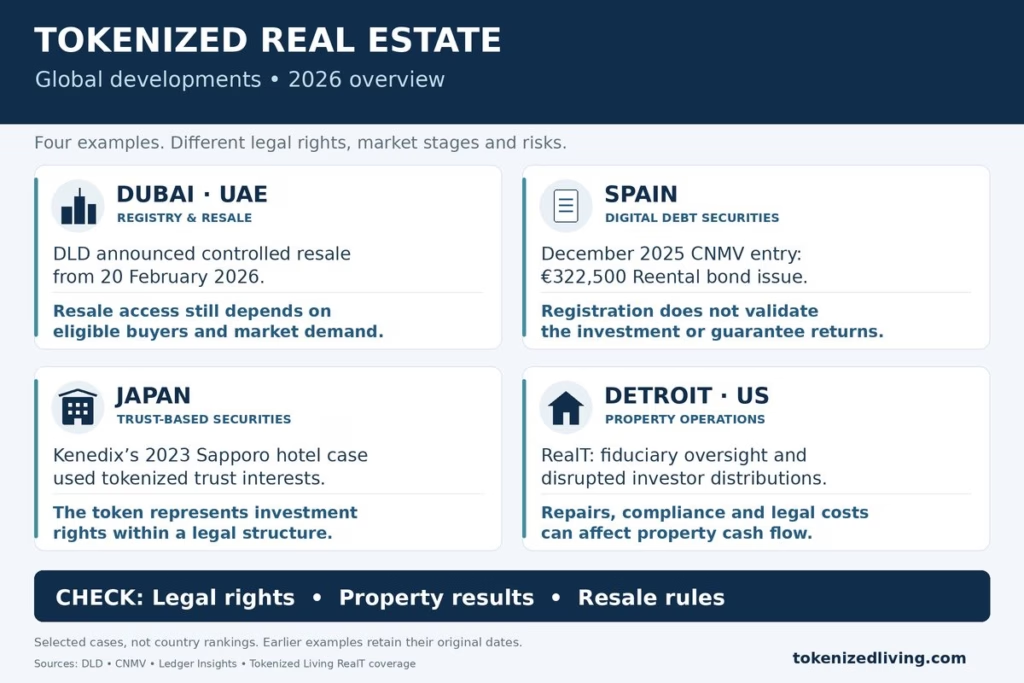
Tokenized real estate global trends are becoming easier to assess through specific projects. Dubai is testing property token resale within an official framework. Spain has documented securities issued through distributed ledger technology. Japan offers examples of hotel investments structured as digital securities.
Meanwhile, RealT’s Detroit problems show how property conditions and court decisions can affect token holders.
Together, these cases reveal a market developing along several paths. The differences matter because a property token can represent very different rights.
Some arrangements connect tokens with official property records. Others give investors shares, trust interests or a claim against a borrower. Each structure changes how income, control and potential losses reach investors.
The developments at a glance
The examples below illustrate different approaches. They are selected cases, rather than a ranking of national markets.
| Location | Documented example | Main issue for investors |
|---|---|---|
| Dubai, UAE | DLD announced a controlled resale phase beginning February 20, 2026 | How registry-linked tokens transfer between eligible buyers |
| Spain | A December 2025 CNMV entry records an ERIR appointment for a Reental bond issue | What the security represents and what what registration covers |
| Japan | Kenedix’s 2023 Sapporo hotel offering used digital securities | How trust-based investment rights connect investors with property |
| Detroit, US | RealT’s portfolio has faced litigation, fiduciary oversight and disrupted distributions | How property operations and legal intervention affect cash flow |
These developments also show why dates matter. An earlier completed offering can help explain today’s market, but should retain its original date.
Dubai: connecting property records with token resale
Dubai provides a concrete example of a land authority participating in real estate tokenization.
On February 9, 2026, Dubai Land Department announced a second phase of its tokenization project. It said secondary-market resale would begin on February 20, covering approximately 7.8 million real estate tokens.
DLD described this as a controlled pilot framework. Its earlier work tested tokenization on title deeds, while the new phase aimed to assess resale operations and market efficiency.
The announcement also made wider participation and additional platforms subject to evaluation and regulatory approvals. These details appear in DLD’s Phase II announcement.
The useful development is the connection between official property registration and digital transfers.
However, enabling resale does not establish how quickly an investor can find a buyer. That requires evidence of completed trades, prices and waiting times. The announced token count also measures tokens eligible for resale, rather than trading volume or property value.
Spain: a documented route for tokenized securities
Spain offers a different example through the recording of securities represented using distributed ledger technology.
A CNMV entry dated December 19, 2025, identifies Ursus-3 Capital as the entity responsible for registration and record-keeping for a Reental Tourist Homes issue. It concerns €322,500 in non-convertible bonds.
This role is known as an ERIR: the entity responsible for maintaining the relevant securities register.
The CNMV also states that registration does not mean it has validated the issuance conditions or the issuer’s information. Both the entry and this qualification appear in the CNMV’s official ERIR register.
For readers, the key distinction is ownership. A bond creates a debt claim under its terms. It does not automatically give its holder direct ownership of a building.
This specific entry also cannot establish the structure of every investment offered by the same platform. Our Reental review explains why investors need to check each offering’s documents.
Japan: property investment through digital securities
Japan’s Sapporo hotel case shows another way to structure a property-backed token.
In May 2023, reporting described Kenedix’s fifth digital security offering, linked to a hotel in Sapporo. The approximately ¥3.4 billion issuance used Progmat, with MUFG as trustee and Daiwa Securities as lead underwriter.
The structure placed the property in a trust. Tokens represented beneficiary certificates connected with that trust. Ledger Insights’ report on the Sapporo offering explains the arrangement.
This is an earlier example that helps explain the market in 2026. It demonstrates how digital securities can fit within a structure involving property managers, trustees and securities firms.
For an investor, hotel performance remains central. Occupancy, room prices and operating costs affect the money available for distributions. Digital records can support the investment process, while the hotel still needs to attract guests and control expenses.
The United States: RealT highlights operating risk
RealT’s Detroit case adds a different perspective to the global picture.
The portfolio has faced litigation over housing conditions and compliance. Around 700 Detroit properties came under special fiduciary oversight following an April 2026 agreement.
RealT subsequently announced its intention to pursue voluntary liquidation in July 2026. That announcement did not establish completed sales or a reliable repayment timetable for investors. Our RealT Detroit lawsuit coverage explains the developments and their effect on token holders.
This case concerns a particular platform and portfolio. It should not be treated as a verdict on every US property token.
Its wider relevance is practical: distributions depend on the underlying business. Repairs, taxes, insurance, rent collection and legal costs can all change the cash available.
Investors therefore need to understand who can replace a manager, approve a sale or control funds when problems arise.
Four trends these examples reveal
1. Legal rights are central to meaningful comparisons
“Fractional ownership” can describe several arrangements.
An investor might hold an interest in a property-owning company, a trust security or a loan. Another model may connect ownership with an official land register.
Those differences affect voting rights, income entitlement and what happens during insolvency.
A useful comparison starts with a simple question: what legal right does this token give its holder?
Our complete guide to tokenized real estate explains the main structures in more detail.
2. Secondary markets need evidence of actual use
Issuing tokens and supporting resale are separate tasks.
A platform can provide a marketplace without attracting enough buyers for regular trading. Sellers may also face eligibility checks, transfer restrictions or limited trading windows.
Useful evidence includes completed transaction volumes, the number of active buyers and recent sale prices. An advertised property valuation may differ from the price available when an investor wants to leave.
The next meaningful milestone for many projects is evidence that investors can exit under clear, workable conditions.
3. Traditional investment roles remain relevant
The Japanese example includes a trustee and securities underwriter. Spain’s example assigns responsibility for maintaining a securities register. Dubai involves the land authority itself.
These arrangements suggest that tokenization can develop through existing institutions and responsibilities.
The practical question is what each participant does. Investors should be able to identify who holds assets, maintains records, handles distributions and resolves errors.
Clear responsibilities can make a product easier to assess. The names of well-known organisations alone do not establish its investment quality.
4. Property reporting deserves equal attention
A blockchain record can show a token transfer. Assessing a building requires additional information.
Investors need timely accounts of occupancy, rent collection, expenses, debt and maintenance. For development projects, construction progress and funding needs also matter.
Reporting becomes especially valuable when performance falls below expectations. Clear explanations of missed distributions or rising costs help investors understand their position.
Why global market-size headlines need care
A worldwide market estimate is useful only when readers know what it measures.
Figures may refer to the full value of underlying buildings, the value of securities issued or the amount currently outstanding. Trading volume measures something else again.
For example, a property worth $10 million could support a $2 million tokenized investment. Adding both figures together would overstate the amount represented by that investment.
Broader real-world asset totals introduce another problem. They may include government debt, private credit, commodities and funds alongside property.
Forecasts also need a clear label. A projection for 2030 describes an expected outcome under certain assumptions. It cannot establish the size of today’s market.
For this reason, individual issuances and documented transactions provide a firmer basis for comparison than a headline total with unclear definitions.
For a closer comparison, our guide to measuring the tokenized real estate market separates tracked token values, institutional property funds and long-term forecasts.
What would demonstrate further progress?
Future announcements will be more useful when they answer practical questions.
Evidence worth watching includes:
- Completed issuances: how much investors actually committed, rather than a fundraising target.
- Recorded resales: transaction values, prices and time needed to find buyers.
- Clear investor rights: accessible documents explaining ownership, debt claims and decision-making.
- Property-level results: income after expenses, maintenance spending and changes in valuation.
- Orderly exits: evidence showing how sales, repayments and platform closures work in practice.
These measures help separate technical progress from investment performance. Both deserve attention.
For readers comparing available services, our tokenized real estate platform comparison examines differences in structure, access and exit options.
Frequently asked questions
Does buying a property token make me a property owner?
It depends on the legal structure. A token may represent company shares, trust interests, debt or rights connected with a property register. The offering documents should explain what you hold and who legally owns the building.
Does regulatory registration make an investment safe?
Registration has a specific scope. It may concern an intermediary, a record-keeping role or another part of the investment process. Check what the relevant authority has actually registered or authorised. Property performance and potential losses still require separate assessment.
Can tokenized real estate be sold instantly?
That depends on transfer rules and available buyers. A digital transfer may be quick once a trade is agreed, while finding a buyer can take much longer. Some investments also restrict when or to whom tokens can be sold.
Can investors buy tokenized property in another country?
Some offerings accept overseas investors. Access depends on the product, investor residence and applicable rules. Currency conversion, tax reporting and the process for enforcing rights can also affect the investment.
For a country-specific example, our guide to tokenized property in Switzerland explains how investor eligibility, ownership structures and Lex Koller affect access.
Which country leads tokenized real estate?
The answer depends on the measure. Registry integration, issuance value, investor access and resale activity describe different forms of progress. The examples in this article do not establish a single global leader.