
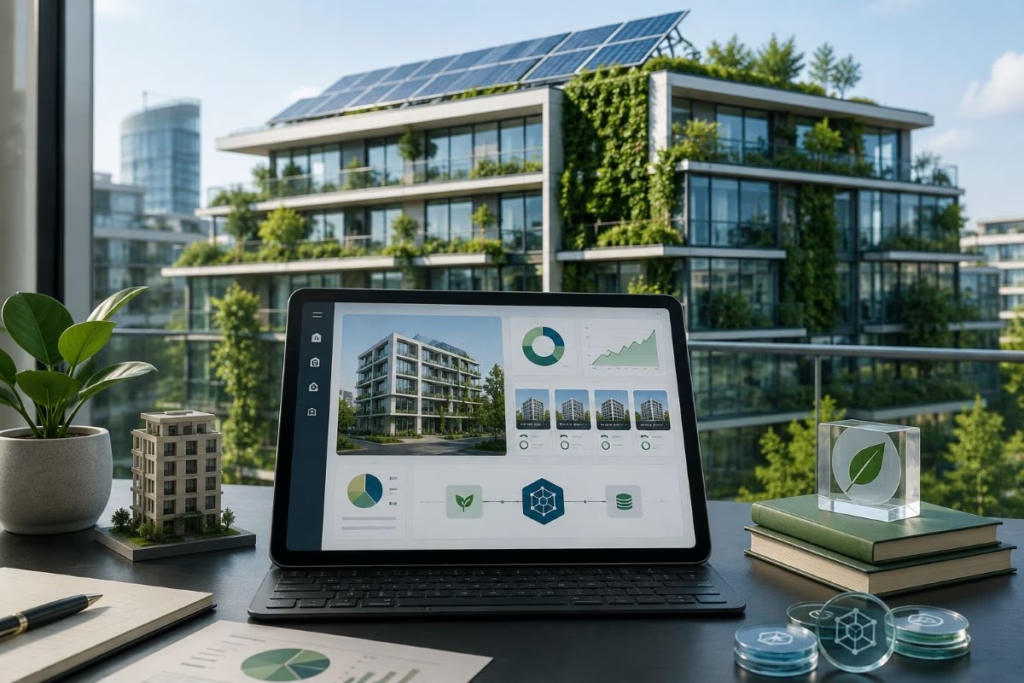
Will real estate tokenization have an Environmental Impact?
Real estate tokenization is often discussed as a way to make property investing more accessible.
That part is easy to understand.
Instead of buying an entire building, investors may be able to buy smaller digital units linked to a property, fund, or real estate project.
The environmental argument is more complicated.
Tokenization does not automatically make a building greener. A property can be divided into digital tokens and still waste energy, use poor materials, or produce weak environmental data.
So the real question is not whether tokenized real estate sounds sustainable.
A better question is whether tokenization can help fund, track, and open access to genuinely greener property investments.
This article looks at the environmental impact of real estate tokenization, where the promise is real, and where investors need to watch out for greenwashing.
TL;DR — Real Estate Tokenization and Environmental Impact
Real estate tokenization does not make a property sustainable by itself.
The environmental impact still depends on the building, location, energy use, materials, management, and reporting.
Tokenization may help smaller investors access green buildings, energy-efficient retrofits, or sustainable real estate projects.
Digital records can improve transparency, but only if platforms publish useful environmental data.
Greenwashing is a major risk when platforms use sustainability language without evidence.
Eco-conscious investors should check energy performance, certifications, emissions data, renovation plans, and independent verification.
A green token is worthless if the underlying property is not genuinely greener.
Some links in this article may be affiliate links. If you choose to invest through them, we may earn a small commission at no extra cost to you.
This article is for education only. It is not financial, legal, tax, or environmental advice.
What Real Estate Tokenization Actually Changes
Real estate tokenization turns property-related rights into digital tokens.
Those tokens may represent fractional ownership, income rights, debt exposure, or another legal claim connected to a property or real estate entity.
The structure varies by platform.
One project may tokenize rental income from an apartment building. Another may tokenize shares in a legal entity that owns property. A different model may focus on real estate debt or development finance.
For investors, the main appeal is access.
Large property deals usually require serious capital. Tokenization can reduce the entry amount, making it easier for smaller investors to gain exposure to real estate.
Ownership records may also become easier to manage. Transfers, income distributions, and investor records can be handled through digital systems.
Those benefits are useful.
However, none of them automatically reduce carbon emissions.
A token changes the investment wrapper. It does not change the building’s energy use, construction materials, tenant behaviour, or maintenance standards.
That distinction matters.
What Tokenization Does Not Change
Real estate remains a physical asset.
Buildings still need electricity, heating, cooling, water, materials, insurance, repairs, and ongoing management.
Construction can create major emissions before a tenant ever moves in. Cement, steel, glass, transport, demolition, and waste all carry environmental costs.
Older buildings may also perform badly if they lack insulation, efficient systems, modern windows, or proper energy monitoring.
A tokenized property can therefore be environmentally weak.
The blockchain layer may look modern, but the underlying asset could still be an inefficient building with poor data and high operating costs.
Investors should avoid confusing digital access with environmental progress.
The asset matters more than the token.
Why Real Estate Sustainability Matters
Buildings are central to the climate discussion.
They use large amounts of energy and produce significant emissions through both construction and daily operation.
That makes real estate a serious target for sustainability improvements.
Energy-efficient buildings can reduce operating costs, improve tenant comfort, and support long-term environmental goals.
Retrofits may also matter more than new construction in many markets. A large share of the buildings that will exist in future decades has already been built, so improving existing properties is essential.
Tokenized real estate could play a role here if it helps direct capital into better buildings, cleaner upgrades, and more transparent reporting.
But that role is conditional.
Without real sustainability data, tokenization becomes another marketing layer.
Where Tokenization Could Help Greener Property Investing
The strongest environmental case for tokenization is not that tokens are green.
The stronger case is that tokenization may improve access, funding, and transparency around green real estate.
Smaller Investors Can Access Green Buildings
Sustainable property is often expensive.
High-quality buildings with efficient systems, strong locations, and recognized certifications may be out of reach for ordinary investors.
Tokenization can lower the entry point.
That may allow smaller investors to participate in property projects that would normally be limited to large investors, funds, or institutions.
Access alone is not enough, but it can widen participation.
Green Retrofits Could Attract New Capital
Many buildings need upgrades.
Common improvements include insulation, solar panels, efficient heating and cooling, better lighting, water-saving systems, and smarter energy monitoring.
These upgrades cost money.
A tokenized structure could help raise capital for a specific retrofit project, especially if the platform clearly explains how investor money will be used.
For example, a property owner might tokenize part of a financing round for energy improvements.
Investors would then need clear information about costs, projected savings, risks, repayment terms, and environmental results.
That model has potential.
It also needs discipline.
Better Reporting Could Improve Trust
Blockchain is often described as transparent.
That can be true for ownership records and transactions.
Environmental transparency is different.
Investors need more than a wallet address or token record. They need building-level data.
Useful reporting may include energy use, carbon emissions, water use, occupancy, certification status, retrofit progress, maintenance updates, and independent assessments.
If a platform connects token ownership with clear property reporting, investors can make better decisions.
Poor reporting turns the sustainability claim into decoration.
Fractional Ownership Can Spread Support Across Projects
Fractional ownership may allow investors to support several sustainable property projects instead of concentrating capital in one building.
A small investor could gain exposure to energy-efficient housing, green office space, or retrofit-focused projects across different markets.
This may reduce concentration risk.
Still, diversification only helps if the underlying assets are genuinely different and properly managed.
Buying several “green” tokens from one weak platform is not enough.
Green Buildings vs Green Tokens
This is the key point.
A green building and a green token are not the same thing.
A green building should have measurable features.
These may include lower energy use, better insulation, efficient heating and cooling, renewable energy, water-saving systems, responsible materials, healthy indoor air, and credible certification.
A green token is only a digital claim.
Without evidence from the property itself, the token proves very little.
Investors should always ask:
What makes the building green?
Who verified it?
Is the data current?
Are the improvements already completed, or only planned?
Does the platform report actual performance after investment?
Marketing words are cheap.
Measured performance is harder to fake.
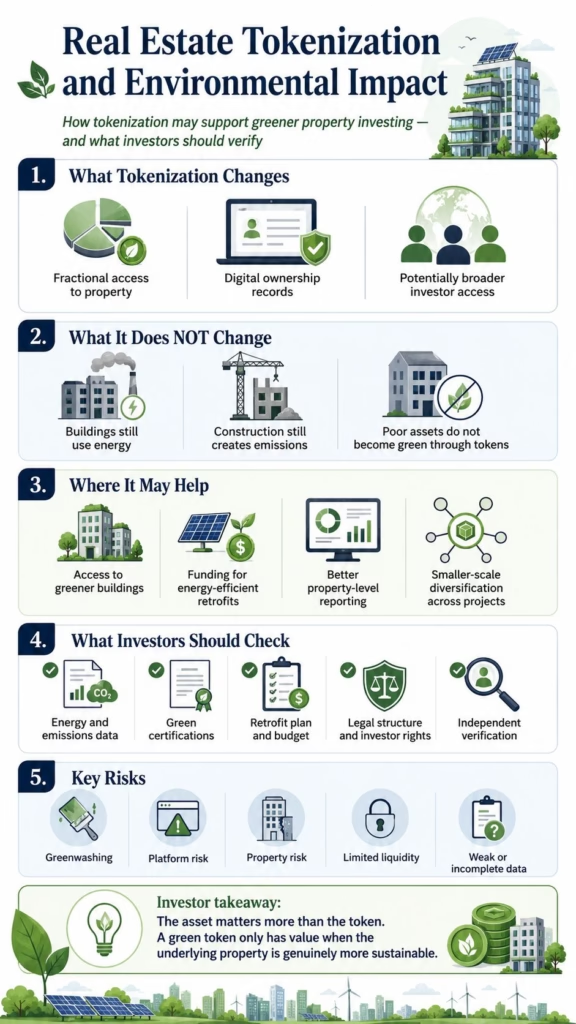
The Greenwashing Risk
Greenwashing happens when a project looks more sustainable than it really is.
Real estate is especially vulnerable because buildings are complex.
A platform can highlight solar panels while ignoring poor insulation. A development can promote green landscaping while using carbon-heavy materials. Another project may describe itself as sustainable without showing energy data, emissions data, or independent certification.
Tokenization can make this worse if investors focus on the technology instead of the asset.
A dashboard can look impressive.
A token can feel modern.
Neither proves environmental impact.
Eco-conscious investors should be sceptical when a project uses broad terms like “green,” “eco-friendly,” “sustainable,” or “climate positive” without evidence.
Specific claims are stronger.
Vague branding is weaker.
What Eco-Conscious Investors Should Check
Before investing in tokenized real estate with an environmental angle, check the evidence.
Building Performance
Look for actual energy data.
Projected savings are useful, but real performance matters more.
Investors should check whether the property publishes energy use, water use, emissions, operating costs, and efficiency improvements.
A serious platform should explain how those numbers are measured.
Certification
Green building certifications can help, but they are not perfect.
LEED, BREEAM, Energy Star, NABERS, and other frameworks may provide useful signals depending on the market.
Certification should not replace due diligence.
Investors still need to know what level was achieved, when it was awarded, and whether the building continues to perform well.
Retrofit Plan
For older buildings, the retrofit plan matters.
A credible plan should explain the work, budget, timeline, expected savings, and responsible contractors.
Strong projects may also report progress after the investment closes.
Weak projects often stop at promises.
Legal Structure
Environmental quality does not fix poor legal design.
Investors still need to know what the token represents.
Does it provide equity, debt, income rights, or another claim?
Who owns the property?
What happens if the platform fails?
Can investors sell?
How are disputes handled?
A sustainable building can still be a bad investment if the legal structure is weak.
Data Verification
Independent verification is better than platform claims.
Look for third-party audits, recognized certifications, professional energy assessments, or public reporting.
A project that marks its own homework deserves extra scrutiny.
Blockchain Choice
The blockchain itself can also matter, although it is not the main issue.
Older proof-of-work systems have been criticized for high energy use.
Many modern tokenization projects use more energy-efficient networks, but investors should still check the chain, custody setup, and transaction process.
Even so, the property’s environmental performance usually matters more than the chain.
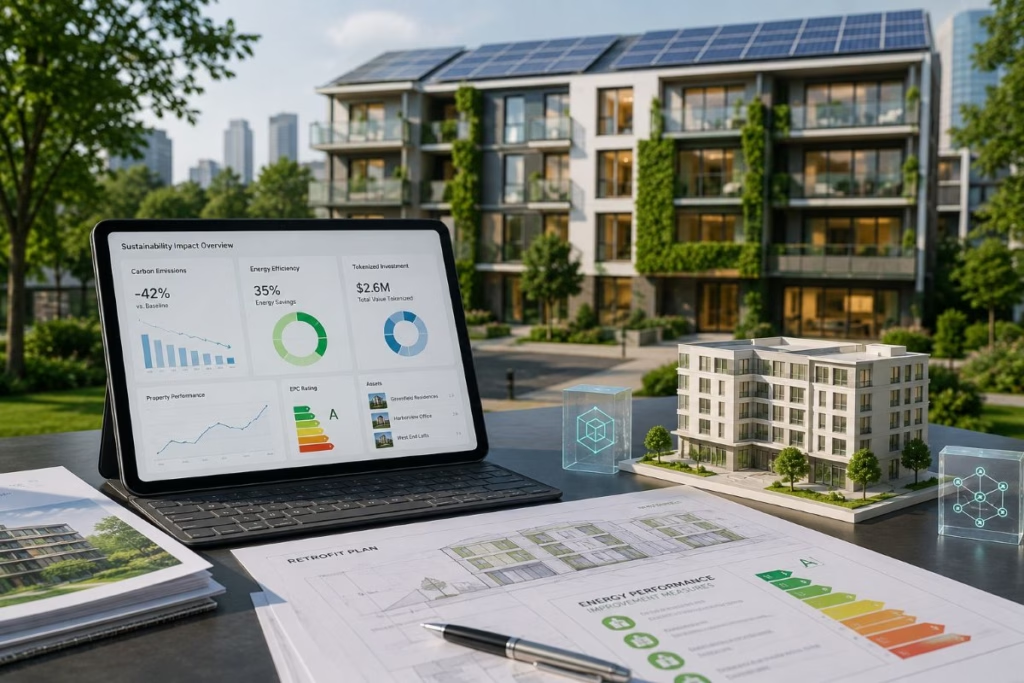
Potential Benefits for Sustainable Real Estate
Real estate tokenization may support greener investing in several ways.
First, it can broaden access.
More people may be able to invest in green buildings or retrofit projects without buying whole properties.
Second, it may improve funding options.
Property owners could raise capital for energy upgrades through fractional investment structures.
Third, it can support more detailed reporting.
Platforms that publish property-level data may help investors compare sustainability claims more easily.
Fourth, tokenized ownership could make niche projects more visible.
Smaller sustainable developments, community housing projects, or retrofit-focused assets may find new investor audiences.
These benefits are possible.
They are not automatic.
Execution decides whether the model adds value.
Main Risks
The environmental case for tokenized real estate comes with several risks.
Greenwashing
This is the biggest one.
A platform may use sustainability language without providing proof.
Investors should demand data, not slogans.
Platform Risk
Tokenized real estate depends on the platform’s operations, legal structure, compliance, reporting, and technology.
A weak platform can damage even a good property investment.
Property Risk
Buildings still face vacancies, repairs, market downturns, insurance costs, and management problems.
Sustainable features do not remove normal real estate risk.
Liquidity Risk
Tokenized property is often described as more liquid than traditional real estate.
That may be true in some cases, but liquidity depends on buyers, platform rules, transfer restrictions, and secondary market depth.
A green investment can still be hard to sell.
Data Risk
Environmental data can be incomplete, outdated, or difficult to compare.
A project may report estimated savings rather than actual performance.
Investors should understand what the numbers really show.
Regulatory Risk
Tokenized real estate sits between property law, securities law, digital asset regulation, and tax rules.
Sustainability claims may also face more scrutiny as greenwashing rules become stricter.
Regulatory uncertainty should not be ignored.
Tokenized Real Estate and ESG Investing
ESG investing looks at environmental, social, and governance factors.
Tokenized real estate can touch all three.
The environmental side may include energy efficiency, emissions, water use, materials, and retrofit plans.
Social factors may include housing quality, tenant wellbeing, affordability, community impact, and access to investment opportunities.
Governance covers legal structure, investor rights, reporting quality, platform controls, and decision-making.
Many projects focus too much on the environmental label and too little on governance.
That is a mistake.
Bad governance can destroy investor trust, even when the asset has strong sustainability features.
For ESG-focused investors, the best projects should combine measurable building performance with clear legal rights and honest reporting.
Anything less is incomplete.
Simple Investor Checklist
Use this checklist before trusting environmental claims in tokenized real estate.
Environmental Questions
Does the property publish energy data?
Are emissions measured or estimated?
Is water use reported?
Does the building have recognized certification?
Are the sustainability features already in place?
What improvements are planned?
Who verifies the claims?
Investment Questions
What does the token legally represent?
Who owns the property?
How is income distributed?
What fees apply?
Can tokens be sold?
What happens if the platform fails?
Which jurisdiction controls the agreement?
Greenwashing Questions
Is the language specific or vague?
Are claims backed by documents?
Does the platform report actual performance after launch?
Are risks explained clearly?
Does the project rely too much on buzzwords?
If the answers are weak, the investment is not ready for serious consideration.
Market Insight: The Asset Comes First
Tokenization can make real estate investing more accessible.
It can also improve record-keeping and make fractional ownership easier to manage.
Those are real advantages.
Environmental impact is a separate question.
A poor building does not become sustainable because it has tokens attached to it.
A strong green building still needs clear legal rights, fair fees, reliable reporting, and realistic income assumptions.
For investors, the order should be simple.
Check the asset first.
Review the platform second.
Study the token structure third.
Do not reverse that order.
Final Thoughts
So, will real estate tokenization have an Environmental Impact?
The short answer is maybe.
Real estate tokenization could support greener property investing.
It may help fund energy-efficient buildings, retrofit projects, and more transparent real estate models.
Smaller investors may also gain access to sustainable property opportunities that were once difficult to reach.
But tokenization is not an environmental solution by itself.
The building still matters most.
Energy use, emissions, materials, certification, management, and verified reporting should carry more weight than blockchain branding.
Eco-conscious investors need to be careful.
A genuine green real estate project should provide evidence. A weak one will rely on buzzwords.
Tokenized real estate may become part of sustainable investing, but only when the environmental claims are measurable, the legal structure is clear, and the risks are explained honestly.
Legal and Sustainability Risk Box
Tokenized real estate can involve property law, securities regulation, tax rules, digital asset custody, and cross-border investment issues.
Environmental claims may also be difficult to verify.
A token does not guarantee ownership rights, income, liquidity, or sustainability.
Before investing, read the platform documents, review the property data, check independent evidence, and speak with qualified professionals where needed.
This article is for informational purposes only and should not be taken as investment, legal, tax, or sustainability advice.
Frequently Asked Questions
Is real estate tokenization good for the environment?
Not automatically. Real estate tokenization can improve access and reporting, but the environmental impact depends on the building, materials, energy use, management, and sustainability data.
Can tokenized real estate support green buildings?
Yes, it may help investors access green buildings or fund energy-efficient retrofits. The project still needs credible evidence, clear reporting, and a strong legal structure.
What is greenwashing in tokenized real estate?
Greenwashing happens when a project uses environmental language without strong proof. Vague claims such as “eco-friendly” or “sustainable” should be backed by data, certification, or independent verification.
Does blockchain make real estate more sustainable?
Blockchain can improve transparency and ownership tracking, but it does not make a property sustainable by itself. The building’s real-world performance matters more.
What should investors check before buying green real estate tokens?
Investors should check energy data, emissions reporting, green certification, retrofit plans, platform quality, legal rights, fees, liquidity rules, and independent verification.
Are green building certifications enough?
Certifications can be useful, but they are only one part of the review. Investors should also look at actual performance, current data, costs, and ongoing management.
Can tokenization help finance retrofits?
Potentially, yes. Tokenized structures could help raise capital for upgrades such as solar panels, insulation, efficient heating and cooling, and water-saving systems. Investors still need clear terms and risk disclosures.
Is sustainable tokenized real estate suitable for beginners?
Beginners should learn the basics first. Understanding tokenization, fractional ownership, real estate risk, ESG claims, liquidity, and platform structure is essential before investing.