
When we look at tokenized real estate global trends in 2026, we can see a radid expansion.
But not in the way most people expected.
A lot of headlines make it sound like the world is moving toward one giant blockchain-based property market. That is not happening.
Instead, different regions are building different parts of the system.
Some are focused on ownership.
Others care more about compliance.
And some are building infrastructure first.
Right now, tokenized real estate still feels fragmented. But the direction is becoming clearer.
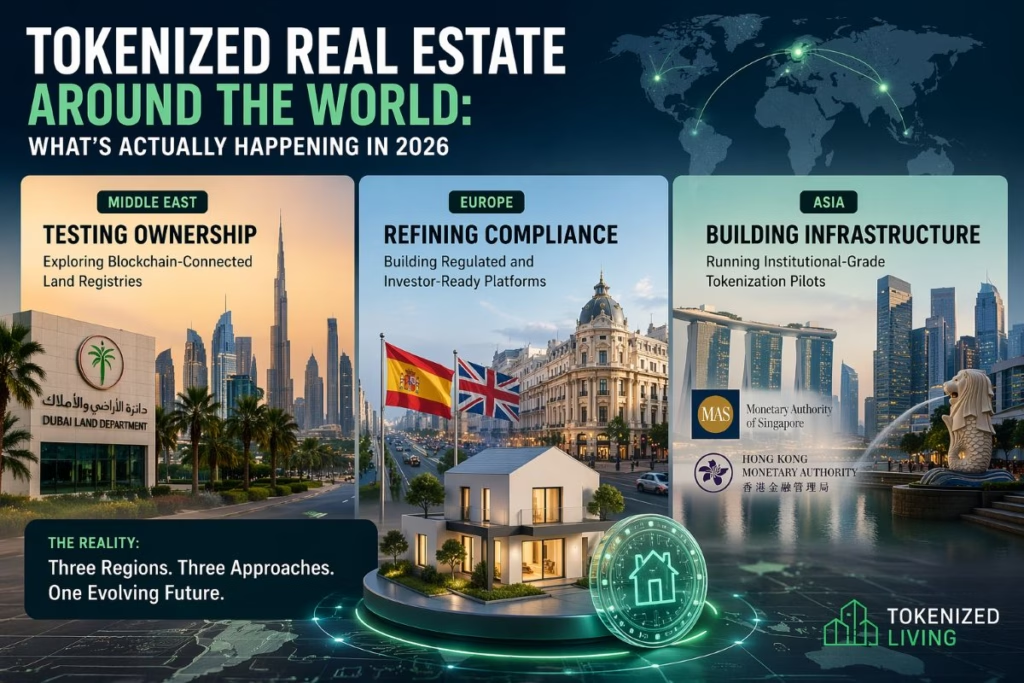
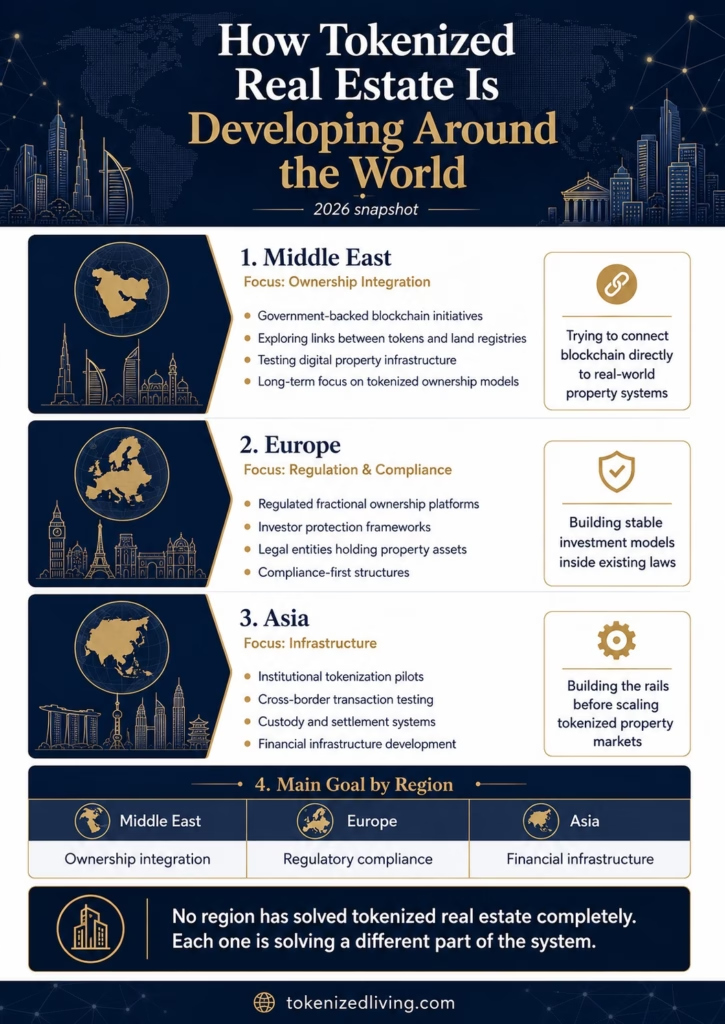
Middle East: Testing Ownership Models
The Middle East is taking one of the most ambitious approaches.
The Dubai Land Department has been exploring blockchain-based property systems for several years. The important part is that this goes beyond simple investment platforms.
They are looking at how blockchain could eventually connect with property registration itself.
That matters because most tokenized real estate platforms today do not actually tokenize property titles. In most cases, investors own shares in a company or legal structure connected to the property.
Dubai is experimenting much closer to the ownership layer.
If governments eventually integrate land registries with blockchain systems, the entire sector changes.
That is still early.
But this is one of the few regions seriously testing it.
Europe: Building Inside Existing Regulations
Europe has taken a slower approach.
But structurally, it may be the most stable.
Platforms like Reental are working within existing securities and property laws rather than trying to bypass them.
That means:
- regulated entities
- investor verification
- legal ownership structures
- compliance-first models
Some critics argue that this is not “real” tokenization because investors usually do not own the property directly.
That criticism misses the point.
These structures are designed to survive regulatory scrutiny.
And honestly, that is probably why many European platforms have avoided some of the problems seen elsewhere.
Asia: Quietly Building Infrastructure
Asia is taking a different route.
Less hype. More infrastructure.
The Monetary Authority of Singapore has been testing tokenization projects through Project Guardian. Meanwhile, the Hong Kong Monetary Authority has also explored tokenized asset frameworks.
This work is aimed more at institutional finance than retail investing.
The focus is on:
- settlement systems
- custody
- interoperability
- cross-border transactions
That may sound less exciting than tokenized rental properties.
But infrastructure is what allows larger markets to develop later.
Different Regions Are Solving Different Problems
This is the part many people overlook.
Different regions are solving different parts of the puzzle.
| Region | Main Focus |
|---|---|
| Middle East | Ownership integration |
| Europe | Regulation and compliance |
| Asia | Financial infrastructure |
None of these alone creates a global tokenized property market.
But together, they show where the industry is heading.
Tokenization Still Depends on Traditional Systems
One of the biggest misconceptions around tokenized real estate is the idea that blockchain replaces legal systems.
It does not.
Even when assets are tokenized:
- property rights still exist off-chain
- governments still control land registries
- courts still enforce disputes
- regulators still define securities rules
Recent issues involving RealT in Detroit showed this clearly.
The technology may work perfectly.
That does not remove legal risk. Furthermore, taxes need to be calculated.
What Happens Next?
The next phase of tokenized real estate probably will not come from another platform launch.
The bigger developments to watch are:
- land registry integration
- regulated secondary markets
- institutional adoption
- cross-border legal frameworks
That is where the real shift happens.
Final Thoughts
Tokenized real estate is growing.
Just not in one clean, unified system.
The Middle East is testing ownership models.
Europe is refining regulated investment structures.
Asia is building institutional infrastructure.
Right now, all three approaches are developing separately.
Eventually, they may connect.
That is when tokenized real estate becomes much bigger than a niche investment trend.
FAQ about Tokenized Real Estate Global Trends
Is tokenized real estate legal?
Yes, although regulations vary by country. Most platforms operate under securities laws.
Do token holders own the actual property?
Usually no. Most investors own shares or rights linked to a legal structure that owns the property.
Which region is leading tokenized real estate?
There is no single leader. Different regions are focusing on different parts of the industry.
Why is regulation so important?
Without clear regulation, tokenized real estate platforms can face legal and operational risks.
Could property deeds eventually exist on blockchain?
Possibly. But that would require governments and land registries to integrate blockchain systems directly.