
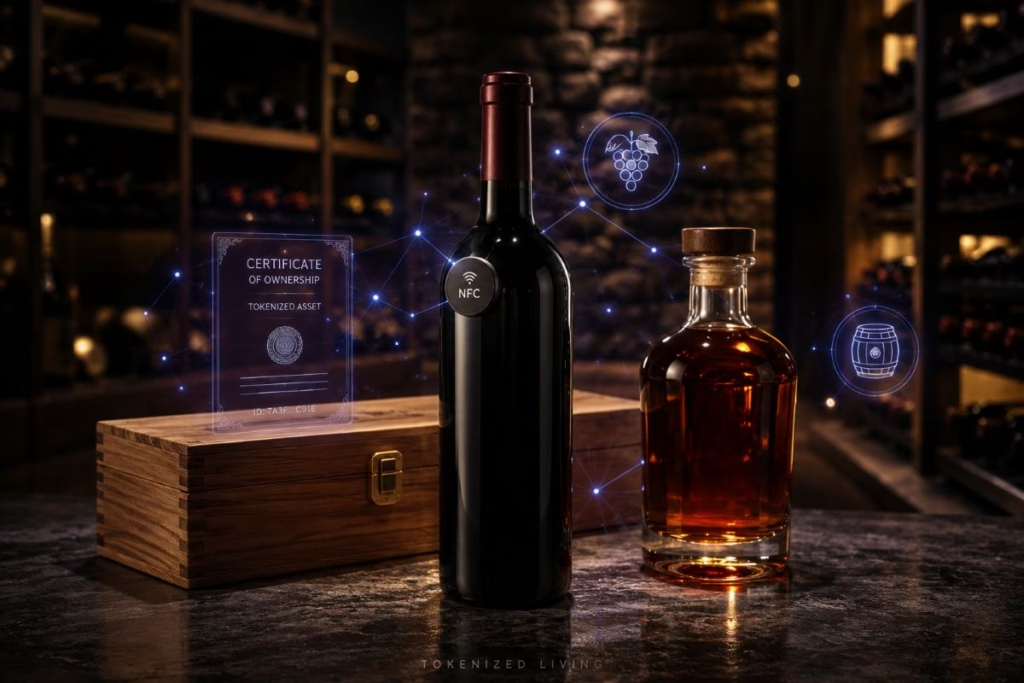
Tokenized wine brings blockchain technology into one of the world’s oldest collectible markets.
The basic idea sounds simple. A digital token connects to a physical bottle, case, cask, or wine portfolio. Investors or collectors can then transfer the digital asset while the beverage remains in professional storage.
However, the token does not always represent the same thing.
One token may show ownership of a particular bottle. Another may provide a share in a collection. A third might only act as a digital certificate or redemption voucher.
Therefore, investors must look beyond the blockchain. The legal rights, custodian, storage arrangements, fees, and resale market matter far more than the token itself.
TL;DR: Tokenized wine can connect physical bottles or portfolios with blockchain-based records. It may improve provenance, simplify transfers, and provide smaller investment units. However, tokenization does not guarantee legal ownership, rising prices, or an easy exit. Always verify the underlying asset, legal agreement, custodian, insurance, fees, and actual resale demand.
This article is for informational purposes only. It does not provide financial, legal, or tax advice. Fine wine and spirits can lose value and may be difficult to sell.
What Is Tokenized Wine?
Tokenized wine is a physical wine asset connected to a digital token on a blockchain. It sits within the broader market explained in our beginner’s guide to RWA tokenization.
The physical asset might be:
- One identifiable bottle
- A sealed case of wine
- A barrel or cask
- A professionally managed collection
- A financial interest linked to wine inventory
The token records information or rights connected to that asset. Those details can include the producer, vintage, bottle number, ownership history, storage location, and redemption conditions.
In many whole-bottle models, the token is a non-fungible token, or NFT. Its unique identity matches a specific bottle or case. Fractional structures may instead use divisible tokens, shares, or other investment units.
If you are new to the concept, our plain-English guide to tokenization explains how digital tokens can represent different types of rights.
A Wine Token Can Represent Different Rights
Calling something “tokenized wine” does not explain what the buyer owns.
That depends on the legal and commercial structure behind the token.
| Structure | What the token may represent | Main question to ask |
|---|---|---|
| Whole-bottle token | Ownership or a redemption right linked to one bottle | Can I legally claim or transfer the bottle? |
| Fractional token | A share in a bottle, case, collection, or holding company | What legal entity holds the wine? |
| Digital passport | Provenance, authenticity, or product-history data | Does it transfer ownership or only record information? |
| Experience token | Access to a tasting, event, membership, or special release | Is there any investment or resale right? |
| Tokenized security | A security or financial interest recorded on-chain | Which laws and investor protections apply? |
This distinction is critical.
A digital passport can help authenticate a bottle without giving its holder legal title. Likewise, an NFT may provide redemption rights without creating fractional investment ownership.
In 2021, Sygnum Bank and Fine Wine Capital used a different model. Their wine tokens were issued as ledger-based securities under Switzerland’s DLT framework. That legal structure linked the tokens to enforceable rights rather than relying on an NFT alone.
Consequently, the most important question is not, “Which blockchain does it use?”
The better question is:
What do I legally own, and which document proves it?
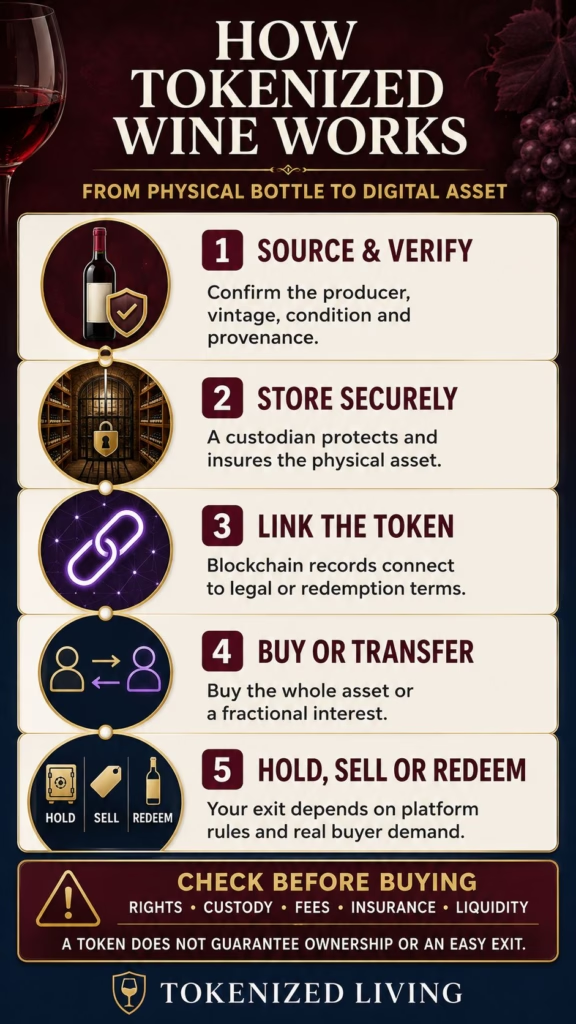
How Does Wine Tokenization Work?
Each platform uses its own structure. Nevertheless, most credible models follow a similar process.
1. The Wine Is Sourced and Authenticated
First, a winery, merchant, collector, or specialist platform supplies the asset.
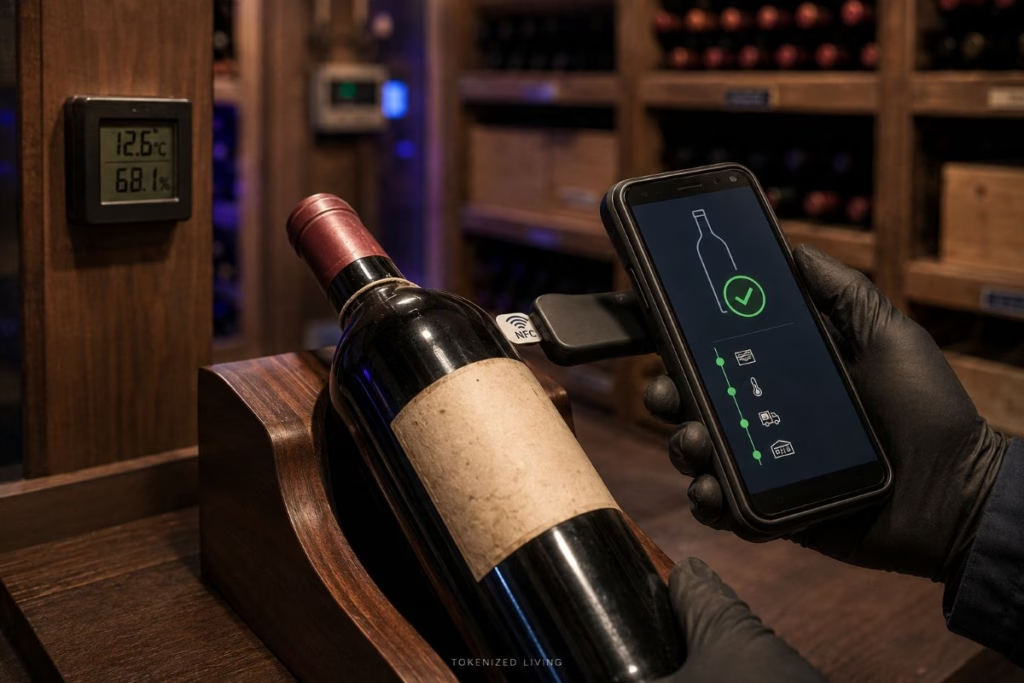
The platform should document its origin, condition, vintage, bottle number, and ownership history. Some providers also use RFID or NFC tags to connect each physical bottle with its digital record.
Blockchain can protect recorded data from later alteration. However, it cannot prove that the original information was correct.
Therefore, professional authentication still matters.
2. A Custodian Stores the Physical Asset
The wine usually remains in a bonded or climate-controlled warehouse. Correct temperature, humidity, light exposure, and handling protect its condition.
This arrangement separates ownership from possession. Investors trade the digital record while the bottle stays inside the storage system.
As a result, repeated sales do not require repeated shipping.
3. The Issuer Creates the Token and Legal Terms
Next, the issuer creates a token linked to the bottle or investment structure.
The accompanying agreement should explain:
- What the token represents
- Who owns the physical asset
- How transfers work
- Whether investors can redeem the wine
- Who pays storage, insurance, and delivery costs
- What happens if the issuer or platform fails
Smart contracts can automate transfers. Still, code cannot replace missing legal rights.
4. Buyers Complete the Purchase
Some platforms require a crypto wallet. Others allow buyers to register with an email address and pay through ordinary methods.
Fractional investments may also require identity checks. In addition, the platform may restrict buyers by country or investor status.
5. The Asset Remains Stored or Gets Redeemed
The owner may keep the token, list it for resale, or redeem the underlying bottle when permitted.
Redemption often ends the investment. Once the wine leaves professional storage, its verified chain of custody may also end.
Moreover, delivery can create tax, customs, insurance, and shipping costs.
Tokenized Wine Versus Fractional Wine Ownership
Tokenization and fractional ownership are related, but they are not identical.
Fractional ownership means several people share rights or financial exposure to one asset. Blockchain is optional.
Tokenization describes the digital record and transfer layer. A platform can tokenize an entire bottle for one owner without dividing it. Conversely, a wine investment company can divide a portfolio without putting investor interests on-chain.
This difference affects control and exits.
A whole-bottle owner may have a clear redemption right. By contrast, fractional investors may need the manager to sell the entire collection before receiving proceeds.
Always examine the structure instead of assuming every fraction equals direct bottle ownership.
Current Examples of Tokenized Wine and Spirits
The sector remains small. However, several projects show how the technology can support different uses.
CruTrade: Trading Wine Without Moving the Bottles
CruTrade uses Avalanche to record ownership of provenance-verified bottles. Each bottle receives an RFID tag and remains in bonded, climate-controlled storage.
Therefore, collectors can transfer the digital asset without shipping the wine after every sale.
Avalanche reported that CruTrade draws on Crurated inventory linked to more than $60 million in tokenized wine since 2021. The model focuses on whole bottles and chain-of-custody records rather than simply dividing one bottle among many investors.
dVIN: Provenance and Wine-Backed Finance
dVIN Labs is developing infrastructure for wine provenance and financing.
Its model combines cryptographic product records with legal structures and bonded storage. It also explores using wine inventory as collateral without physically moving it.
However, dVIN states that its platform remains in active development. Readers should therefore treat it as emerging infrastructure, not a mature investment marketplace.
WineFi and Lympid: Fractional Wine Exposure
WineFi partnered with Lympid to develop fractionalized fine-wine investments supported by blockchain infrastructure.
This approach differs from buying one tokenized bottle. Investors may instead gain exposure to selected wine assets or curated portfolios at a smaller entry point.
Still, smaller fractions do not remove valuation, liquidity, storage, or platform risk.
Bowmore: Tokenized Whisky With Redemption
Tokenization also extends beyond wine.
In 2025, Bowmore and Avalanche launched uniquely numbered whisky bottles linked to NFTs and NFC tags. Buyers received digital proof connected to a physical bottle and redemption rights.
This example demonstrates tokenized collectibility. However, a limited release is not automatically an investment product. Its future price still depends on demand from whisky collectors.
Potential Benefits of Tokenizing Wine and Spirits
Tokenization can improve parts of the fine-beverage market when the underlying structure works.
Stronger Provenance Records
A blockchain can maintain a time-stamped history of token transfers.
When a bottle enters the system directly from a producer or trusted merchant, that record may strengthen its provenance. RFID and NFC tags can also help connect the digital identity with the physical item.
Nevertheless, blockchain protects records. It does not authenticate a counterfeit bottle by itself.
Less Physical Movement
Fine wine can suffer from heat, vibration, poor humidity, or careless handling.
Tokenized trading allows the bottle to remain in controlled storage while ownership changes. Therefore, the model can reduce unnecessary transport and protect the chain of custody.
Smaller Investment Sizes
Fractional structures can divide expensive collections into smaller units.
That may open the market to people who cannot purchase a complete case or rare bottle. Yet a low minimum only improves access. It does not improve the quality of the investment.
Faster Ownership Transfers
Blockchain settlement can update the digital ownership record quickly.
However, the platform must also update its legal and custodial records. If those systems disagree, the blockchain entry alone may offer limited protection.
Improved Transparency
Investors may be able to inspect token supply and transfer history on-chain.
Even so, they still need off-chain evidence. Warehouse reports, insurance policies, audits, valuations, and legal documents remain essential.
The Major Risks Most Tokenized Wine Articles Ignore
Tokenized wine marketing often talks about access and liquidity. It rarely gives equal attention to the risks.
That imbalance can mislead investors.
Tokenization Does Not Guarantee Liquidity
A token may transfer quickly from one wallet to another. That does not mean a willing buyer exists.
Real liquidity requires active buyers, trading volume, fair pricing, and a functioning marketplace. A platform with few users may leave investors unable to exit.
Our guide to tokenized asset secondary markets explains why technical transferability and actual liquidity are different.
Wine Prices Can Fall
Fine wine is a collectible asset, not a guaranteed inflation hedge.
When checked in August 2026, the Liv-ex Fine Wine 100 had risen 3.3% over one year. However, it remained 6.8% lower over two years and 7.4% lower over five years. The broader Fine Wine 1000 was down 9% over two years and 7.9% over five years.
Therefore, selective recovery should not be confused with dependable long-term growth.
Valuations May Be Difficult to Verify
Platforms may show estimated portfolio values. Yet the eventual sale price can differ significantly.
Vintage, producer, critic scores, condition, provenance, market demand, and available supply all affect value. Fractional investors may also lack control over the timing of a sale.
Storage and Insurance Create Ongoing Costs
Fine beverages need secure, suitable storage.
Investors should identify who pays the warehouse and insurance bills. They should also check which losses the policy excludes.
Fees can consume modest gains, especially during a weak market.
The Physical and Digital Records Can Separate
A secure token is worthless if the bottle disappears, suffers damage, or was never placed in custody.
Regular inventory checks and independent audits can reduce this risk. However, investors still depend on off-chain companies and records.
Platform Failure Can Freeze the Process
The blockchain may continue operating after a company closes. Unfortunately, redemption, storage payments, customer support, compliance, and legal transfers may not.
Before investing, check what happens if the platform, issuer, warehouse, or asset-holding company becomes insolvent.
Regulation and Investor Protection Vary
Some fractional structures may qualify as securities. Others may fall under collectible, property, or contractual rules.
The position varies by structure and jurisdiction.
UK authorities have specifically warned that many wine and whisky investments sit outside Financial Conduct Authority protection. Therefore, investors may lack access to the Financial Services Compensation Scheme if something goes wrong.
Putting an unregulated investment on a blockchain does not make it regulated.
Whisky Casks Carry Additional Risks
Cask investors must verify the distillery, warehouse, cask number, ownership document, insurance, storage fees, and exit route.
Moreover, maturation takes years. Fraud or overvaluation may not become obvious until the investor tries to sell.
Tokenization can improve recordkeeping. It cannot replace direct confirmation from the bonded warehouse.
A Due-Diligence Checklist Before Investing
Before buying tokenized wine or spirits, ask the platform these questions:
- What exactly does the token represent?
- Which legal document gives me ownership or financial rights?
- Who currently owns the physical bottle, case, or cask?
- Where is the asset stored, and can the warehouse confirm it?
- Who authenticated the asset before tokenization?
- Does independent insurance cover theft, damage, fire, and spoilage?
- Who pays storage, insurance, platform, trading, and redemption fees?
- Can I redeem the asset, and what will delivery cost?
- Is there genuine secondary-market activity or only a resale promise?
- What happens if the platform or custodian fails?
- Which laws apply to the token in my country?
- How does the platform calculate the displayed valuation?
If the provider cannot answer these questions clearly, walk away.
For a wider framework, read our beginner’s guide to investing in tokenized assets.
Is Tokenized Wine a Good Investment?
Tokenized wine may appeal to collectors who understand the underlying market and accept limited liquidity.
The technology can improve provenance, reduce unnecessary transport, and make ownership transfers more efficient. Fractional structures may also lower entry costs.
Still, the investment case depends on the wine, price, legal structure, fees, storage, and exit demand. Blockchain cannot repair an overpriced bottle or weak agreement.
For most beginners, tokenized wine should remain a small, speculative alternative holding rather than a core investment. Anyone who needs quick access to their money should avoid it.
Ultimately, the token is only the digital wrapper.
The physical asset, enforceable rights, and exit market determine whether the investment deserves your money.
FAQs About Tokenized Wine and Spirits
Does a Wine NFT Mean I Own the Physical Bottle?
Not always. Some NFTs provide legal ownership or redemption rights. Others only act as certificates, memberships, or digital collectibles. Read the legal agreement before buying.
Can Tokenized Wine Be Divided Into Fractional Shares?
Yes. A platform can divide exposure to a bottle, case, portfolio, or asset-holding company. However, fractional ownership does not necessarily mean direct ownership of individual bottles.
Can I Drink or Collect the Underlying Wine?
Some whole-bottle platforms allow physical redemption. Fractional products may not. Redemption can also trigger delivery charges, taxes, customs fees, and the end of professional custody.
Is Tokenized Wine Easy to Sell?
Not necessarily. Blockchain can make transfers faster, but liquidity depends on buyer demand and marketplace activity. Many alternative assets remain difficult to sell quickly.
Is Tokenized Whisky Regulated?
The answer depends on the structure and country. In the UK, many whisky cask investments are unregulated and lack FCA-related compensation protection. A blockchain token does not automatically change that position.
How Does Blockchain Prevent Counterfeit Wine?
Blockchain can preserve provenance records after trusted parties enter them. RFID or NFC tags can connect those records to bottles. However, specialists must still authenticate the physical wine before it enters the system.