
Updated: August 25, 2026
Token-gated events restrict registration, ticket sales, content or admission to people who control a qualifying blockchain token.
However, the token does not always become the event ticket.
Sometimes an NFT unlocks an exclusive ticket sale. In other cases, the token proves membership at the entrance. An organizer can also issue a new NFT that serves as the admission credential.
These models sound similar, but they operate differently.
Therefore, organizers must choose the right structure before selecting a platform or minting anything.
This guide explains how token-gated events work, how to set one up and which security mistakes to avoid.
Token-Gated Events at a Glance
- A token-gated event requires attendees to prove control of a qualifying blockchain token.
- The qualifying asset could be an NFT, membership token or cryptocurrency balance.
- Token gating does not always mean issuing NFT tickets.
- Organizers can gate ticket sales, registration pages, online meetings or physical entry.
- Wallet verification should use signatures rather than blockchain transactions.
- Static QR codes and screenshots remain vulnerable to copying.
- Rotating barcodes are not unique to blockchain ticketing.
- Organizers still need refund, privacy, transfer and emergency access procedures.
- Blockchain can support admission control, but it cannot eliminate every form of fraud.
What Is a Token-Gated Event?
A token-gated event limits access to people who meet a blockchain-based ownership requirement.
For example, an organizer might allow entry only to wallets holding:
- A particular NFT
- One token from an approved collection
- A minimum cryptocurrency balance
- A membership token
- An NFT issued for a previous event
- A non-transferable digital credential
The attendee connects a compatible wallet to the event platform. The system then checks the relevant blockchain.
If the wallet meets the requirement, the attendee can register, buy a ticket or enter the event.
However, wallet ownership does not automatically prove someone’s real-world identity. It only proves control of that wallet during verification.
If you are new to the subject, our plain-English guide to tokenization explains what digital tokens can represent.
Token-Gated Access Versus NFT Tickets
Token-gated access and NFT ticketing are not interchangeable terms.
A token can unlock an event without becoming the ticket itself. Alternatively, an organizer can issue a new token that functions as the admission credential.
The three main models work as follows:
| Access model | How it works | Suitable use |
|---|---|---|
| Existing-token gate | A wallet must hold an existing token before accessing registration or admission | NFT communities, clubs and loyalty programs |
| NFT ticket | The organizer issues a new token representing event admission | Conferences, festivals and collectible tickets |
| Hybrid access | A token unlocks a conventional ticket sale, registration form or guest list | Larger events needing familiar ticketing systems |
Ticketmaster provides a real example of the hybrid model. Its token-gated sales have allowed qualifying NFT holders to unlock presales and other ticket offers.
The NFT functions as an access key. However, the customer still receives a conventional Ticketmaster ticket.
This distinction matters because organizers do not need to tokenize every ticket.
Sometimes the most practical system combines wallet verification with established registration and admission tools.
What Is an NFT-Gated Meeting?
An NFT-gated meeting is an online or physical meeting restricted to qualifying NFT holders.
For an online meeting, wallet verification might unlock:
- A private livestream
- A video-conferencing link
- A members-only website
- A Discord or Telegram channel
- Downloadable event materials
- A private discussion room
Meanwhile, physical NFT-gated meetings may use pre-registration, wallet verification or a scannable admission credential.
Organizers should never hide a private meeting link only with front-end code. Someone could copy and share the underlying URL.
Instead, the system should verify access on the server before loading protected content.
When Does Token Gating Make Sense?
Token gating works best when the qualifying token already has a genuine community or membership function.
Suitable examples include:
- NFT community meetups
- DAO meetings
- Web3 conferences
- Token-holder voting sessions
- Loyalty-member experiences
- Private product launches
- Music fan-club presales
- Collectors’ events
- Recurring membership gatherings
Additionally, organizers can use attendance tokens to unlock later benefits.
For example, a conference token might provide access to recordings, future discounts or a private discussion group.
However, those benefits only exist while the organizer continues providing them. The blockchain does not create permanent utility by itself.
When Should You Avoid Token Gating?
Token gating adds unnecessary friction when the event has no meaningful connection to a blockchain community.
A conventional ticketing platform will usually work better for:
- Public community meetings
- Small local workshops
- One-time private parties
- Events targeting non-crypto audiences
- Experiences where simple email registration is sufficient
Forcing every attendee to install a wallet can damage conversion rates.
Additionally, first-time users may struggle with network selection, signatures and wallet security.
Therefore, organizers should not use blockchain merely because it sounds innovative. The system needs a clear purpose.
How to Set Up Token-Gated Events Step by Step
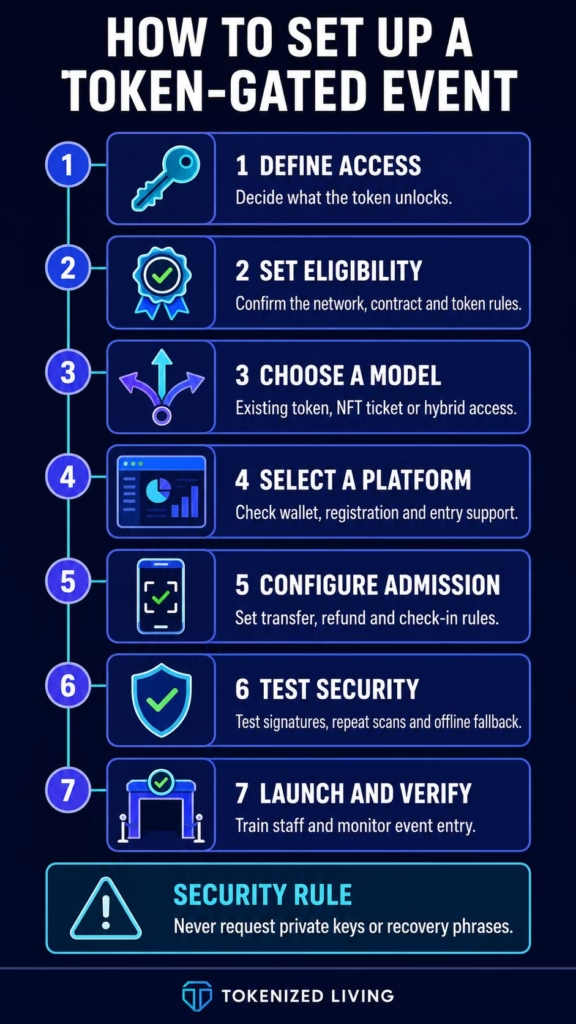
1. Define What the Token Unlocks
First, decide which stage of the event journey requires token ownership.
You can gate:
- The registration page
- A private ticket sale
- Discounted pricing
- Specific ticket categories
- Event admission
- VIP areas
- Online content
- Post-event recordings
- Future community access
Avoid vague promises about exclusive experiences.
Instead, describe the exact benefit, eligibility period and transfer rules.
For example:
Holders of one qualifying NFT can register for one free ticket until September 10. Ownership will be checked again during registration.
That rule gives attendees a clear expectation.
2. Choose an Existing-Token or New-Token Model
Next, decide whether attendees already possess the qualifying token.
Using an existing token usually creates less work. The system simply checks ownership against a defined contract address.
However, you may need to create new tokens when:
- The event has no existing community token
- Each attendee needs a unique admission credential
- Different ticket levels require separate benefits
- The token will support future membership
- You want to issue a digital attendance record
Do not mint an NFT simply to attach event artwork.
A conventional ticket will provide a smoother experience unless the token has another useful function.
3. Establish the Eligibility Rules
The platform needs precise instructions for determining who qualifies.
These rules may include:
- Blockchain network
- Smart-contract address
- Token standard
- Token ID
- Minimum token balance
- Approved NFT collection
- Ownership snapshot date
- Expiration time
- Number of tickets allowed per wallet
Always verify the contract address directly.
Scammers can create tokens with identical names and artwork. Therefore, a collection name alone cannot establish eligibility.
You should also decide when ownership gets checked.
A registration-time check may allow someone to transfer the token after claiming a ticket. Meanwhile, an event-day check may block someone who legitimately transferred wallets.
The correct approach depends on your admission model.
4. Select the Blockchain Network
When gating access with an existing token, use the network where that token already exists.
Do not ask holders to bridge assets solely for the event.
When issuing new tokens, consider:
- Transaction fees
- Wallet compatibility
- Platform support
- Network reliability
- Confirmation times
- Smart-contract security
- Environmental impact
- Attendee familiarity
Lower-cost networks can reduce minting expenses. However, choosing an obscure chain may create more support problems than it solves.
Our guide to choosing a blockchain for a tokenization project covers these trade-offs in more detail.
5. Choose the Appropriate Token Standard
Ethereum-compatible networks commonly use ERC-721 or ERC-1155 tokens.
ERC-721 works well when each token represents a unique credential. Meanwhile, ERC-1155 can manage multiple ticket types through one contract.
For example, an ERC-1155 contract could support:
- General admission
- VIP admission
- Speaker passes
- Staff credentials
- Sponsor access
The Ethereum token standards documentation explains the difference between these formats.
Nevertheless, most organizers should not deploy an unaudited custom contract.
Use an established platform unless your project has experienced blockchain developers and a clear technical requirement.
6. Select a Token-Gating Platform
The right platform depends on whether the event happens online, in person or through an existing ticketing provider.
Current examples include:
Unlock Protocol
Unlock Protocol supports memberships, event registration, ticketing, QR codes and check-in verification.
It also offers checkout tools, email delivery, allowlists and token-gating integrations.
This route suits organizers who want configurable on-chain membership or ticketing features.
Tokenproof
tokenproof supports token-gated and guest-list events. Its event formats include ticketed, non-ticketed and request-to-attend experiences.
It focuses heavily on real-world verification and brand experiences.
Collab.Land
Collab.Land primarily supports token-gated online communities.
For example, qualifying holders can receive access to private Discord or Telegram channels.
However, it does not replace a complete physical-event ticketing system.
Ticketmaster
Ticketmaster has used NFTs to unlock presales, selected seats and exclusive experiences.
However, its token-gated sales system represents an enterprise partnership model rather than a simple do-it-yourself tool.
Platform features, networks and prices can change. Therefore, verify current support before promoting or selling the event.
7. Create the Event and Registration Flow
After choosing a platform, enter the main event details.
Include:
- Event name
- Date and starting time
- Time zone
- Venue or meeting platform
- Registration deadline
- Capacity
- Ticket price
- Refund policy
- Transfer rules
- Accessibility information
- Contact details
Next, configure the wallet requirement.
The registration page should explain:
- Which token qualifies
- Which blockchain network it uses
- Which wallets the platform supports
- Whether wallet verification costs anything
- Whether ownership gets checked again
- What happens if the attendee changes wallets
Keep these instructions visible before the wallet connection button.
8. Make Wallet Verification Understandable
A legitimate token-gating platform should not ask attendees for private keys or recovery phrases.
Instead, the user normally connects a wallet and signs a message.
The signature proves that the user controls the wallet. It does not transfer funds or move tokens.
The Sign-In with Ethereum standard uses signed messages containing details such as the domain, chain, issue time and a unique nonce.
These controls help prevent replay attacks and misleading signing requests.
However, attendees still need clear instructions.
Add a warning such as:
Connecting your wallet does not require your recovery phrase. Never enter your recovery phrase into an event website or share it with support staff.
Attendees unfamiliar with wallets can read our MetaMask setup and security guide.
Still, do not force MetaMask if the platform supports other suitable wallets.
9. Decide How Admission Will Work
Physical events need a reliable method for converting eligibility into entry.
Common options include:
- Live wallet verification
- A unique QR credential
- A rotating barcode
- An emailed admission pass
- An Apple or Google Wallet pass
- A verified guest list
- A combination of these methods
A token does not normally “contain” a rotating QR code.
Instead, the event platform generates a code linked to the attendee’s registration or token record.
Furthermore, rotating barcodes are not exclusive to blockchain systems. Ticketmaster’s conventional mobile tickets use barcodes that refresh every 15 seconds.
This technology makes copied screenshots less useful. However, it does not make fraud or account compromise impossible.
10. Configure Transfers, Resales and Refunds
Decide whether attendees can transfer their tokens or tickets.
Transferable tickets offer flexibility. Nevertheless, they can also create resale and eligibility problems.
Non-transferable credentials may suit:
- Staff passes
- Educational certificates
- Personal invitations
- Compliance-sensitive gatherings
- One-per-person membership events
If transfers remain available, specify:
- The approved transfer method
- Any transfer deadline
- Whether resale is permitted
- Whether royalties or fees apply
- How refunded tokens get cancelled
- Whether the new holder must register separately
Blockchain rules only control transactions performed through supported smart contracts.
They cannot automatically prevent private payments, wallet sales or every form of unauthorized resale.
11. Build a Non-Wallet Fallback
Not every legitimate attendee will arrive with the correct wallet and a working phone.
Someone may lose access to their device. Others may face connection problems inside the venue.
Therefore, create a controlled fallback process.
Options include:
- Pre-verifying wallets before the event
- Providing emailed claim links
- Supporting embedded wallets
- Maintaining a secure guest list
- Using a staffed support desk
- Checking identification against registration records
- Issuing replacement credentials after cancelling old ones
The fallback should not become an easy bypass.
Staff must record manual admissions and prevent the original credential from being used again.
12. Test the Complete Process
Never test only from the organizer’s account.
Instead, create several test users covering different situations:
- Eligible NFT holder
- Ineligible wallet
- Wrong blockchain network
- Wallet holding multiple qualifying tokens
- Mobile-wallet user
- Desktop-wallet user
- Transferred token
- Already-used ticket
- Lost connection
- Cancelled registration
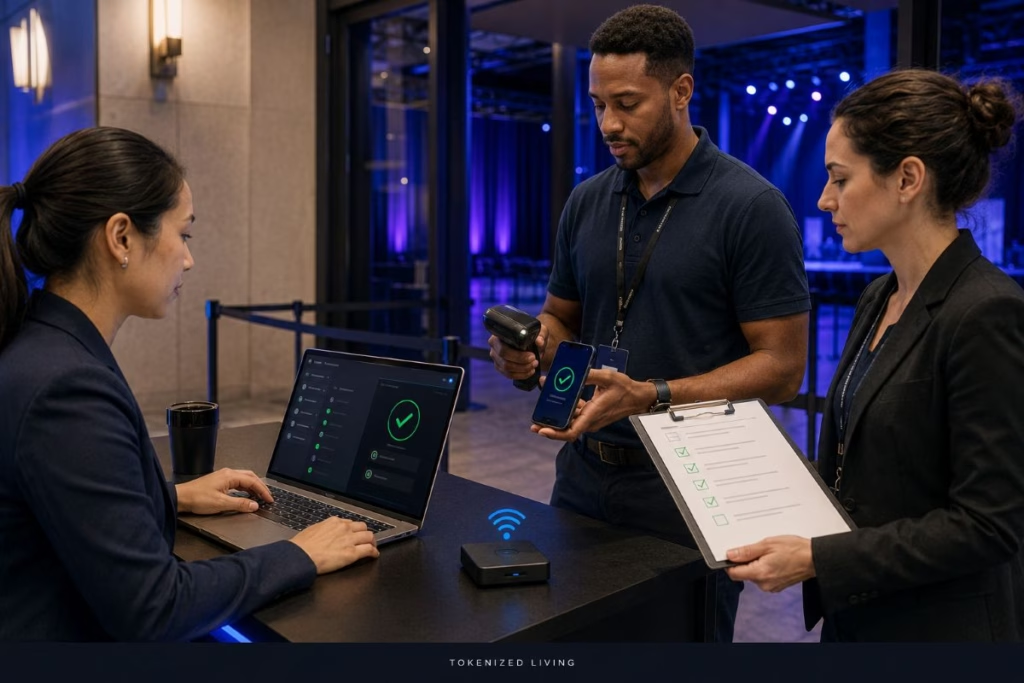
Then test registration, confirmation emails, wallet signatures, QR generation and event check-in.
Additionally, test the process using the same mobile connection available at the venue.
A system that works on office Wi-Fi may fail inside a crowded conference hall.
Token-Gated Event Security Checklist
Before launching, confirm the following:
- The official contract address appears on the event page.
- The correct blockchain network is clearly identified.
- Wallet signatures include the correct event domain.
- Authentication uses unique nonces.
- Signing requests have reasonable expiration times.
- The platform never requests recovery phrases.
- Staff cannot export unnecessary wallet or identity data.
- Used tickets cannot enter twice.
- Refunded credentials become invalid.
- Manual admissions get recorded.
- Staff accounts use strong passwords and two-factor authentication.
- Spare scanning devices remain available.
- The venue has an offline contingency plan.
- Attendees know where to obtain legitimate support.
For online events, enforce access on the server. Simply hiding a link or button in the browser provides weak protection.
Privacy and Personal Data
Public blockchains are not suitable places for names, email addresses, home addresses or identification documents.
Store personal registration information off-chain and collect only what the event requires.
The European Data Protection Board’s blockchain guidance emphasizes data minimization and privacy protections.
Organizers should also explain:
- Which information they collect
- Why they need it
- How long they retain it
- Which companies process it
- Whether it connects to a public wallet address
- How attendees can exercise their privacy rights
A public wallet address may reveal transaction history and asset balances.
Therefore, avoid collecting or analyzing unrelated blockchain activity.
How Much Does a Token-Gated Event Cost?
Costs vary according to the platform and technical model.
Possible expenses include:
- Platform subscriptions
- Smart-contract deployment
- Token minting
- Blockchain transaction fees
- Payment processing
- Card-payment integration
- Wallet onboarding
- Custom development
- Security reviews
- Check-in devices
- Technical support
- Refund administration
A free NFT does not create a free event system.
Even when users pay no minting fee, the organizer or platform may sponsor the blockchain transaction.
Therefore, compare the complete operating cost rather than the advertised minting price.
Benefits of Token-Gated Events
A well-designed token gate can provide several advantages.
Verified Community Access
The system can verify whether a wallet meets a published ownership rule.
This reduces dependence on manually maintained membership lists.
Reusable Membership
One token can unlock several events or digital experiences.
As a result, organizers can build recurring benefits around an established community.
Flexible Access Levels
Different tokens can unlock general admission, VIP areas, merchandise or private content.
Portable Credentials
Blockchain tokens can work across compatible applications and platforms.
However, that portability still depends on each application supporting the token.
Continued Engagement
Attendance credentials can support post-event recordings, discounts or later community activities.
Nevertheless, organizers must continue delivering those benefits.
Risks and Limitations
Token gating does not solve every ticketing problem.
Wallet Friction
Attendees may abandon registration when they encounter unfamiliar wallet steps.
Stolen Wallets
Blockchain verification confirms wallet control. It does not confirm how the user obtained that control.
Token Transfers
A holder may transfer the qualifying token after claiming admission.
Smart-Contract Risk
Errors in custom contracts can affect minting, transfers or access.
Platform Dependence
The event may still depend on centralized websites, APIs, scanners and support teams.
Privacy Exposure
Connecting a public wallet can reveal more financial activity than attendees expect.
Weak Physical Procedures
A secure token cannot compensate for poorly trained door staff or an unprotected fallback list.
Frequently Asked Questions
What is a token-gated event?
A token-gated event restricts registration, ticket sales, content or admission to wallets holding a qualifying blockchain token.
Do attendees need an NFT?
Not always. Organizers can gate access using NFTs, fungible tokens, membership credentials or other supported blockchain assets.
Is a token-gated event the same as NFT ticketing?
No. An existing NFT may unlock a conventional ticket sale. Alternatively, the NFT itself can function as the admission credential.
Can I create token-gated events without coding?
Yes. Several platforms provide no-code registration, token verification and check-in tools. However, organizers still need to configure and test them carefully.
Does every attendee need MetaMask?
No. Wallet requirements depend on the blockchain and platform. Some systems support several wallets or create embedded accounts for beginners.
Does connecting a wallet cost money?
Wallet connection and message signing normally require no blockchain fee. However, minting or purchasing a token may involve transaction costs.
Can someone copy an NFT ticket screenshot?
A static QR code or screenshot can be copied. Therefore, platforms may use rotating codes, live ownership checks or single-use credentials.
Are token-gated events fraud-proof?
No. They can improve verification, but stolen wallets, phishing, fake websites and weak admission procedures remain possible.
Can token-gated tickets be resold?
That depends on the smart contract, platform and organizer’s rules. Some credentials remain transferable, while others restrict or disable transfers.
What is the best blockchain for token-gated events?
Use the network holding the existing community token. For new tokens, compare fees, reliability, wallet support and platform compatibility.
Final Verdict
Token-gated events can provide useful access control for established blockchain communities.
However, organizers should not confuse token gating with NFT ticketing. They should also avoid presenting blockchain as a guaranteed solution to fraud.
The strongest setup combines clear eligibility rules, secure wallet verification and reliable event-day procedures.
Start with the access experience you want to create. Then choose the simplest technology capable of delivering it.
If a conventional ticket already solves the problem, use one.
If token ownership provides genuine membership or community value, token gating may earn its place.