

TL;DR
Tokenization means turning rights to an asset into digital tokens on a blockchain.
That asset might be real estate, bonds, art, gold, private credit, carbon credits, or even income linked to music rights.
A token does not always mean direct ownership.
Sometimes it represents equity. Sometimes it represents a claim on cash flow. In other cases, it gives access to a fund, product, or legal agreement.
That is why the key question is not only, “What is tokenization?”
The better question is:
What does this token actually give me rights to?
What Is Tokenization?
Tokenization is the process of representing an asset, right, or financial claim as a digital token.
That token usually sits on a blockchain or distributed ledger.
In simple terms, tokenization takes something from the real world and gives it a digital wrapper.
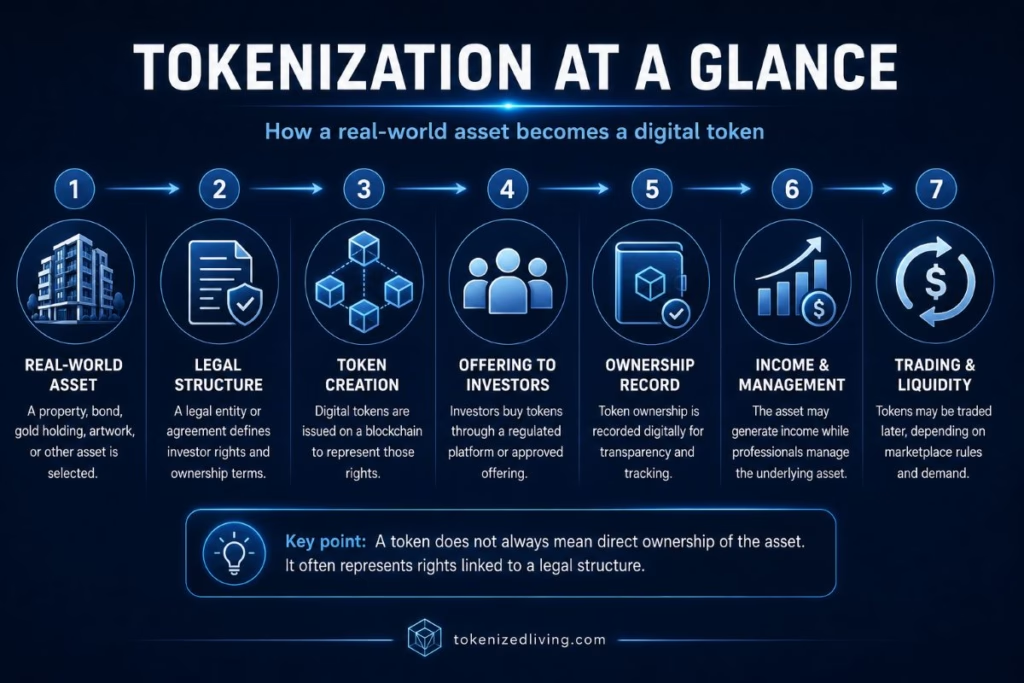
For example, a real estate platform might place a property into a legal structure. Investors then buy tokens linked to that structure. Each token may represent a share of ownership, a right to income distributions, or another financial interest.
That sounds simple.
However, the details matter.
A token is not magic. It does not automatically make an asset safe, liquid, or profitable. It is a digital record connected to legal, financial, and technical rules.
The token is only as strong as the structure behind it.
A Simple Tokenization Example
Imagine a $500,000 rental property.
Instead of selling the whole property to one buyer, a platform creates 50,000 tokens. Each token costs $10.
An investor buys 100 tokens.
That investor now has exposure to a small part of the property structure.
Depending on the platform, those tokens may give the investor:
- A share of net property income
- A share of future sale proceeds
- Voting rights on certain decisions
- Access to a secondary marketplace
- A claim through a company, fund, trust, or contract
That last point matters most.
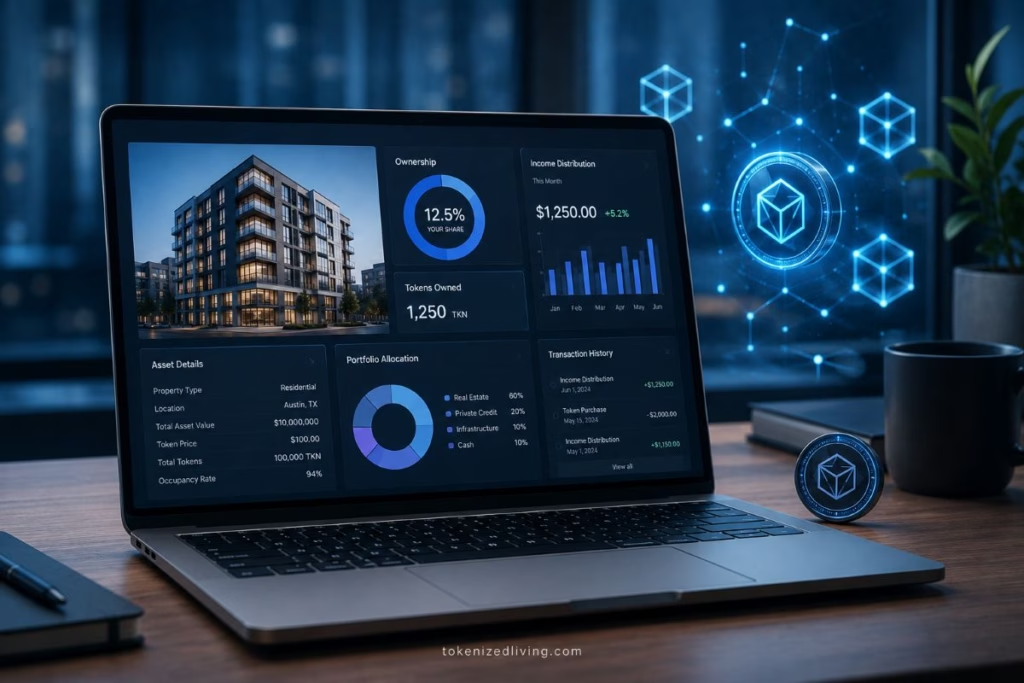
The investor may not own the property deed directly. More often, the investor owns tokens linked to an entity or agreement that controls the asset.
This is where beginners often get confused.
They see “tokenized real estate” and assume they own bricks, land, or a legal title.
In many cases, they own a digital interest tied to a legal structure.
That difference is huge.
Why Tokenization Exists
Tokenization exists because many valuable assets are hard to buy, sell, divide, or manage.
Real estate is the obvious example.
Buying a full property takes a lot of capital. Selling it takes time. Managing it adds more work. Legal paperwork, brokers, banks, and settlement delays also slow things down.
Tokenization tries to make parts of that process more digital.
It can help with:
- Fractional access
- Faster record-keeping
- Automated distributions
- Easier transfer of ownership interests
- More transparent transaction history
- Global investor access, where regulations allow it
This is why tokenization has become a major theme in real-world assets, or RWAs.
Still, the promise often runs ahead of reality.
Some tokenized assets have strong legal structures and clear reporting. Others are thin, risky, or badly explained.
A nice-looking dashboard does not prove the investment is solid.
What Can Be Tokenized?
Many assets can be tokenized, but not every asset should be.
The most common examples include:
| Asset Type | What the Token May Represent | Beginner Warning |
|---|---|---|
| Real estate | Equity, income rights, or shares in a property structure | Check who owns the deed |
| Bonds | A digital version of debt exposure | Check issuer risk |
| Treasury products | Exposure to short-term government securities | Look at fund structure and access rules |
| Private credit | Claims linked to loans or credit pools | Check default risk |
| Gold | Ownership or claims linked to stored gold | Check custody and redemption |
| Art and collectibles | Fractional rights in high-value items | Research valuation and exit options |
| Music rights | Royalty or income-linked rights | Check what rights are included |
| Carbon credits | Environmental claims or credit exposure | Check verification quality |
Real estate gets the most attention because people understand property.
But tokenization is bigger than property.
The larger trend is about putting financial claims, ownership records, and asset rights into digital systems.
That makes the space exciting.
It also makes it easy to misunderstand.
Tokenization vs Fractional Ownership
Tokenization and fractional ownership are closely related, but they are not the same thing.
Fractional ownership means several people own or hold rights to parts of an asset.
Tokenization means those rights are represented using digital tokens.
You can have fractional ownership without blockchain.
For example, a group of investors can own shares in a property company using normal legal documents.
You can also have tokens that do not provide true ownership.
For example, a token may give access to rewards, payments, usage rights, or platform benefits.
So the clean distinction is this:
Fractional ownership describes the split. Tokenization describes the digital format.
When both come together, investors may get smaller-ticket access to assets that were once harder to reach.
That is the useful part.
The dangerous part is when platforms blur the language.
“Tokenized” does not always mean “you own the asset.”
“Fractional” does not always mean “you control anything.”
Read the documents before believing the headline.
Why Blockchain Is Used
Blockchain gives tokenization a shared digital record.
That record can show who holds which tokens, when transfers happened, and how many tokens exist.
Smart contracts can also automate certain actions.
For example, a platform may use smart contracts to handle token transfers, income distributions, compliance checks, or investor allowlists.
This does not remove the need for lawyers, auditors, custodians, or regulators.
In fact, real-world asset tokenization often needs more legal clarity than normal crypto projects.
Why?
Because the asset exists outside the blockchain.
A property sits in a city. A bond has an issuer. Gold needs storage. A loan depends on repayment.
The blockchain records the token.
It does not magically enforce every real-world right.
That is why serious tokenization platforms need both good technology and strong legal design.
One without the other is weak.
The Big Benefit: Access
The main benefit of tokenization is access.
A beginner may not have enough money to buy a full rental property, a private fund position, or a high-value asset.
Tokenization can split exposure into smaller units.
That makes some markets easier to enter.
For younger investors, this matters.
Instead of waiting years to save for one property, they may start with smaller allocations across several tokenized assets.
For international investors, tokenization may also open access to markets that were previously difficult to reach.
However, access is not the same as quality.
A bad investment does not become good because the minimum investment is lower.
Smaller tickets can actually encourage lazy decisions.
That is a real problem.
When people only invest $50 or $100, they sometimes skip due diligence.
That is backwards.
The amount may be small, but the risks are still real.
The Second Benefit: Efficiency
Traditional asset markets often involve slow paperwork, manual settlement, and layers of intermediaries.
Tokenization can reduce some friction.
Transfers may happen faster. Ownership records may update more cleanly. Income distributions may become easier to track.
In some cases, investors can see transaction history on-chain.
That can improve transparency.
Yet efficiency depends on the platform.
If a tokenized real estate platform still has poor reporting, unclear fees, weak legal documents, and no reliable marketplace, then blockchain does not fix the core issue.
The technology helps when the structure already makes sense.
It cannot rescue a badly designed product.
The Third Benefit: Programmability
Programmability is one of the strongest parts of tokenization.
A token can follow rules.
For example, a token may only transfer to approved investors. It may block users from restricted countries or it may handle income distributions through smart contracts. It may connect with DeFi tools, lending markets, or automated compliance systems.
This is where tokenization becomes more than a digital certificate.
It becomes a financial building block.
That is also where the risk increases.
More moving parts mean more ways for something to break.
Smart contracts can have bugs. Oracles can fail. Legal rights can be unclear. Marketplaces can dry up. Platforms can change terms.
Beginners should respect the complexity.
Simple marketing often hides a messy back end.
The Biggest Misunderstanding: Liquidity
Many people think tokenization automatically creates liquidity.
It does not.
Liquidity means you can sell quickly, at a fair price, with enough buyers in the market.
A token can exist on a blockchain and still have almost no buyers.
This happens often with tokenized real estate, collectibles, private credit, and smaller RWA projects.
The platform may show a secondary marketplace.
That does not guarantee demand.
A listed token is not the same as an easy exit.
This is one of the biggest mistakes new investors make.
They assume “digital” means “easy to sell.”
That assumption can burn them.
Before buying any tokenized asset, ask:
- Is there a real secondary market?
- How much trading actually happens?
- Are there withdrawal limits?
- Can the platform pause transfers?
- Who can legally buy the token from me?
- What fees apply when I sell?
If those answers are weak, treat the asset as illiquid.
Legal Risk Box
Tokenization depends on legal rights.
The token itself is only one part of the structure.
Before investing, check what the token represents under the law.
Does it represent equity? Debt? A fund interest? A revenue claim? Membership interest? Contractual rights?
Also check the jurisdiction.
A token issued in one country may not give the same protection to investors in another country.
Regulation matters even more when the token looks like a security.
That is why serious platforms usually include investor checks, legal documents, transfer restrictions, and clear disclosures.
If a platform avoids these details, be careful.
The risk is not only price loss.
It may be unclear whether you have enforceable rights at all.
Tokenization in Real Estate
Real estate is one of the clearest use cases for tokenization.
Property is valuable, familiar, and usually hard to divide.
Tokenized real estate platforms try to split property exposure into smaller digital units.
Some focus on rental property. Others focus on development projects, luxury real estate, hotel assets, or real estate debt.
The appeal is obvious.
Investors can gain exposure without buying an entire property.
They may also receive income distributions if the underlying property generates net cash flow.
But again, the structure matters.
The most important question is:
Who owns the property, and what exactly do token holders own?
Sometimes token holders own shares in a company that owns the property.
Other times they hold rights to income.
Sometimes they hold tokens linked to a debt agreement.
These are not the same.
A beginner guide that ignores this point is useless.
Tokenization in Finance
Finance may become an even bigger area than real estate.
Tokenized Treasuries, money market funds, private credit, bonds, and deposits have attracted serious institutional attention.
This makes sense.
Financial assets already rely on records, settlement systems, custodians, and contracts.
Tokenization can make those records more programmable.
It may also support faster settlement, better collateral movement, and more efficient cross-border transactions.
However, institutional tokenization does not mean every retail token is safe.
Large firms usually operate inside strict legal and compliance systems.
Retail platforms vary widely.
Do not confuse institutional progress with automatic safety for every tokenized product.
That is lazy thinking.
What Beginners Should Check First
Before buying any tokenized asset, check seven things.
1. What does the token represent?
Do not accept vague language.
Find out whether the token gives ownership, income rights, debt exposure, fund access, or something else.
2. Who controls the real asset?
For real estate, check who owns the deed.
With gold, check who stores it.
For debt, check who issued it.
For funds, check who manages the assets.
3. What legal documents support the token?
Marketing pages are not enough.
Look for offering documents, terms, risk disclosures, ownership structures, and investor agreements.
4. How do investors get paid?
Income should not be vague.
Check the source of distributions, the payment schedule, fees, reserves, and possible delays.
5. Can you sell?
A secondary marketplace is useful only if buyers exist.
Look for actual trading activity, not just a “sell” button.
6. What fees apply?
Small fees can eat returns.
Check platform fees, management fees, transaction fees, spread, blockchain fees, and exit fees.
7. What happens if the platform fails?
This question separates serious platforms from weak ones.
If the website disappears, do token holders still have a claim?
Who manages the asset?
Who communicates with investors?
Where are records kept?
If the answer is unclear, walk away.
Common Tokenization Myths
Myth 1: Tokenization removes middlemen
Not always.
Many tokenized assets still rely on companies, lawyers, custodians, administrators, property managers, auditors, brokers, and payment providers.
Tokenization may reduce some friction.
It does not remove every intermediary.
Myth 2: Tokenization guarantees liquidity
No.
Liquidity depends on buyers, demand, regulation, marketplace design, and asset quality.
A token with no buyers is still hard to sell.
Myth 3: Token holders always own the real asset
Not always.
A token may represent many different rights.
Direct ownership is only one possible structure.
Myth 4: Blockchain makes everything transparent
Blockchain can show on-chain activity.
It may not show property condition, tenant issues, unpaid taxes, legal disputes, management problems, or off-chain debt.
Real-world assets need real-world due diligence.
Myth 5: Smaller investments mean smaller risk
The ticket size may be smaller.
The product risk may not be.
A $100 investment in a weak structure is still a bad investment.
Is Tokenization the Future?
Tokenization is likely to become part of the future financial system.
Banks, asset managers, exchanges, and blockchain firms are all testing or building tokenized products.
That does not mean every project will survive.
The early internet had real winners and plenty of garbage.
Tokenization will probably follow the same pattern.
Strong platforms will focus on legal clarity, reporting, investor protection, real demand, and useful technology.
Weak platforms will hide behind buzzwords.
Beginners need to learn the difference.
That is the whole point of Tokenized Living.
Final Thoughts
So, what is tokenization?
Tokenization is the digital representation of an asset, right, or financial claim using blockchain-based tokens.
It can make investing more accessible.
Tokenization can improve record-keeping.
Futhermore, it can support faster transfers and automated processes.
But it does not remove risk.
A token is not always a deed.
Marketplaces are not always liquidity.
A dashboard is not always transparency.
The real value sits behind the token.
Before investing, check the asset, the legal structure, the rights, the fees, the platform, and the exit options.
That may sound boring.
Good.
Finally, remember that boring due diligence is what keeps beginners from becoming exit liquidity for someone else’s slick marketing.
FAQs
What is tokenization in simple terms?
Tokenization means turning rights to an asset into digital tokens. These tokens can represent ownership, income rights, debt exposure, fund shares, or other claims.
Is tokenization the same as cryptocurrency?
No. Cryptocurrency is usually a digital asset itself. Tokenization uses blockchain tokens to represent something else, such as real estate, bonds, gold, or private credit.
Does tokenization mean I own the real asset?
Not always. Some tokens represent ownership. Others represent income rights, debt, fund interests, or contractual claims. Always check the legal documents.
Can real estate be tokenized?
Yes. Real estate can be placed into a legal structure, then divided into digital tokens. Investors may receive exposure to property income, equity, or debt, depending on the structure.
Is tokenization safe?
Tokenization is not automatically safe. Risk depends on the asset, issuer, platform, legal structure, custody, liquidity, and investor protections.
Can I sell tokenized assets easily?
Sometimes, but not always. A tokenized asset may have a secondary marketplace, but that does not guarantee buyers. Many tokenized assets remain illiquid.
Why are big financial institutions interested in tokenization?
Institutions are interested because tokenization may improve settlement, record-keeping, collateral movement, and asset management. Retail investors should still judge each product on its own merits.
What should beginners check before investing?
Beginners should check what the token represents, who controls the asset, what legal rights exist, how payments work, whether there is real liquidity, and what happens if the platform fails.