
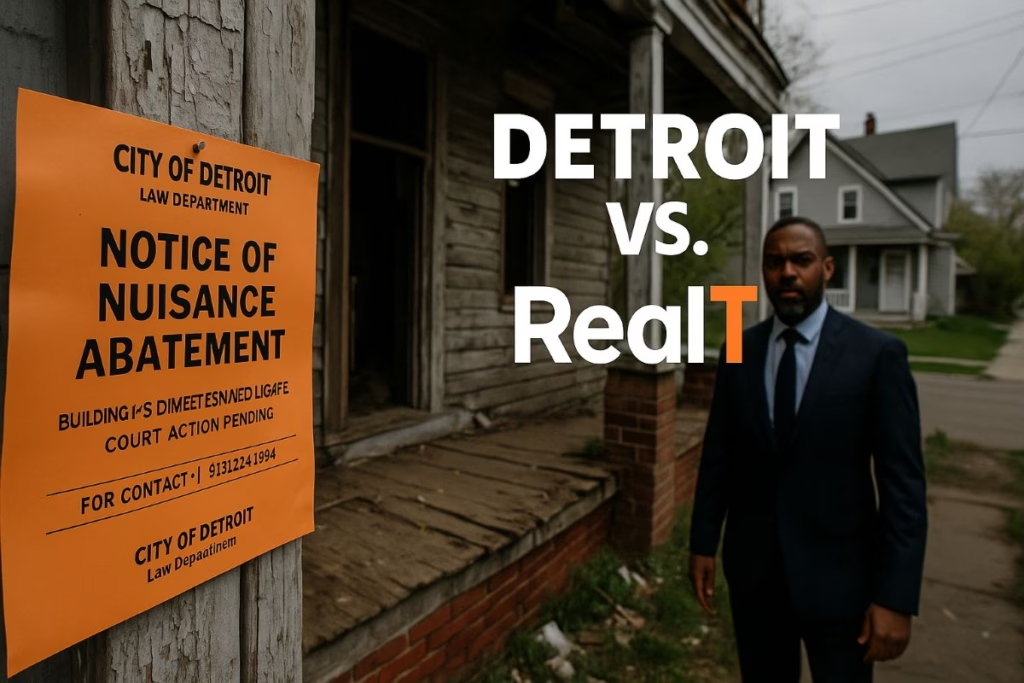
In July 2025, the City of Detroit filed a sweeping public nuisance lawsuit, Detroit vs RealT, a blockchain-based real estate firm and its founders, Remy and Jean-Marc Jacobson. The legal action targets over 400 properties, highlighting severe habitability issues and questioning the very foundation of tokenized real estate ownership.
The Detroit vs. Realt lawsuit may well become a landmark case for digital property investing.
“This is the largest nuisance abatement case in our history,” said Conrad Mallett, Corporation Counsel for the City of Detroit. “These defendants have profited from our communities while ignoring their most basic legal obligations as landlords and property owners.”
Some links in this article may be affiliate links. If you choose to invest through them, we may earn a small commission at no extra cost to you.
Always do your own research before making any investment decisions.
Updated August 14, 2026: RealT’s July Liquidation Announcement.
Since this article was published, RealT’s position has deteriorated significantly.
On July 2, 2026, RealT announced its intention to begin voluntary liquidation and sell its property portfolio. Normal distributions from many affected properties had already stopped.
Approximately 700 Detroit properties remain under court-appointed special fiduciary Charles Bullock. He retains final authority over repairs and property sales within that portfolio. Therefore, RealT’s liquidation announcement does not end the Detroit lawsuit or allow its founders to sell those properties independently.
RealT has not provided token holders with a reliable repayment timetable or verified recovery estimate. Read our updated RealT review and Detroit fiduciary analysis for the complete position.
⚖️ What the Court Ordered in July 2025
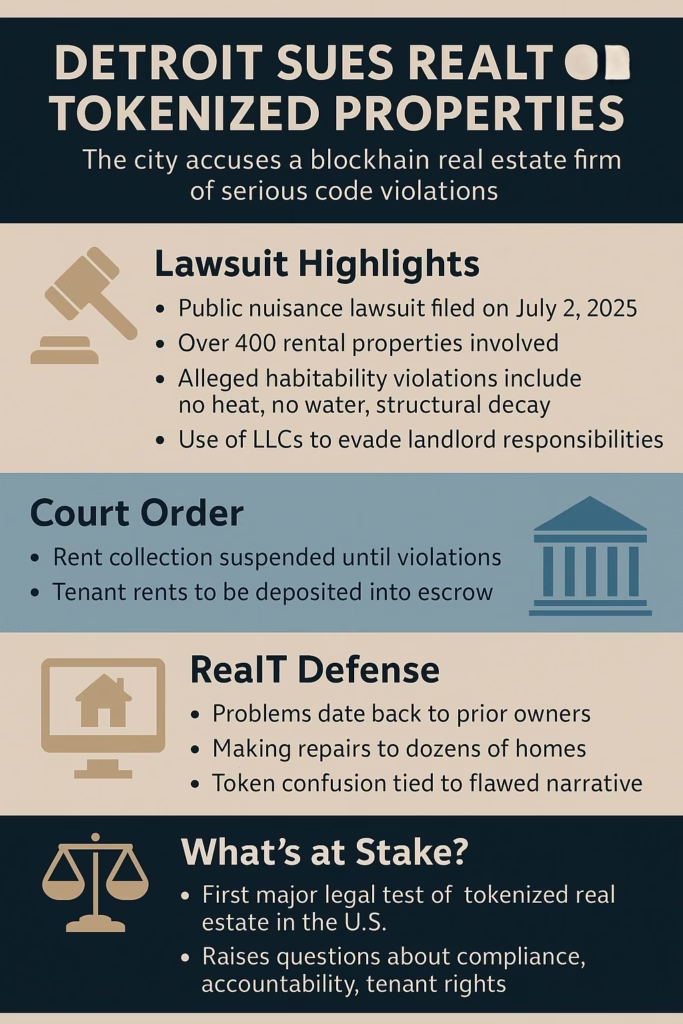
On July 22, 2025, Wayne County Circuit Court Judge Annette Berry issued a temporary restraining order against RealT and its affiliates. According to the City of Detroit’s announcement, the order:
- Restricted direct rent collection until the relevant property met city requirements and received a certificate of compliance.
- Required RealT to notify tenants to pay rent into escrow. The company could access those funds only for repairs needed to bring properties into compliance.
- Protected tenants in properties without a compliance certificate from eviction, provided they deposited rent into escrow.
What Changed in April 2026?
A judge approved a subsequent agreement on April 22, 2026, placing approximately 700 Detroit properties under special fiduciary Charles Bullock.
According to Outlier Media’s reporting on the agreement, eviction authority transferred from RealT to the fiduciary. Bullock also gained broad powers over repairs and property sales.
The July 2025 restrictions therefore describe an earlier stage of the case and must be read alongside the later fiduciary arrangement.
🧱 How RealT’s Model Works—And Where It’s Crumbling
RealT built its reputation by offering fractional ownership in real estate through Ethereum-based tokens. A separate LLC series own each property, and investors hold tokens representing equity stakes. This system, once lauded as innovative, is now being scrutinized for lack of oversight.
The city’s complaint argues RealT:
- Failed to maintain properties
- Collected rent while violating housing codes
- Misused LLC structures to avoid accountability
- Sold tokens for properties where ownership status was legally unclear
Notably, RealT also faces criticism for selling access to buildings that allegedly had no running water, no heat, or were structurally unsound.
📉 A Crisis of Confidence in Tokenized Real Estate?
For years, tokenization advocates have promised increased liquidity, lower barriers to entry, and more equitable real estate investment. But this case reveals potential downsides:
- Lack of municipal compliance
- Token holder confusion about legal rights
- Regulatory grey zones in rent collection and eviction rights
Consequently, investors may be exposed to unforeseen legal risks, especially in jurisdictions with strict landlord-tenant laws.
🏘️ Tenant Protection First: Detroit’s Legal Strategy
The city’s court filing wasn’t just punitive—it aimed to protect renters. With many tenants living in unsafe or uninhabitable conditions, the city took swift action:
- Launched door-to-door outreach campaigns
- Directed residents on how to use escrow accounts
- Ordered RealT to secure 58 vacant homes within 30 days
- Set a 90-day deadline for code compliance
Tenants in affected non-compliant properties were directed to place rent into approved escrow accounts rather than pay RealT directly, subject to the court’s requirements.
RealT’s Response and What Happened Next
When Detroit initially filed the lawsuit, RealT blamed previous property managers for many of the financial and maintenance problems. The company said it was centralizing management, improving tenant communication and carrying out repairs through New Detroit PM LLC.
However, the proposed recovery did not restore normal operations. In April 2026, a judge approved an agreement placing approximately 700 Detroit properties under special fiduciary Charles Bullock. RealT then announced its intention to liquidate the portfolio in July.
🌐 The Bigger Picture: Regulation for the Token Economy
This case could reshape how jurisdictions regulate tokenized real-world assets. If upheld, the court’s ruling could lead to:
- Stronger compliance rules for token issuers
- Clearer ownership frameworks for token holders
- Mandatory escrow and inspection systems for rent collection.
🧠 Final Thoughts: Innovation Needs Guardrails
Real estate tokenization remains a trailblazing concept, but the Detroit vs, RealT case reminds us that technology can’t outrun accountability.
If decentralized platforms wish to thrive in regulated environments, compliance, transparency, and tenant protections must be baked into the business model—not bolted on after the fact.
🙋♂️ Detroit vs RealT Frequently Asked Questions (FAQs)
RealT used ERC-20 tokens to represent shares or membership interests in legal entities connected to US rental properties. Investors historically received property-linked distributions in stablecoins. However, RealT announced voluntary liquidation in July 2026 and should no longer be treated as a normally operating investment platform.
Detroit alleges that RealT and its affiliated LLCs failed to maintain habitability standards in over 400 properties, including lack of heat, water, structural stability, and proper licensing. The city also accuses RealT of using a complex LLC structure to evade landlord responsibilities.
The July 2025 order restricted direct rent collection at non-compliant properties. It also protected tenants in those properties from eviction, provided they deposited rent into escrow.
The April 2026 agreement subsequently placed approximately 700 Detroit properties under special fiduciary Charles Bullock. Eviction authority transferred to the fiduciary, alongside broad powers over repairs and property sales. The original restrictions and the later agreement represent separate stages of the court’s intervention.
Not directly. RealT tokens represent membership interests in an LLC, not direct ownership of the deed. While this provides indirect equity, it may not grant legal rights typically associated with property ownership.
Special fiduciary Charles Bullock controls approximately 700 Detroit properties under a court-approved agreement. He has broad authority over repairs, compliance and property sales. RealT’s founders cannot independently control the liquidation of those assets.
This case highlights how local housing enforcement can affect tokenized property investments. It shows that cities can—and will—hold digital property platforms accountable for real-world conditions. Other platforms should expect increased scrutiny around:
Property maintenance
Licensing
Legal clarity of token holder rights.
We use AI tools to enhance research and drafting, always under human supervision.