
Updated; 9th September 2026
Review basis: Robinhood’s published product information and legal documentation.
Robinhood Stock Tokens provide exposure to US stocks and exchange-traded products through two different legal structures.
The original European offering now carries the name Classic Stock Tokens. A newer product operates through blockchain wallets on Robinhood Chain.
That distinction affects where you hold your investment, how dividends work and how you exit. Neither product automatically makes you a shareholder in the underlying company.
This Robinhood Stock Tokens review explains both offerings, their costs and the risks behind the familiar company names.
What Changed Since Robinhood’s 2025 Launch?
Robinhood’s June 30, 2025 announcement introduced more than 200 stock and ETF tokens for eligible European customers. Those products initially used Arbitrum and supported trading through Robinhood’s European app.
The next major step arrived on July 1, 2026.
Robinhood launched its public mainnet and newer Stock Tokens, with access through Robinhood Wallet in more than 120 countries, subject to eligibility. Its original products remained available as Classic Stock Tokens.
The catalogues also differ. Robinhood reported more than 2,000 Classic Stock Tokens in June 2026. The newer wallet-based range advertises over 190 at this review’s update date.
Those figures describe separate product ranges and can change.
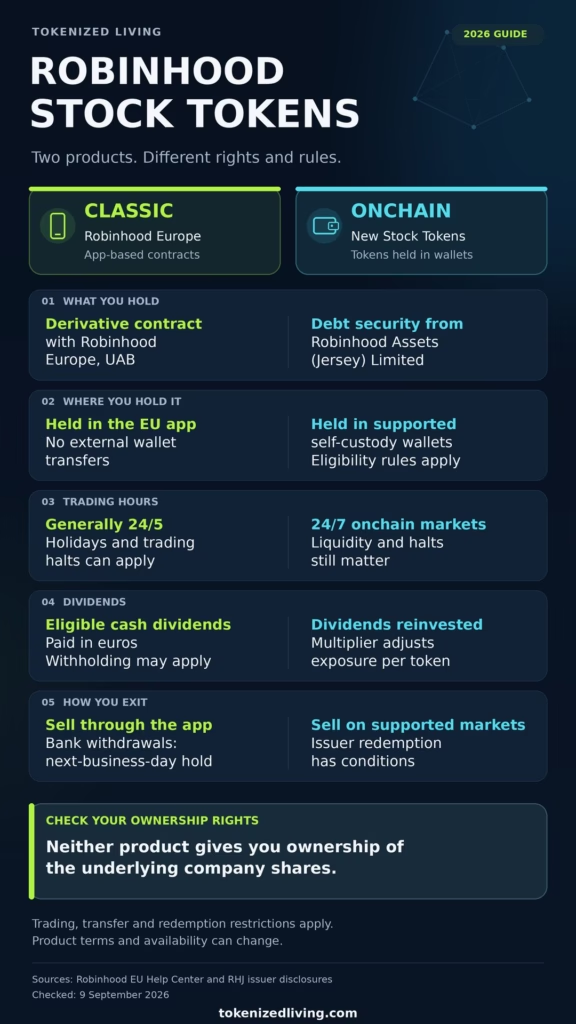
Classic Stock Tokens vs the New Stock Tokens
| Feature | Classic Stock Tokens | New Stock Tokens |
|---|---|---|
| Provider or issuer | Robinhood Europe, UAB | Robinhood Assets (Jersey) Limited |
| Legal structure | Financial derivative contract | Tokenized debt security |
| Holding route | Robinhood Europe app | Supported blockchain wallets |
| External wallet transfers | Currently unavailable | Supported, subject to product restrictions |
| Trading model | Generally 24/5 | Onchain markets can operate 24/7 |
| Dividends | Eligible cash payments in euros | Reinvestment reflected through a multiplier |
| Underlying shareholder rights | No ownership or voting rights | No legal or beneficial ownership rights in the underlying securities |
Robinhood’s Classic product explanation and RHJ product documentation describe these different structures. Dividend and trading conditions require a closer look below.
What Do Robinhood Stock Token Holders Actually Own?
Classic Tokens: A Contract With Robinhood Europe
Buying a Classic token creates a derivative contract with Robinhood Europe. Its value follows the selected stock or exchange-traded product.
The Classic Key Information Document states that holders do not own the underlying securities. They cannot redeem the contract for those shares or exercise shareholder voting rights.
Your payment claim therefore depends on Robinhood Europe meeting its obligations.
New Tokens: Debt Securities Issued in Jersey
The newer tokens are securities issued by Robinhood Assets (Jersey) Limited, often abbreviated to RHJ. Their value links to underlying stocks or ETFs.
However, the issuer’s product terms expressly exclude legal or beneficial rights in those underlying securities. Holding a token linked to Apple does not give you Apple shareholder rights.
Robinhood says matching securities back the tokens. Its service-provider disclosure identifies Alpaca Securities as broker and custodian, and Security Agent Services AG as security and verification agent.
Those arrangements support the investment structure. They do not remove custody, issuer or enforcement risk.
Before buying, locate the relevant prospectus, supplements and token-specific final terms in the RHJ disclosure collection.
Who Can Buy Robinhood Stock Tokens?
Classic tokens serve eligible customers through Robinhood Europe. Opening access involves an investor questionnaire, tax information, required agreements and an assessment of product understanding, according to Robinhood’s onboarding instructions.
The newer tokens have a broader international distribution model. Nevertheless, wallet access does not establish legal eligibility.
RHJ excludes the United States and US persons. Other restrictions include Canada, the United Kingdom and Switzerland, alongside additional prohibited jurisdictions. Check the current restrictions and applicable offering documents before trading.
A supported wallet, visible ticker or accessible website cannot override those restrictions.
Robinhood Stock Token Fees
Classic Token Costs
Robinhood’s European fee schedule applies a 0.10% currency-conversion fee when buying and selling Classic tokens. Euros convert into dollars for purchases, with the reverse conversion when positions close.
For example, a €1,000 conversion carries a €1 fee. Buying and later selling creates two separate conversions, calculated on their respective values.
Market price movements and changes in the euro-dollar exchange rate also affect returns. A small published fee does not make frequent trading harmless.
New Token Costs
RHJ publishes the following issuer fee rates:
- Purchase or subscription: 0.00%.
- Redemption during the first 90 days from issuance: 0.00%.
- Redemption after that period: 0.05%.
Check the applicable issuance date and final terms. The issuer can change these rates within the limits specified in those documents.
These are issuer charges. A wallet, exchange or trading pool may have separate costs, including spreads, swap fees and slippage. Robinhood Chain also uses ETH for network fees, as its mainnet documentation explains.
Direct subscription with RHJ is reserved for authorised participants. Ordinary buyers acquire existing tokens through supported markets, as the issuance documentation clarifies.
Compare the full transaction cost before selecting a trading route.
How Do Dividends Work?
Classic tokens provide eligible dividend payments in euros. Robinhood processes these as cash distributions and does not charge its FX conversion fee on them. Tax withholding may apply. Its corporate-action guidance explains the treatment.
The newer wallet-based tokens work differently.
Robinhood describes dividend reinvestment through a multiplier. Cash from the underlying dividend purchases additional shares, increasing the economic exposure associated with each token.
For illustration, a multiplier rising from 1.00 to 1.01 increases the represented exposure per token. It does not mean a cash dividend arrives in your wallet.
The technical documentation explains that the multiplier can change while the raw token balance remains constant. Wallet displays may reflect that adjustment differently.
Reinvestment does not guarantee a positive return. The underlying share price can still fall.
Trading Hours and Liquidity
Classic tokens generally trade from Monday at 02:00 until Saturday at 02:00 CET/CEST, subject to daylight-saving schedules, holidays and interruptions. Robinhood lists those conditions in its trading-hours guidance.
The newer tokens support trading through onchain venues that can operate throughout the week. However, continuous access does not guarantee a buyer or a favourable price.
RHJ’s price-deviation disclosure acknowledges that token prices can diverge from their underlying securities. Liquidity differences and market conditions can contribute to those gaps.
Corporate actions can also interrupt trading. The issuer’s corporate-action notices describe potential pauses, order cancellations and restrictions during particular events.
Our guide to secondary markets for tokenized assets explains why transferability and a reliable exit are separate questions.
Selling, Redemption and Bank Withdrawals
Exiting a Classic Position
Classic holders close positions through Robinhood Europe. They cannot currently transfer those tokens into an external wallet.
After a sale executes, Robinhood makes the proceeds available for further trading. However, its sale-proceeds guidance describes a next-business-day withdrawal hold before the euros become withdrawable to a bank account.
Check the app’s available-to-withdraw balance. An immediately reusable trading balance does not promise an immediate bank transfer.
Exiting a New Stock Token Position
Eligible holders can sell through supported secondary markets. That route depends on available liquidity, the quoted price and platform terms.
Issuer redemption has separate conditions. The RHJ FAQ describes direct redemption where there is no authorised participant, subject to identity and anti-money-laundering checks.
An authorised participant is a firm involved in the issuer’s creation and redemption process. RHJ currently names Bitstamp Global Ltd in that role.
Before relying on redemption, confirm the applicable route, payment method, minimums, timing and fees. Selling on a market and redeeming with an issuer are different processes.

What Happened With the OpenAI and SpaceX Tokens?
The 2025 launch also attracted attention through promotional tokens linked to OpenAI and SpaceX.
Reuters reported in July 2025 that Robinhood described a limited giveaway enabled through a special-purpose vehicle. OpenAI said it had neither partnered with Robinhood nor endorsed the offering.
That episode should remain clearly dated. It does not establish unrestricted access to private-company shares or demonstrate that the companies authorised those tokens.
The Main Risks Investors Should Understand
Counterparty and Custody Risk
Robinhood Europe is the sole counterparty for Classic contracts. Its Key Information Document assigns the product the highest risk category, 7 out of 7. It also states that the product lacks investor-compensation and deposit-insurance coverage.
For the newer tokens, RHJ says an independent security agent would sell the backing securities and distribute proceeds following issuer insolvency. That described recovery process does not establish immediate or complete repayment.
Wallet and DeFi Risk
Holding a token yourself adds responsibility for wallet security, transaction approvals and recovery credentials.
Using it in a lending application introduces another set of risks. Smart-contract failures, collateral-price changes and liquidation rules can affect the position independently of the underlying company’s performance.
The ability to use an asset as collateral should therefore be assessed separately from the decision to own it. Our article on the financial-stability risks of tokenization examines these connections across markets.
Market and Access Risk
Share prices can fall, token prices can diverge, and trading access can change. Currency movements also influence the return measured in your home currency.
Recognising a company’s name does not make the token’s legal structure familiar.
Robinhood Compared With Kraken and Coinbase
Comparing token counts or advertised hours is only a starting point. Investors also need to compare issuer obligations, custody arrangements, shareholder rights and exit procedures.
Our Kraken xStocks review examines its separate token issuer and redemption arrangements. The Coinbase tokenized-stocks guide explains its Base products and distinguishes them from conventional brokerage stocks and equity perpetuals.
For a broader checklist covering documents, eligibility and custody, use our guide to buying tokenized assets.
| These products sit within a wider shift across funds, banking and property, covered in our 2026 tokenization market overview. |
Our Verdict
Classic tokens offer an app-based route to price exposure for eligible European users. The newer tokens add wallet control and potential use in blockchain applications.
Those features have value when they meet a specific need. However, investors seeking ordinary share ownership should compare the rights and costs of a conventional brokerage account carefully.
Choose the legal structure and exit route first. The convenience of the interface comes afterwards.
Frequently Asked Questions
Are Robinhood Stock Tokens actual company shares?
No. Classic tokens are derivative contracts with Robinhood Europe. The newer tokens are debt securities issued by RHJ. Neither gives holders ownership of the underlying company shares.
Can I move Classic Stock Tokens into Robinhood Wallet?
Robinhood currently does not support external transfers of Classic tokens. The newer wallet-based tokens are a separate product, so their launch does not automatically make Classic holdings transferable.
Do all Robinhood Stock Tokens trade 24/7?
No. Classic tokens generally trade 24/5. New tokens can trade on supported onchain venues throughout the week, but liquidity, corporate actions and operational restrictions still matter.
Will I receive cash dividends?
Eligible Classic holdings receive dividend payments in euros. The newer tokens use dividend reinvestment and a multiplier instead of paying that cash into your wallet.
Does 1:1 backing remove investment risk?
No. Backing does not prevent price falls, custody failures, issuer problems or delays in recovering money. Investors must also understand what legal claim the token actually provides.
Can US residents buy these products?
The European Classic offering is separate from Robinhood’s US brokerage service. RHJ’s newer Stock Tokens exclude the United States and US persons under the offering restrictions.
This article provides general educational information, not personalised investment, legal or tax advice. Product terms and availability can change, and investors can lose their capital.